Even back then, super sports cars were (almost) too much ...

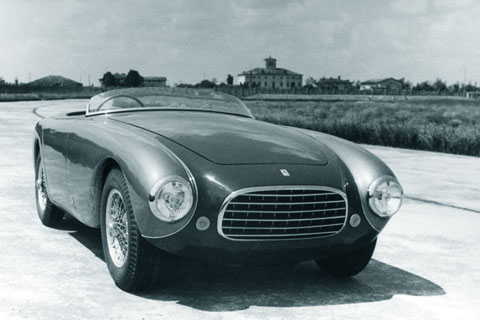
It's been a while since we last looked at our historical testof the Ferrari 212 Export Vignale published in 2011. When we read through it again, we noticed passages that could be written about hyper sports cars again today, for example:
" As a utility vehicle, however, it has little reason to exist - or so it may seem at first glance. Speeds of almost 200 km/h are too much for all through roads in Europe today, including the highways, because the traffic and the relatively narrow width of even the best roads do not normally permit such speeds.
From an economic point of view, the time gain that can be achieved with this car, which is safe to drive in every respect, is certainly not worth it, as it comes at the price of a very high production price, only two seats, little luggage space and not exactly low fuel consumption."
Now you need to know that this Ferrari 212 measured just 372 x 156 cm (length x width), i.e. it was about the same size as the later original Golf. And that the lower-compression version had just 140 hp, which was produced by its 2.5-liter twelve-cylinder engine. But it also cost around CHF 40,000, which the test authors described as a "small fortune" and which was seven times the price of a VW 11A (Beetle). A Rolls-Royce Silver Dawn was about the same price and still offered five seats and quite a bit of trunk space.
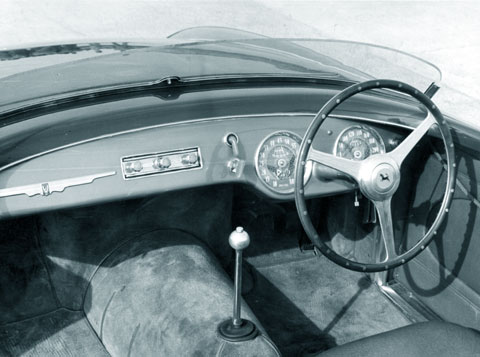
But back to the Ferrari 212, which impressed the test drivers of the time across the board, as it was surprisingly suitable for everyday use and offered driving performance that hardly any other competitor product, with the exception of pure racing cars, could match.
It must have been a very special privilege to drive such a car back then, and it is hard to imagine that the lucky driver was met with the same envy and resentment as the drivers of the Bugatti Veyron, McLaren P1 or Ferrari Enzo are today.
We would like to add another quote here, because it also shows how practical the super sports car of that time was for everyday use:
" Even on undulating roads without a hard surface, the Ferrari glides along without vibrations and hardly requires any reduction in speed. When driving in city traffic, where the car demonstrates excellent maneuverability, a slight loosening of the shock absorbers and a proper adjustment of the tire pressure is enough to elicit a compliment about the driving comfort from even the most sensitive, elderly people."
If you would like to read the entire test , you can of course do so in our report archive; if you prefer a printed version, you should buy Automobil Revue number 38 on September 17, 2020, in whose classic supplement the test is reproduced again.
P.S. Now we are just waiting for a reader who would like to provide us with a car like this for a driving report ...