At the end of the year, we like to look back before archiving the old agenda and opening the new one. Yes, a lot happened in 2023. For example, a Ferrari 250 GTO went under the hammer once again, albeit a very special one. Nevertheless, the auction record of almost USD 52 million was achieved. However, some observers had expected more and this was also true for many other auctions in 2023. At most, there were price jumps for particularly sought-after younger super sports cars, but hardly any for cars from the 1960s or 1970s.
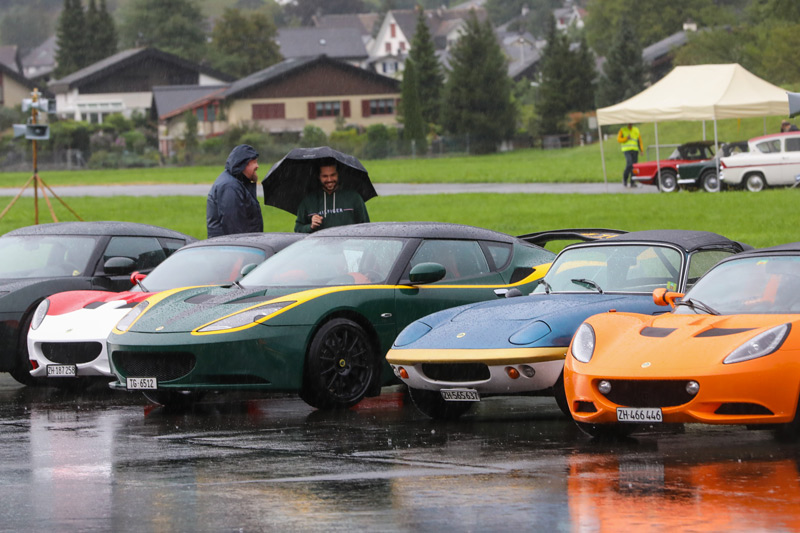
In terms of events, 2023 was a very rich year. And even though we remember the summer as being exceptionally dry and warm, a whole series of events literally fell through. In any case, I had to change my shoes before getting out of the Lotus at the British Car Meeting at the end of August, as the airfield in Mollis was practically under water. And I actually fitted the Elan roof for the first time in over two years!
But it was precisely these brand-independent meetings across age eras and vehicle categories that were the icing on the cake in 2023. It is always a great pleasure to be able to view a wide variety of cars at an event, and once again events such as the Classic Days Düsseldorf, the Lägern Classic, the Classic Gala Schwetzingen, the British Car Meetings in Mollis and on Lake Geneva, the newly invented lightweight meeting at Motorworld Kempthal and many others offered just that. Keep up the good work!
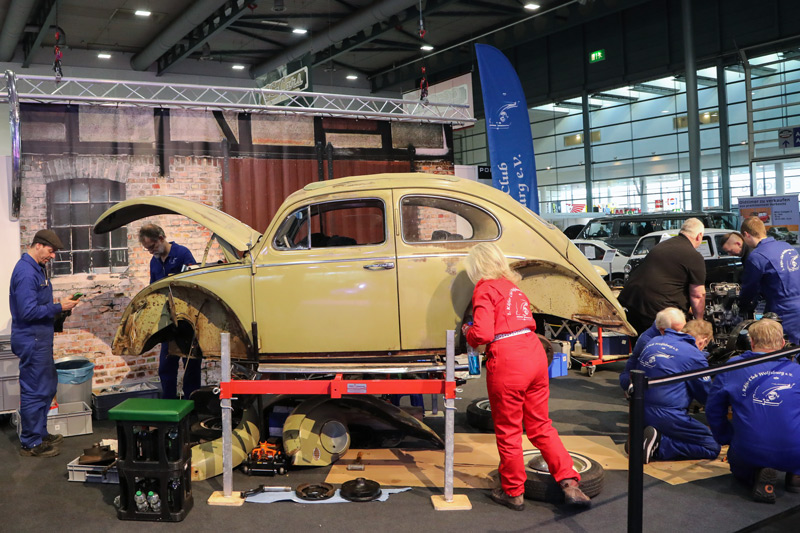
The trade fairs are also (almost?) back to their old size. We particularly liked the Bremen Classic Motorshow this year, but the Auto e Moto d'Epoca also proved that the move from Padua to Bologna had done it no harm, on the contrary!
And which cars that we were allowed to portray left particularly deep impressions? Almost every classic car was able to shine with special features, whether it was the beautiful shape, the special gearbox, the powerful-sounding engine, the sporty driving characteristics or simply the strength of character.
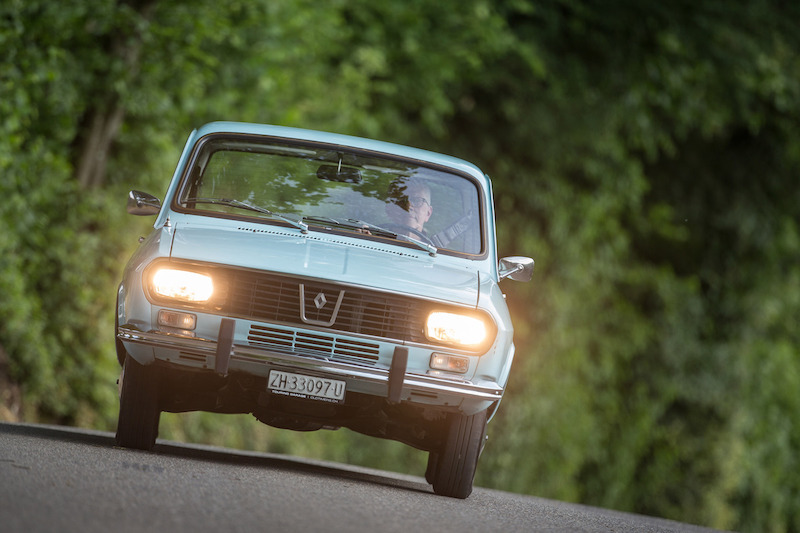
But I would still like to highlight two cars here. The first is the Renault 12 TL ( pictured above), a real bread-and-butter car of the seventies. If it hadn't been light blue, it might not have been noticed at all. But it proved to me once again that even an inconspicuous car can be a lot of fun. And the many thumbs up on the highway showed that other road users also saw it that way.
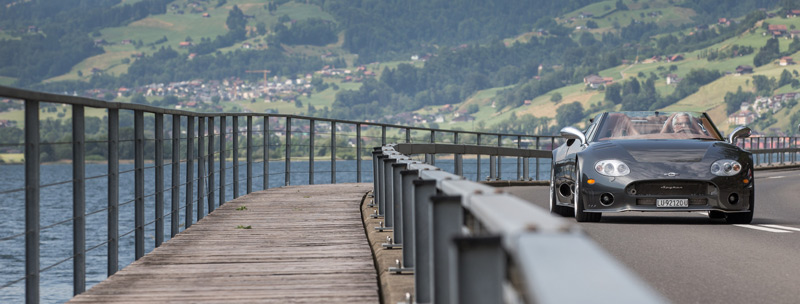
And then there was the Spyker C8, with which we ventured into the new millennium. The Spyker was much less intimidating and unfit for the road than we had feared; in fact, it was downright suitable for everyday use! In many respects it was reminiscent of the Lotus Elise, but with much more of everything ...
At the end of the year, you can also make a wish or a resolution for the future. There are plenty of ideas, such as a long-distance trip in a BMW Isetta, like those undertaken 60 years ago. Or a trip across the Alps in a pre-war car like 90 years ago. Or reenacting the Liège-Rome-Liège long-distance rally in the right car? All that's missing are the right vehicles and a little time ... (but you can have dreams)
A year of beautiful highs and extreme lows is finally coming to an end. I have never longed for a new year as much as the one we are now approaching.
The difficult time with the intensive care of my father up until August 7 was extremely exhausting for my whole family. I also lost two other people in my closest circle of friends far too early, plus four more in the normal time frame.
But, of course, there were also the highs that make 2023 a very positive memory in the end.
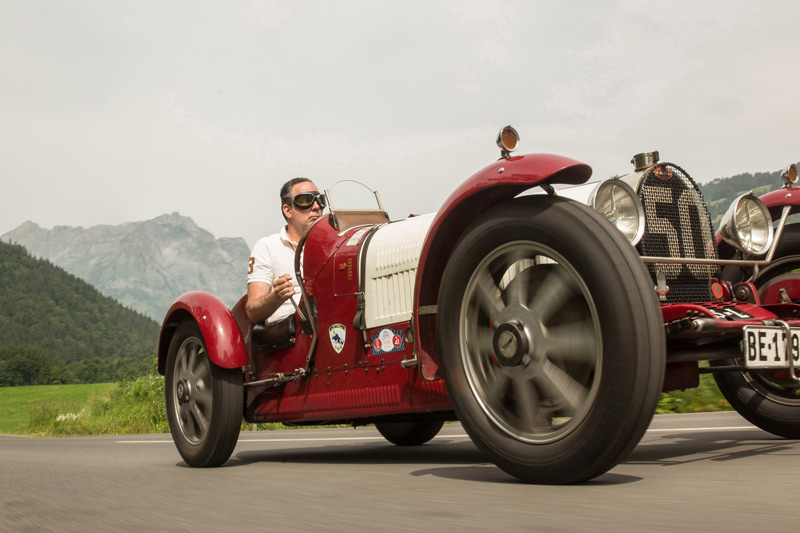
The Bugatti meeting in Engelberg was by far the best classic car meeting I have had the pleasure of experiencing so far. It wasn't just the unique cars, but above all the great company. The somewhat special car-to-car photo shoot with Patrick Jordi in a Type 35 for the cover of our current annual magazine (pictured above) brought everything to a head. We also had by far the best raclette I've ever had in my life.
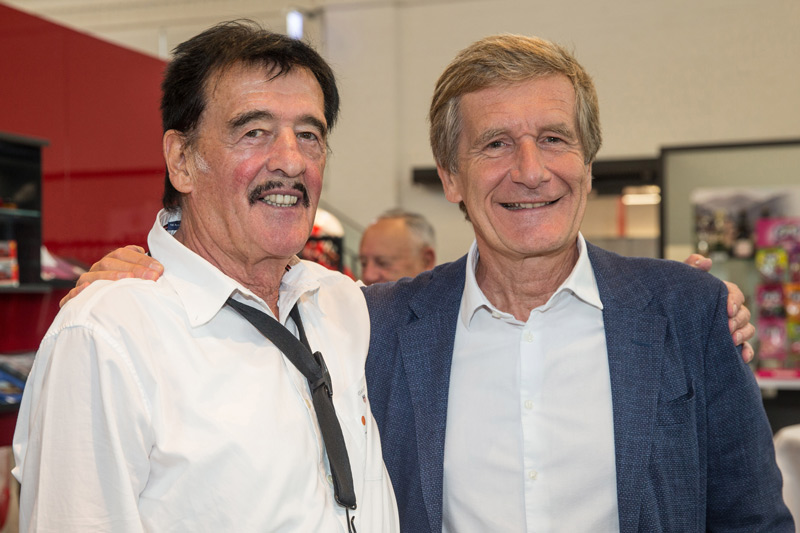
The days in Le Castellet together with the whole Walter Brun family and the Porsche 962 was one of those moments that will surely remain in my memory forever. The fact that the Belgian ex-F1 driver Thierry Boutsen joined us on the last evening, when we had emptied the pub after a good hour, made everything even better.
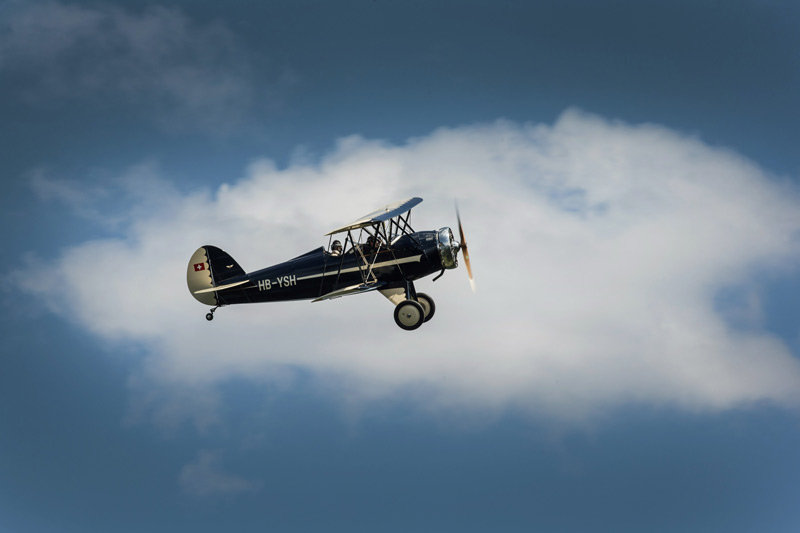
Interesting that two highlights of 2023 were taking place in my home canton of Obwalden and not in Monaco or Goodwood. In addition to the many Bugattis in Engelberg, the OldtimAir Stanserhorn must also be mentioned. Never before have I been so impressed by historic airplanes, which you normally only see standing up high, or at least far away, and now experiencing them in full action at the same height.
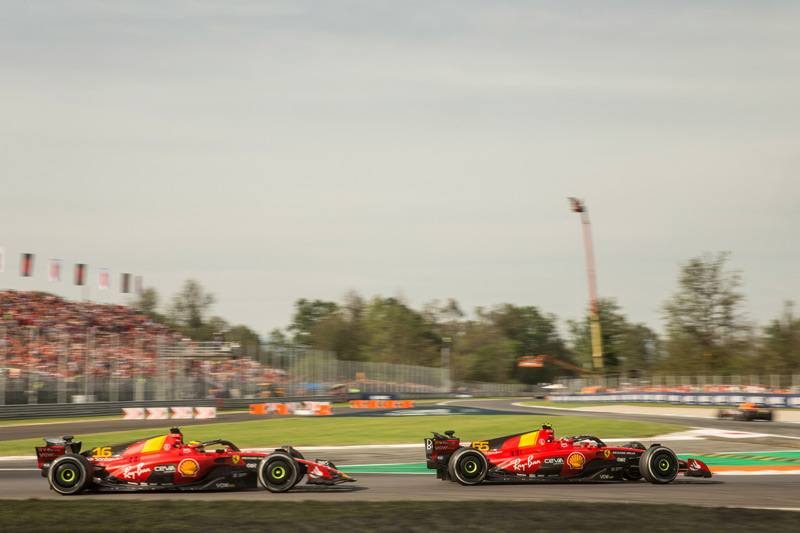
After seven years of total abstinence, being back at a live GP, meeting many old friends in person and increasing my number of photographed F1 races to 554 was of course a very special moment. Now only one more is missing to complete the triple five. Monza is and will remain the Reinhards' second living room, as it is the racetrack that my father and I have visited by far the most over the past 73 years. I was also able to witness Verstappen's 10th consecutive victory live, which now makes him the sole record holder.
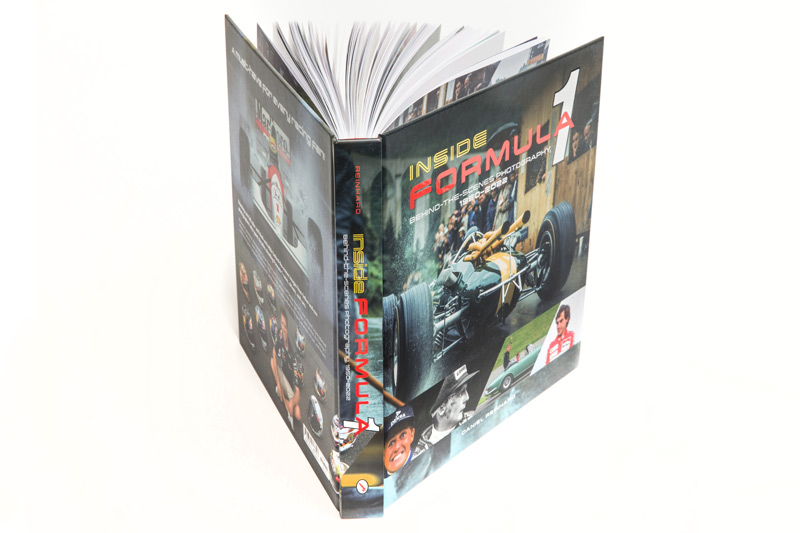
But for me, the absolute biggest standout in 2023 was that the name "Reinhard" flew across the pond and can now also be found on the tables of F1 fans in the USA. When the entire first edition of my book "Inside Formula 1" of 2500 copies was sold out within nine months, the congratulations came from GeraMond-Verlag in Munich with the question of having the book translated so that it could also be sold under license in English-speaking countries. Of course, I gratefully accepted the offer......
Now I really hope that the next year 2024 will be better, not in terms of the positive aspects I mentioned, but rather that there will be less negative things to stress our lives. The few highs should smooth out all the lows.
It almost feels like being in an unfamiliar restaurant. You get something completely different from what you would have expected from the name. The "Wall Street Journal" praises Michael Mann's Ferrari film with the slogan: "Ferrari is the best car movie of all time". In my opinion, however, this is simply not true because the incredible driving dynamics in Steve McQueen's film "Le Mans", which is over 50 years older, simply remain more impressive than the fast cuts and artificial digital speed of today. The enormous possibilities offered by digitalization should actually be able to achieve much more. The Mille Miglia was lined with crowds for its entire 1600 kilometers, but in the film the cars always drive at unreal close intervals through deserted landscapes, with only the town crossings being lively.
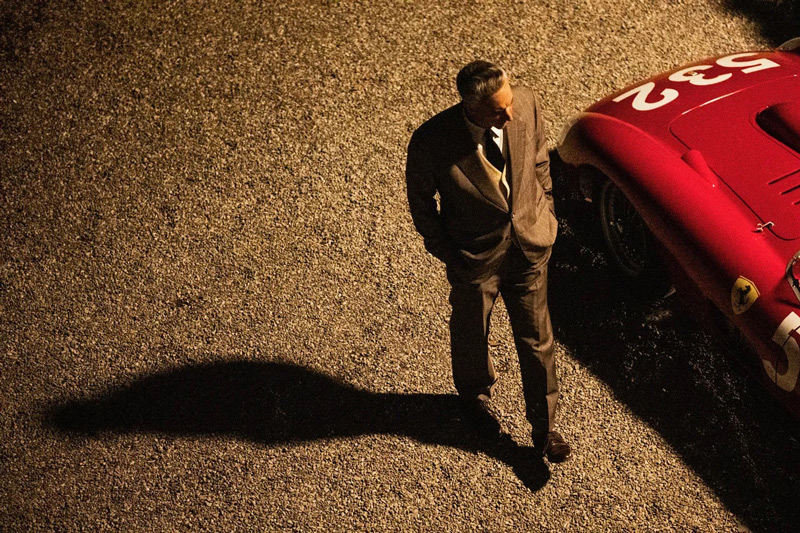
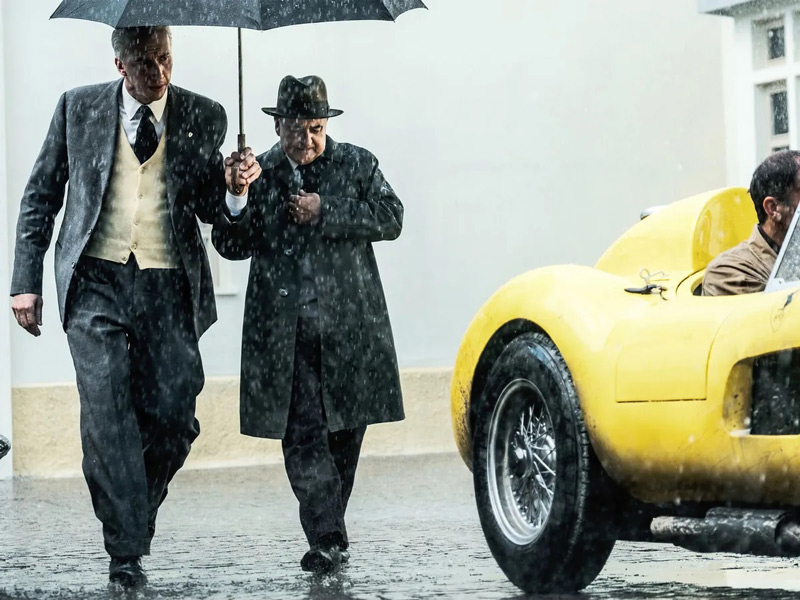
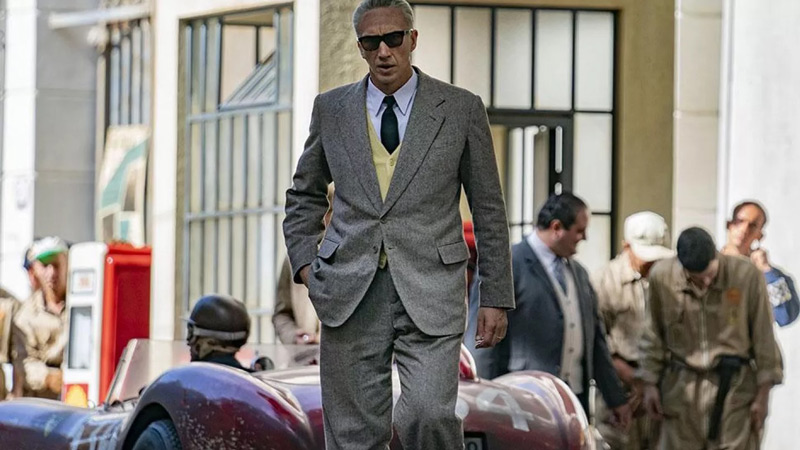
In 1957, the Italian car manufacturer and former racing driver Enzo Ferrari, portrayed in the film by Adam Driver, found himself in the biggest crisis in the company's history. The company that Enzo Ferrari and his wife Laura, played by Penélope Cruz in the film, had built up from nothing ten years earlier was on the verge of insolvency. In order to save his company, Enzo Ferrari put all his energy into a single race, the most famous road race at the time, the Mille Miglia. Of Enzo's 90 years of life, only a third of a single year is recorded. However, these three months of the certainly difficult year 1957 are excellently realized and sensationally played by the two leading actors Adam Driver and Penélope Cruz. In order not to wake up his second wife Lina Lardi (Shailene Woodley) with their illegitimate son Piero, Enzo pushes his Peugeot 403!!! to the hillside early in the morning, then jumps into the car and starts the French car. Thus begins the story, with its unexpected intimate scenes, but also with the expected racing scenes.
Death makes its brutal presence felt from beginning to end, with Enzo visiting the grave of his son Dino, who died of muscular dystrophy on June 30, 1956, aged just 24, alone every morning. After a bit of company history, motorsport begins with the death of Eugenio Castellotti, who died in a fatal accident during test drives in Modena on March 14, 1957, while trying to beat Behra's time in the Maserati 250F with the Grand Prix Ferrari 801. The Mille Miglia on May 11 and 12 of the same year, which is central to the film, ended catastrophically with the death of the Spaniard Alfonso de Portago and his co-driver Edmond Nelson when the Ferrari 335 Sport hit a milestone at full speed on the five-kilometre straight to Guidizzolo, slammed into a telegraph pole and, after spinning, crashed with full force into an embankment. Unfortunately, local fans and their children are standing right there. Nine innocent locals, including five children, are swept to their deaths. The scene of the accident is portrayed in an absolutely uncompromising and taboo-free manner, comparable only to a war movie. Unfortunately, it was a time when death was omnipresent at all times due to a lack of security. Michael Mann wants to portray Enzo's absolutely uncompromising will to succeed.
Michael Mann, as English Motor Sport writes, is considered a director who rarely shies away from contextual violence and here too he chooses an unflinching approach, showing the horrific brutality of the tragedy that occurred just 50 kilometers from the finish line in Brescia. As a result, the film receives the full score of 15 in England. "It stays true to the events, out of respect for the significance of this accident," Mann emphasizes. His sources were police and investigation files - and, as he reveals, a very special eyewitness. "We visited the scene of the accident in Guidizzolo. While we were there, an elderly gentleman with a stick came up to us. He asked what we were doing here. When we explained, he said: 'I was there. We heard the first car drive through. My older brother, who was nine years old at the time, had run out of the house,' he told us. 'I was three. I ran after him, but I was slower and he got to the side of the road - where he was killed. I had to watch the whole accident,' the man told us." This account inspired Mann to create the scene with the farming family and the two children.
Enzo repeatedly encouraged his drivers to take more risks. It wasn't even enough for him when four plus the GT coupé of his cars were unrivaled in the lead, no, he also had to pointlessly urge the fourth-placed Portago to drive faster, which of course triggered an internal battle.
Denis Jenkinson journalist and contemporary witness: "At the inspection in Ravenna, the Ferrari team only received notification of the first three podium places, so they didn't know that the only real competitors from Maserati had already been eliminated. The reaction to this monopoly was actually incomprehensible, only von Trips took it a little easier, but Collins couldn't live with the fact that the German was in the lead at the first check, so he drove faster and Taruffi, as always, only really got into his stride on the fast stages on the Adriatic coast. Gendebien had no idea what was going on behind him and drove as fast as the car could go. By the time they reached Pescara, Collins and Taruffi had overtaken von Trips, and only before they turned inland did they realize that the Maserati threat no longer existed, as all the Ferraris occupied the first five places. In Rome, the order remained unchanged and the Ferraris drove in the order of Collins, Taruffi, Trips and Portago towards a sure-fire big win, which was to be underlined by Gendebien in fifth place and winner of the GT class."
Enzo's private life was just as uncompromising as his management. In addition to a number of affairs, he kept switching back and forth between two women, so much so that his wife Laura even shot him once out of anger (seen in the movie).
Enzo's private life does end up taking the leading role in the movie, but shows us a rather unknown, surprisingly child-loving man.
The release of the film "Ferrari" is the culmination of a lengthy odyssey that spanned 30 years for director and Hollywood star Michael Mann. Mann was already in his fifties when he and his friend, fellow director Sydney Pollack, first began working with screenwriter Troy Kennedy Martin on a story based on Brock Yates' biography "Enzo Ferrari: The Man and the Machine". Pollack passed away in 2008, but Mann, now 80, has only now finally been able to realize the vision they defined together and bring his perspective on Enzo Ferrari to the big screen.
The illegitimate son Piero Lardi, born on May 22, 1945, who has worked in his father's company since 1965 and has been Vice President of Ferrari since 1988, has certainly brought back some memories from his childhood.
Copyright: Michael Mann Movie
Making Of
Interesting note from our reader ra****** regarding the vehicles in the movie:
There are days that you never forget: birthdays, wedding anniversaries, or even days like September 11, 2001, when everyone probably remembers exactly where they were when they learned that planes had flown into the World Trade Center towers in New York.
Tomorrow marks the tenth anniversary of another of these very special and incisive days. The news of seven-time F1 world champion Michael Schumacher's skiing accident was broadcast up and down the airwaves from morning to night. Initially, it didn't sound quite as fatal as it later turned out to be. Michael's state of health was kept under wraps by his family from the beginning until today, i.e. for ten long years. We want to respect that.
ARD will be broadcasting a documentary about the exceptional talent from Kerpen tonight and tomorrow evening. Divided into the five themes "Gravel Pit", "Living Room", "Red", "Time Out" and "Man", it will look back on the seven-time world champion. To mark the sad tenth anniversary, Bayrischer Rundfunk has put together a lavishly produced documentary series about Michael's life and career.
Formula 1 reporter Andreas Troll, who wrote and directed "Being Michael Schumacher", allows many contemporary witnesses to have their say, describing Michael's difficult path from the bottom to the top in their own words. Fascinating footage from Schumi's early karting days to the end of his F1 career (2012) was pulled from various archives.
Accompanied by a professional cameraman, the author also visited yours truly in person. I can say with a clear conscience that Michael Schumacher is the person I have photographed the most, or perhaps better, the most often in my photographic career over all these years, even more than my own children. Thousands and thousands of slides of him fill my archive, which also contains all of his F1 races from my perspective. Even today, the first question I am always asked when I give a presentation or make a public appearance is: "Do you know how Michael Schumacher is doing?"
That's why this documentary is not only worth seeing for Schumi fans, no, it shows once again the great Schumi hype and makes it clear why the fate of the 91-time GP winner continues to touch so many people around the world.
"Being Michael Schumacher" will be broadcast for the first time today (28.12.2023) and tomorrow evening (29.12.2023) from 23:25 on ARD.
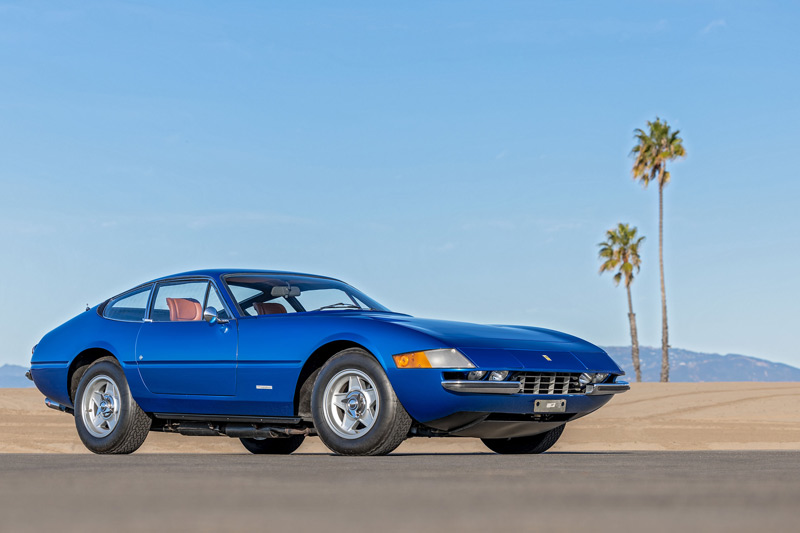
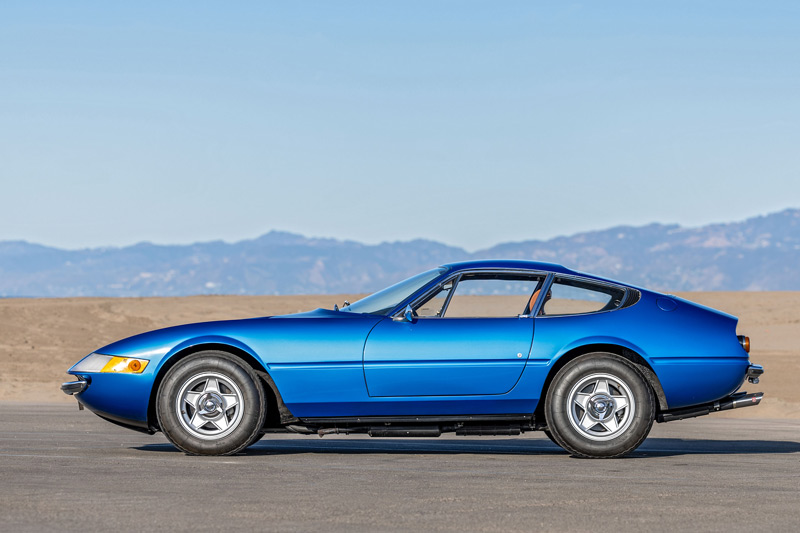
"Blu Dino" is the name of the color in which this Ferrari 365 GTB/4 Daytona from 1972 is painted. The RM/Sotheby's auctioneer will auction the coupé with chassis number 15229 on January 25, 2024 in Arizona. It is expected to fetch USD 650,000 to 750,000, a value rather at the upper end of the current market, possibly justified by an extensive two-year restoration at GTO Engineering, which now dates back about four years.
But back to the color: according to RM, only 116 examples of the Daytona Coupé were delivered in this livery. "Only" is relative, of course, because we are talking about 8.4% of the entire production, which comprised 1383 Coupés up to December 1973.
So there is a high probability that you must have come across one of these blue Coupés at some point. And yet we can't remember coming across a Daytona in "Blue Dino" in the last 10 or 12 years. However, we have seen many, many red Daytonas, which is perhaps also due to the fact that some 365 GTB/4s were repainted in Rosso Corsa a long time ago.
For my part, I would much rather own a blue Daytona like the one pictured. But tastes differ, and unfortunately so do bank balances ...
What a sight! A Mercedes-Benz 280 SL drives along the start-finish straight in Buenos Aires, seemingly chased by super-fast prototypes.
The picture is from the start of the 1000 km race in 1971, the Pagoda is being driven by Juan-Manuel Fangio. Behind him, Giunti in the Ferrari 312 P and Rodriguez in the Porsche 917 roar along the track, of course not yet at racing speed.
The endurance race is overshadowed by the death of Ignazio Giunti, who crashes into Beltoise's almost stationary Matra 660 in his Ferrari on the 39th lap.
Jo Siffert and Derek Bell won the race, but nobody was really happy about it at the time.
The picture from the first lap, however, shows that even less thought was given to safety back then. Despite the fast pace, Fangio and his co-driver are not wearing helmets.
Just a few years ago, we would never have dreamed that we would have to pay extra for a manual gearbox if we had to do without the automatic. It was the other way around. But now car manufacturers charge extra if you want to change gear manually with your foot on the clutch.
Recently? Not quite.
Back in 1960, you paid an extra CHF 1200 if you wanted to order your Facel Vega HK 500 with the Pont-à-Mousson four-speed gearbox, which was 2.7 percent more than the CHF 44,500 you had to pay for the automatic version.
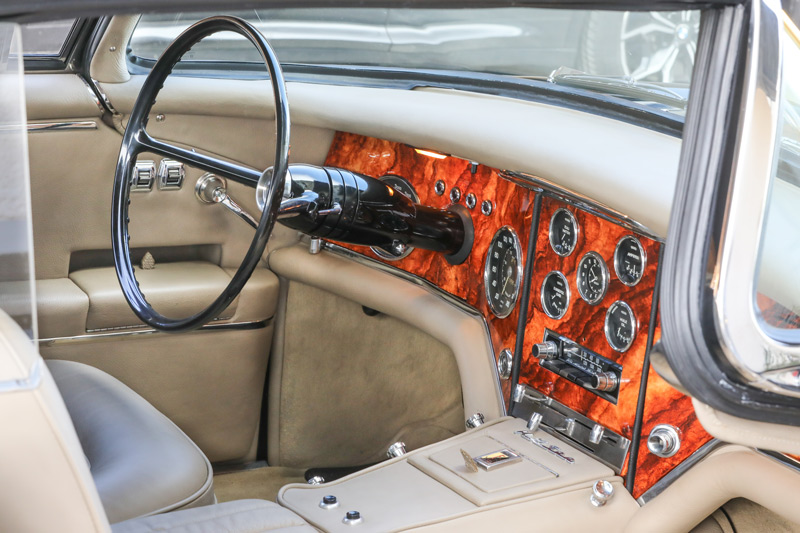
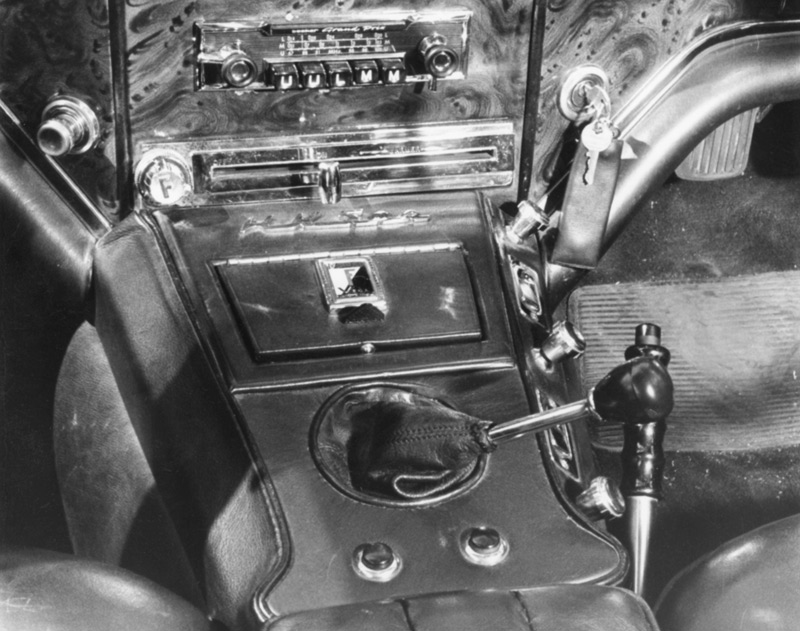
No wonder, then, that most HK 500s were delivered with the Chrysler automatic transmission (pictured above). However, the manual gearbox was praised to the skies at the time. Perhaps also because it was even faster with an additional four-barrel carburetor and another 25 hp of engine power.
And now that we have been able to portray two Facels with automatic transmission, we would give anything to be able to drive a manual version. Maybe this Christmas wish will come true one day ...
Santa was sad. He just didn't really enjoy the sleigh ride any more. How could he make the children of the world happy when he himself was so unhappy, he thought to himself.
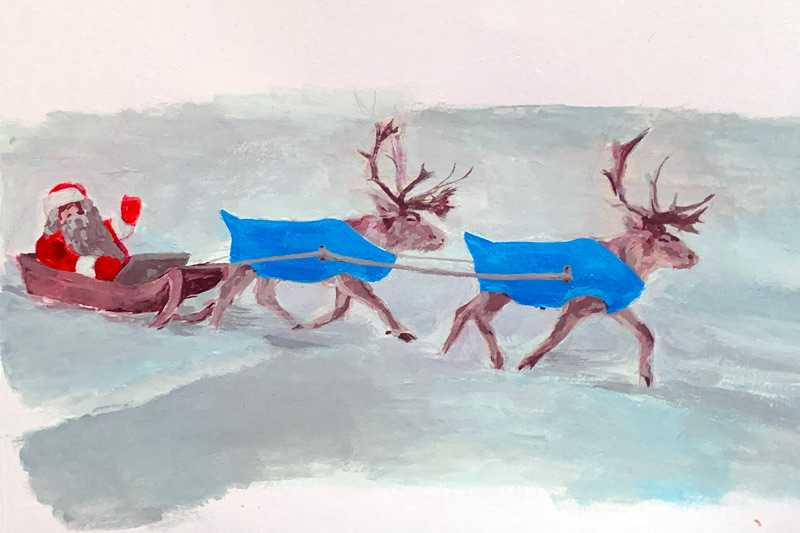
It had all started in the summer when he was presented with his new sledge. Technology does not stop at flying sledges with reindeer. The new model was controlled by a computer and a display in the form of a "tablet" was used to preselect the speed and direction. The technology worked perfectly during the test runs. As soon as Santa had set the speed, the reindeer trotted off in the desired gear. Thanks to the sophisticated computer control system and the direct transmission of signals to the draft animals, the deceleration also worked without a hitch. The technicians assured him that the animals would have to exert themselves less, would need less food and would also produce less "output".
The only problem was that Santa didn't enjoy the whole thing from the start. He missed the direct contact with the animals, the feedback when they initially resisted, or the restlessness they conveyed when the path threatened to become unsafe. It was simply different to control his reindeer with a bridle than with a computer signal.
But nobody wanted to listen to him, after all, the modern approach saved time and in the medium term the sleigh could even move autonomously on certain journeys, which would leave Santa Claus more time to finish the last presents in the back of the sleigh or to take last-minute requests into account. After all, "customer satisfaction" was the most important thing.
And then came the Christmas season, the cold and the snow. When Santa loaded up his modern sleigh and was about to set off, the computer produced a cryptic error message that read something like this: "Sensor 0145 not working". The whole load wouldn't move, the animals became impatient. Nothing worked any more.
Thank goodness Santa had taken precautions. He got his old sleigh out of the shed, hitched up the four reindeer as he had done every year before, reloaded the presents and drove off, or rather flew off.
And how happy he was. He could feel his animals again, they responded directly to his every manual impulse, the feel was right again. And of course the presents arrived on time. Perhaps the food consumption was a little higher than with the computer-controlled sleigh, but the old-fashioned approach was temperature-resistant and created much more "driving pleasure". And Santa didn't want to wrap presents in the back of an autonomous flying sleigh anyway, as it would have made him sick.
We wish all our readers a peaceful and harmonious Christmas!
P.S. If you have identified any parallels with the main theme of this year's annual magazine ("The joy of shifting gears"), then this is probably no coincidence ...
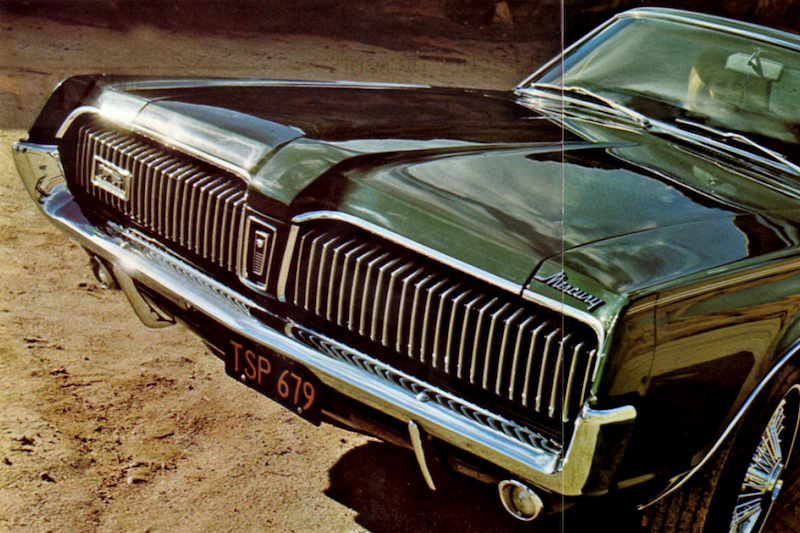
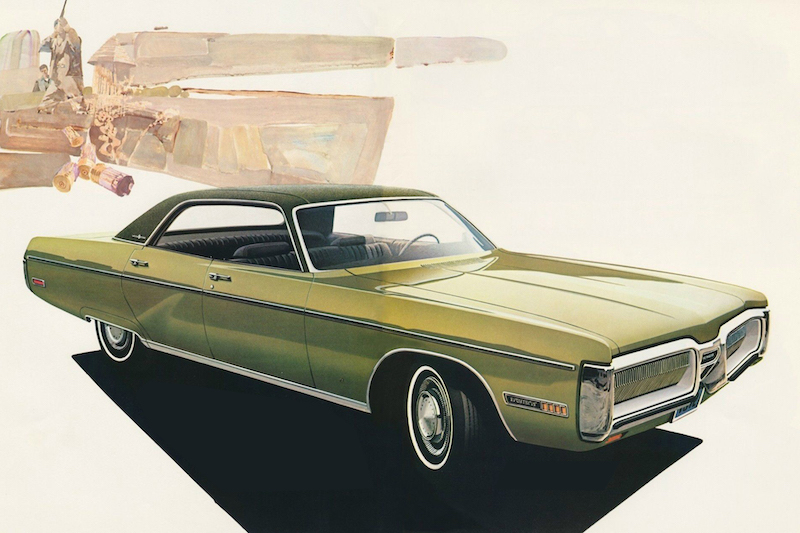
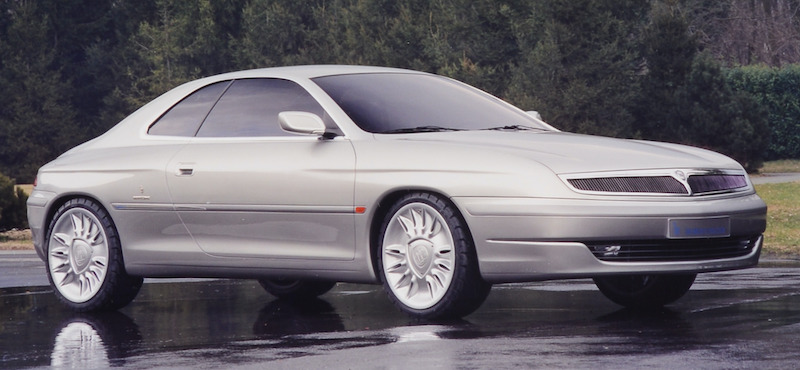
Streamline? Pontoon shape? Stern fins? Panoramic windows? Trapezoidal line? Wedge shape? It was all outdated after just a few years. The most enduring stylistic element of car design lasted not a few years, but three decades: the razor! These electric trimmers for the annoying facial hair shaped the front design of US products in particular across the most diverse fashion trends.
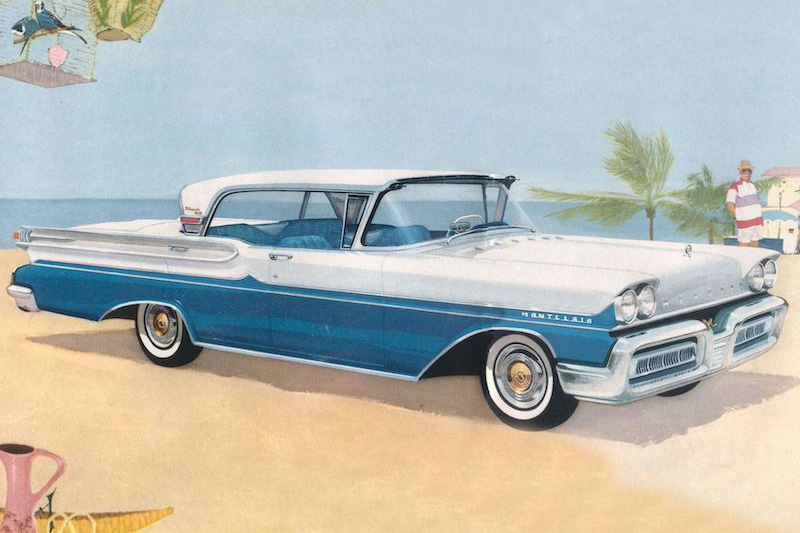
The 1957 Mercury was the first to be presented with chrome-proven cutting blades in the front bumper. In the following decade, the apparent cutting head then moved upwards and preferred to conceal the headlights. It retained this task until the 1970s, with the segments becoming increasingly delicate in contrast to the cars. The 1972 Plymouth Fury presents itself with a strikingly delicate face in a chubby fuselage design.
But the chrome age also marked the end of the shaving age. The Lancia-based Bertone Kayak took up the motif again in 1995, but remained a one-off.
Over the last century and a half, it was only thanks to engineers who were as inventive as they were tireless that the automobile was able to develop from a rattling motorized carriage into a modern means of transport. Thanks to the invention of the electric starter, for example, we no longer have to exert ourselves physically every time we start the engine and most drivers today still have both thumbs. We may even owe our lives to the seatbelt. And thanks to lane departure warning and emergency brake assistants, we can finally play around on our cell phones or the radio at 200 km/h without any danger.
Today, we take the older inventions in particular for granted. But we usually don't even know who came up with them - or how old they actually are. For example, would you have known that the first electric seat heating was installed in a 1965 Cadillac? Or that the intermittent windshield wiper was introduced by Ford in 1969? You see. That's why we've selected 16 innovations for you to put your knowledge of the history of automotive technology to the test.