The goals for the development of the Ford Essex engine family were ambitious. Engines with high and low compression were to be built, and even a diesel engine was planned. The V4 and V6 units were to be used in saloons and sports cars, but also in light commercial vehicles.
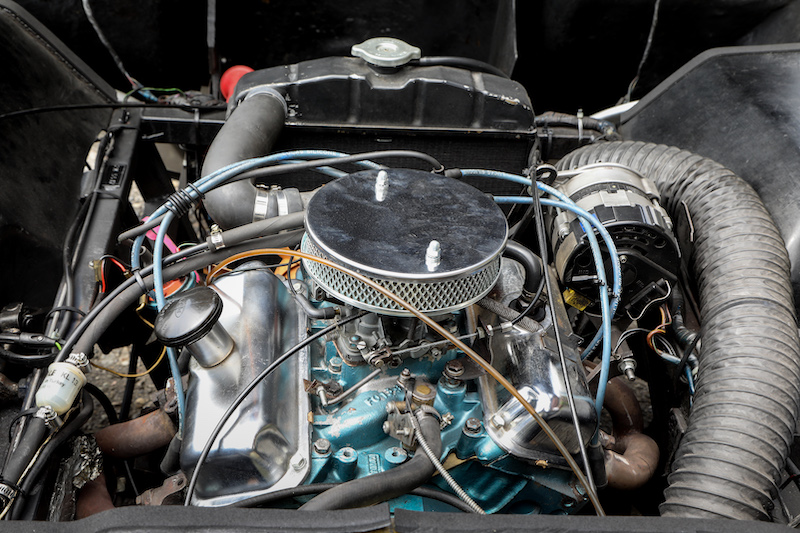
The V4 version had to adopt the 60-degree angle of the V6, which is much more famous today. The shape of the combustion chamber, pistons, valves and ignition trims were also identical between the V4 and V6. Neither the V4 nor the V6 version were lightweight; after all, the diesel target required a relatively massive construction.
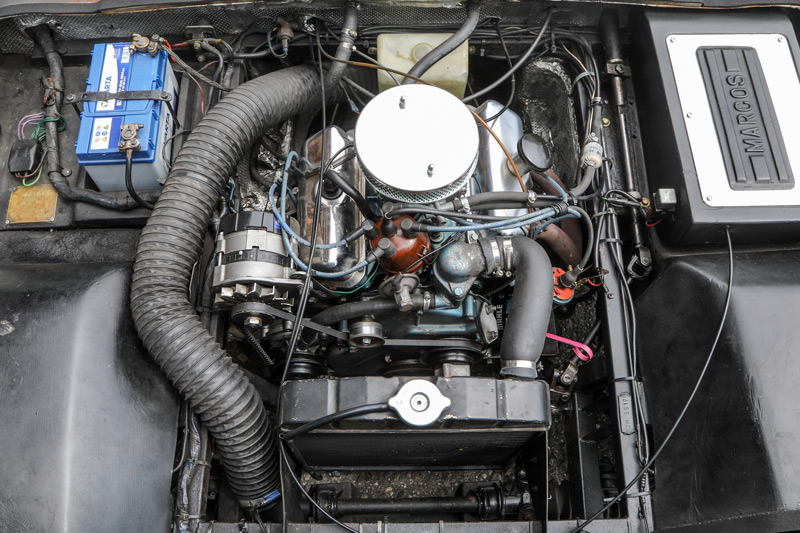
![V4-Motor im Marcos GT von 1970 (© Bruno von Rotz)]()
The Essex V4 was available as a 1.7-liter and a 2.0-liter with identical bores but different strokes. To deal with the vibrations, which could not be prevented due to the 60-degree angle, a balancer shaft was installed, which the V6 did not need.
The performance values were between around 70 and around 100 hp, which were achieved at or below 5000 rpm.
Automobil Revuetested the new British Ford Corsair with V4 engine at the end of 1965 and actually came to a very positive conclusion:
" As the dry paper specifications - weight ready to drive around 980 kg, power 77 DIN hp - suggest, the new Corsair has quite a remarkable temperament. Nevertheless, its engine is not trimmed for maximum performance, but rather for the most consistent possible torque over a wide speed range. The engine characteristics of the new V4 are particularly evident in third gear, giving the Corsair much greater agility on winding roads than its predecessor. Overtaking maneuvers can now be carried out in a much shorter time and therefore with an increased safety margin. The sufficiently energetic clutch is also well adapted to the engine characteristics, the noise coming from the engine is modest and it is characterized by smooth running and freedom from vibration both at idle and under full load. "
A short time later, Motorsport Magazine put the Ford Corsair GT with the more powerful V4 version through the wringer and was disappointed by the performance, which was not exactly GT-worthy. In general, the V4 seemed more like the opposite of a sports engine:
" The V4 Corsair GT is therefore less fussy, but also less satisfying to drive than a Corsair GT or Cortina GT with an in-line engine. Its engine is smooth, quiet and responsive up to a claimed speed of 70 km/h, which corresponds to 3500 rpm in top gear, after which acceleration drops off and there is an unpleasant reverberation and vibration transmitted through the gearshift. In general, the engine noises are louder than I had expected. All this is disappointing after the praise the V-body has received."
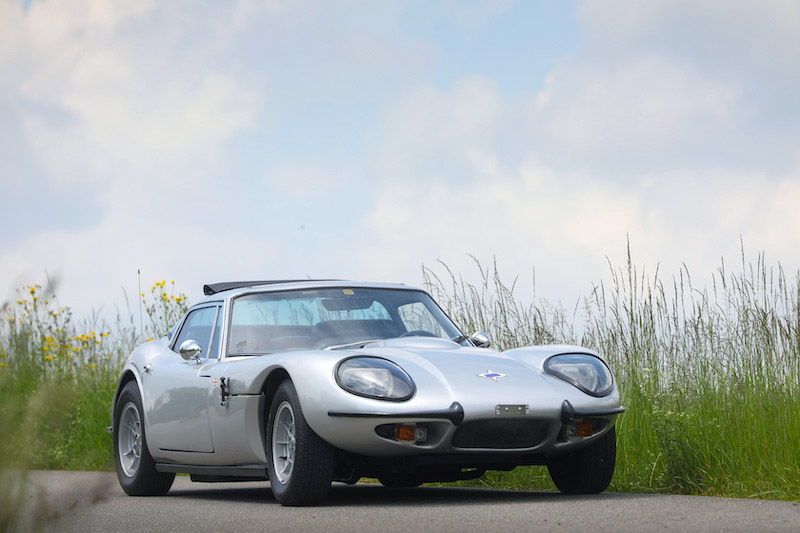
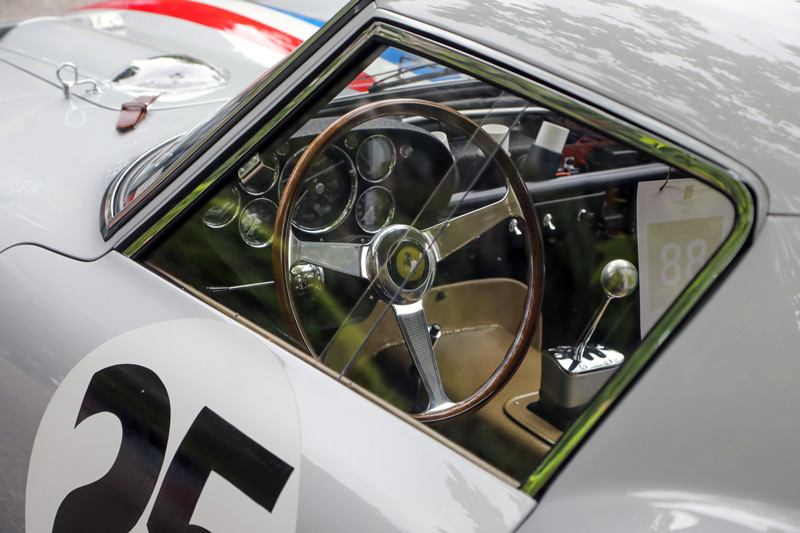
Obviously, the Essex V4 was the right engine for people who didn't like shifting too often and preferred low revs. That doesn't exactly sound like a sports car. It is therefore all the more surprising that Marcos opted for this V4 in order to offer a cheaper version below the three-liter V6. However, the approach was not really successful, as less than 100 units were built.
![Marcos 2 Litre GT von 1970 (© Bruno von Rotz)]()
We have described how the V4 feels as a two-liter in the Marcos in a new driving report .
P.S. The V4 engine was built until 1978, but in the end it was only used in the Ford Transit.