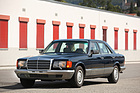
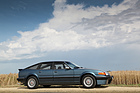
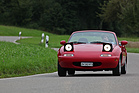
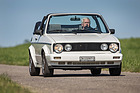
Are the eighties cars destroying the classic car balance?


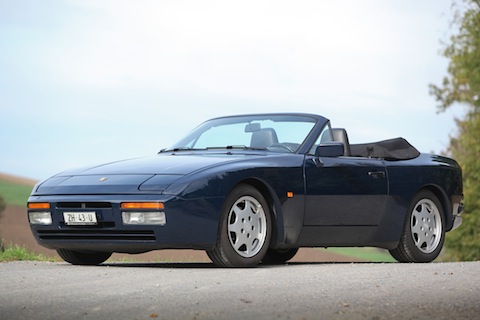
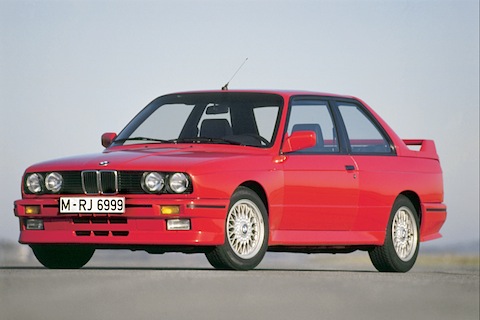
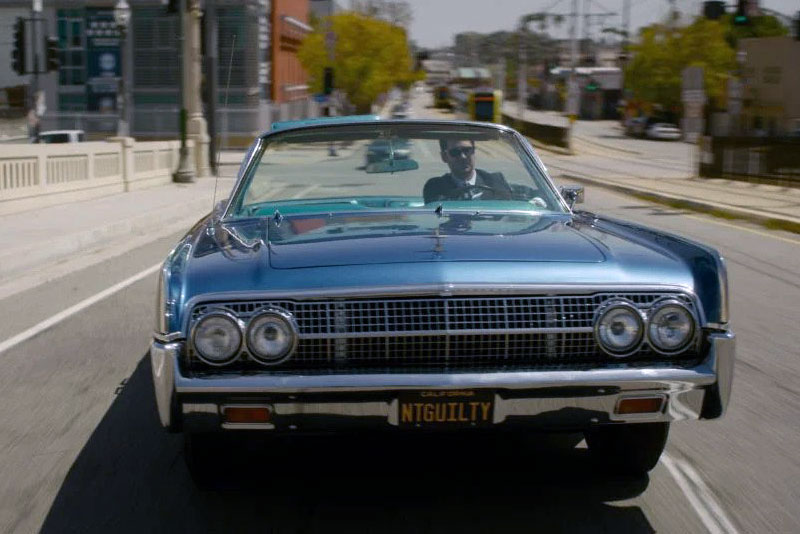
Anyone analyzing the current passenger car registration figures will come across a not entirely unexpected trend. Cars from the 1980s occupy a dominant position among vehicles over 30 years old. In fact, more than half of all classic cars (regardless of H registrations) in Germany were built between 1980 and 1989 (around 453,000 cars in absolute terms), while in Switzerland the proportion is over 35 percent (34,700 vehicles in absolute terms).
It would therefore come as no surprise if a third to half of the vehicles at a classic car meeting were cars that had barely outgrown their youngtimer age. However, this is hardly ever the case, partly because many owners do not see and maintain these cars as mobile cultural assets, but use them as everyday cars (which of course is not necessarily mutually exclusive).
The fact that young classic cars feature so prominently in the registration statistics can be explained, among other things, by the fact that these cars are relatively durable, especially when it comes to rust prevention, and that they were also produced in very large numbers.
The question is, of course, what will happen next - after all, the number of cars from the 1980s almost halved between 2010 and 2020.
Because we don't know either, we asked our readers. The corresponding " Question of the Week" is still running for a while, so anyone who has an opinion is welcome to let us know ...
P.S. Here's an interesting fact in passing: the number of cars registered in 1989 is almost four times as large in Germany as the number of vehicles first registered in 1980. And 1988 is also around three times as large as 1980. According to German registration statistics, the number of cars registered in 1980 is even larger in 2020 than it was in 2010. However, at around 23,000 cars, the absolute number of cars first registered in 1980 is still manageable.
What would be typical cars from 1980? For example, a Fiat Ritmo, a Renault 18, a VW Golf I or a Ferrari 308 GTS, but also a Triumph Spitfire or a Jaguar XJS. However, the Lancia Y10 pictured did not go into production until 1985, so that can be said for sure.