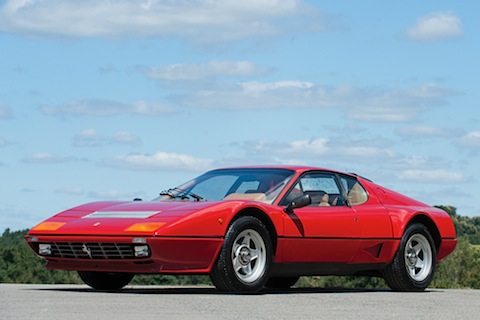
The youngtimers are coming ... or are they?

Over the past few years, classic car owners (and speculators) have achieved sensational returns with classic vehicles. According to market observer Classic Data, the value of a Mercedes-Benz 300 SL Gullwing, built between 1954 and 1957, has increased by an average of 33% per year.
The market value of a Porsche 911 Carrera RS 2.7 Touring, built in 1972 and 1973, increased by barely less. Four years ago, the price was around 200,000 euros, but today it is at least double that. The situation is similar with Ferrari and Lamborghini cars. Even cars that were once quite numerous and inexpensive are achieving surprisingly high percentage increases in value, with the Citroën 2 CV being a frequently cited example.
The youngtimer hype
Naturally, some owners of younger vehicles wonder whether they too can hope for an interesting return. Cars built between 1985 and 1995 (and in some cases up to 2000) are now commonly referred to as "youngtimers". There is a real hype surrounding these vehicles today. The classic car departments of the major car manufacturers are devoting a great deal of energy to these upcoming classics and hardly a television commissioner is not seen sooner or later in one of these vehicles, be it a Citroën CX, a Rover 3500 SD1, an Opel Ascona, a Porsche 911 or a VW Beetle Cabriolet from the 1980s. They radiate a lot of sympathy, or how else can it be explained that janitor and kung fu master Han, alias Jackie Chan, restores a second-generation VW Scirocco in his home in the 2010 film "Karate Kid"?
Attractive but also stable in value?
Cars from the period 1985 to 1995 are attractive to today's younger generation who want to buy a classic (usually as a second car) because they grew up with these cars. However, the majority of these vehicles have not proved to be particularly attractive investments to date.
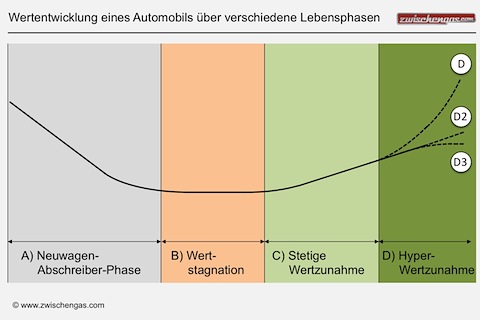
If you look at the universal value curve(see diagram), most youngtimer vehicles are now in phase B, i.e. the market value has hardly changed. In and of itself, this is good news, because at least as the owner of such a car you hardly lose any money as a result of necessary depreciation.
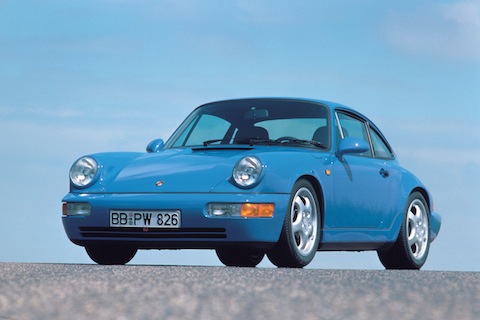
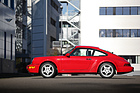
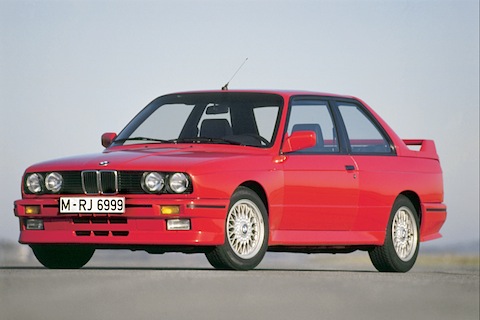
However, there are also some youngtimers that are already in the third phase C, or the fourth phase D. This means that their value is increasing. Their value therefore increases. Examples of this are the BMW M3 (E30, picture above), which has increased in value by around 24% per year over the last few years, or the Porsche 964 RS, which has even managed to increase in value by 32% per year. And some top-class (and rare) Ferrari sports cars, e.g. the F40 or the 288 GTO, also achieve high increases in value.
For the joy of driving
For the majority of youngtimers, however, one must assume value stability and slight fluctuations upwards and downwards. The reason for this lies in their comparatively wide distribution and the fact that they are still awaiting the consecration of veteran status, which is awarded to vehicles over 30 years old in Switzerland and which means a number of concessions and simplifications in operation.
Nevertheless, young classics aged between 15/20 and 30 years are more suitable as collector vehicles than almost any other vehicle category, as their technology is still manageable and spare parts are usually easy to obtain thanks to the high production figures and eBay & Co.
The MX-5 as a model car
The Mazda MX-5 is a prime example of a problem-free youngtimer with a high fun factor . Introduced in February 1989, when the convertible was almost extinct, it started a new open-top driving boom.
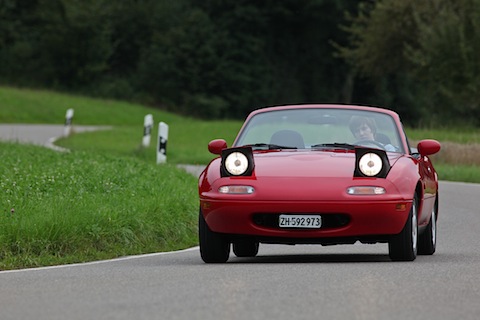
The Mazda was comparatively light and simple, modeled on the English roadsters of the sixties and perfectly suited to the lifestyle of the nineties. Even today, the chubby sports car still appeals with good manners and acceptable fuel consumption. With good maintenance, the costs are kept within limits and, thanks to the catalytic converter, the emissions check is only due every two years. Classic Data notes rising prices, with the early Mazda MX-5 increasing in value by around 8% per year, but finding a vehicle in its original condition is not likely to be easy.
Investing?
So they do exist, the youngtimers that can more than keep up with the stock market in terms of value development. A Lancia Thema 8.32 is one of them.
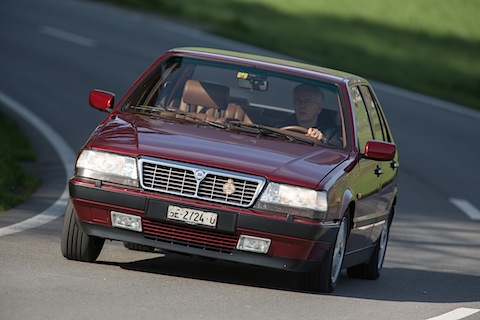
However, it is easy to forget that a car not only costs money when you buy it, but also afterwards. Annual costs of 3,000 to 8,000 francs have to be factored in per year, depending on the car, accommodation and insurance costs, so any increase in value is quickly eaten up, especially if we are talking about vehicles costing less than 50,000 francs.
However, according to a new FIVA survey, only 1% of all classic and modern classic car drivers buy their cars as an investment; most of them do it out of enthusiasm and enjoyment, and that's a good thing!
By the way, further considerations on the subject of "Value development and investment" can be found in a separate topic channel on Zwischengas.