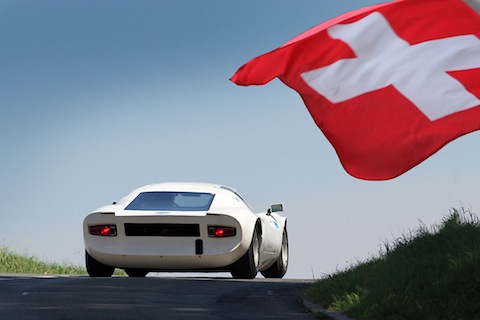
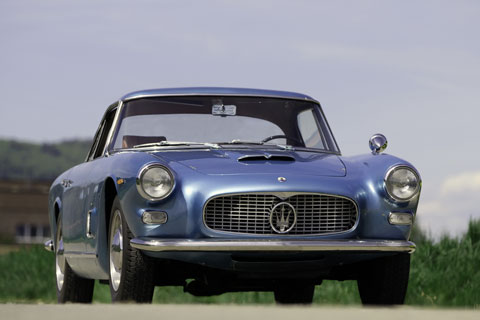
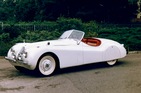
When sports cars are no longer sportier


"One of the reputations that has suffered most during the post-war years is that of the sports car," it was written in a car magazine. And it went on to explain that the sports car was suffering from fast saloons that were winning rallies instead of it, and that sports cars had to be designed so uncompromisingly due to the specialization and focus on racing that they would become mid-engined projectiles that no longer had anything to do with what road car drivers wanted to buy for everyday use.
Yes, these lines were written in a test report in the English magazine "CAR" in November 1968, and the writer explained the original concept of the sports car as follows: "A sports car was a car that drove faster, cornered better and braked more efficiently than any saloon car in the same price category, by exploiting a weight advantage, lower drag and smaller dimensions, as well as other refinements."
And obviously the creators of CAR already felt in 1968 that these advantages of the sports car no longer existed, despite the existence of great cars such as the Lotus Elan, Jaguar E-Type or Porsche 911. Of course, fast saloons such as the Ford Lotus Cortina, the Jaguar Mk 2 or the Alfa Romeo Giulia already existed back then.
But what are we supposed to think about sports cars today when the possible advantages in terms of handling, aerodynamics or driving performance have long since become irrelevant due to the density of traffic and legislation, and even the blandest saloon with a turbo diesel engine is barely slower on average than the most expensive super sports cars on most journeys? Well, despite everything, the sports car has remained desirable to this day, but today it is probably primarily lifestyle and aesthetic arguments that lead to the purchase of a sports car. And this is also interesting: today, Porsche builds more off-road vehicles and four-door cars than low-slung, flat, two-door coupés and convertibles ...