The decade - review 2010-2019 from a classic/young car perspective

The end of the year is always an opportunity to look back, and the end of a decade is of course an even better occasion to do so. What comes to mind when we think back to the decade of the 21st century?
One major topic was certainly the development in the value of classic cars. You could almost speak of an explosion in value. A Miura or an early Countach increased in value by ten or more percent per year, and something similar happened with the Porsche Turbo and other suddenly "hip" classics. Around 2015/2016, the wind picked up and prices slowly began to take root again. However, hardly any classic car is worth less now, in 2019, than it was in 2010. Pre-war cars are perhaps an exception, unless they are particularly rare or sporty, and cars whose fans are slowly dying out.
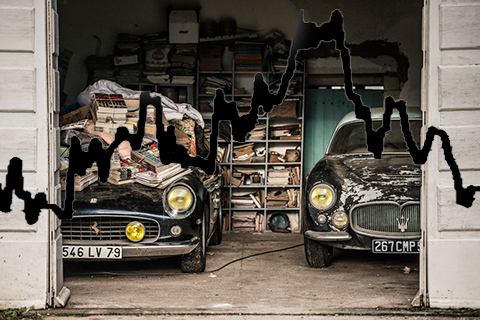
A second important keyword that we associate with the decade is barn finds. The highlight here was in 2014/2015, when Artcurial brought an entire barn find collection (Baillon) onto the market and auctioned it off at the Rétromobile 2015 at unbelievable prices. Wrecks that were barely restorable changed hands for prices that you could buy fully restored cars for elsewhere. However, the auction of the Baillon collection was not the end of the barn-find euphoria. We remember the two 300 SLs in the USA, the yellow Lamborghini from Germany and many others.
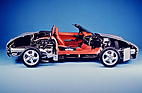
One trend that began in the decade was the construction of new classic cars. Jaguar, Aston Martin, Lister, Chevron and even Porsche (with the yellow 993 Turbo) began to rebuild their own classics from back then.
As a counter-trend, so to speak, the search for absolute and unaltered originality began. In Pebble Beach, but also at other Conours, "Preservation" classes were introduced in which only unrestored originals were in demand. A well-kept patina was now the order of the day where previously the "better than new" motto had reigned supreme.
Even in the decade of the 20th century, many Conours winners were still from the years before the Second World War, while the market was already moving towards ever newer classics. Rare youngtimers were suddenly being valued in the millions, and some of the most expensive cars on the market were suddenly barely 20 years old. The neoclassic was born.
There was a shift in demand from "very old" to "young". Pre-war vehicles were traded much less frequently than in previous years, while young cars were traded much more frequently and at surprisingly high prices.
There were also changes in the event landscape. More and more events were being organized, and the choice on the same weekend could become almost overwhelming. New trade fairs appeared almost non-stop, with some running out of steam sooner.
The environment also took its toll. Diesel-Gate had an impact on the classic car scene. Low emission zones and driving bans also began to affect classic cars and youngtimers in particular. The CO2 debates are not yet over and at the end of the decade, many classic car owners are looking anxiously into the future, wondering how much longer they will be allowed to drive their old cars.
Yet vintage and classic cars do much less damage to the earth's climate than some new cars, simply because the energy invested in their production has long since been amortized. In terms of maintainability and survivability, old cars also have a much better chance than their successors, which are more severely affected by electronic and material problems than their predecessors. Some of these problems can obviously be solved with 3D printers and other modern production technologies, but a lot of research and development is still needed here.
After all, the owner of old cars also benefits from modern communication technologies that have spread over the last ten years. Instructional videos on YouTube, fast exchange of information via Twitter, Facebook and the like or flexible research, as we also enable on zwischengas.com, have made and continue to make many repair or restoration tasks easier.
In the last ten years, we have also had to say goodbye to well-known and beloved brands, such as Lancia, Saab and Pontiac. At the same time, however, some brands have experienced a (small) renaissance, such as TVR, Hispano-Suiza or Alfa Romeo. Tradition and an attractive history were also a strength of major car brands in the decade.
Today, 2019 is coming to an end and with it the decade of the 21st century. It will be interesting to see what the twenties will bring us.
P.S. We thought long and hard about which photo would best characterize the 1920s, and we finally stuck with a photo from the Baillon story.
P.S.2 Have we forgotten something that characterized the decade? Comment, your memories are as important as ours!