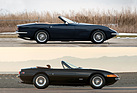
Super sports cars past and present


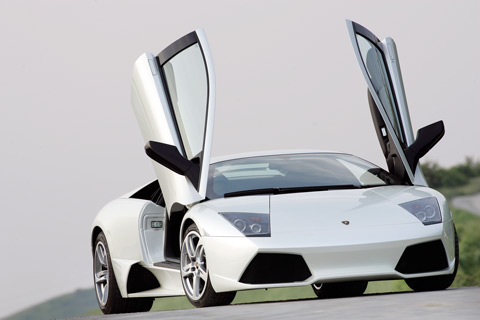
Anyone who bought a Lamborghini Miura , considered by many to be the first super sports car, around 50 to 55 years ago would put DM 75,600 or CHF 67,000 on the counter, a sum roughly 15 times the price of a VW Beetle. He thus owned more or less the fastest road sports car that money could buy. It was similar with a Maserati Ghibli or a Ferrari 365 GTB/4 Daytona, or its successor 365 GT/4 BB (Berlinetta Boxer).
Today, the situation has shifted considerably. Modern hyper sports cars usually cost millions; the average purchase price for one of the fastest cars of modern times is probably around EUR 2 million. At the same time, everyday cars have also become somewhat more expensive. An equivalent to the VW Beetle could be seen in the modern VW Polo, which is listed in the price lists with prices starting at around EUR 20,000 or CHF 25,000. So you could buy 100 Polos for the equivalent of a Rimac Nevera.
Whereas in 1967 a successful owner of a medium-sized business (SME) could afford a Miura, today only crypto-millionaires or footballers and people who have become very rich in other ways order a Rimac.
But the differences between then and now go even further. Back then, most buyers actually drove the Lamborghini Miura, even in everyday life and over longer distances. The modern hypercars, however, usually end up in the underground garages and temples of car collectors; they are hardly ever driven and therefore rarely see the roads. The Miura became a used car that changed hands with significant write-offs, while the Rimac, McLaren P1, Koenigsegg or Bugatti of the modern era often turn up at auctions after a short time with the first owner and are sold on with minimal mileage, sometimes above the new price, only to spend a sheltered life in the next collector's garage.
Of course, modern hypercars offer impressive performance, but compared to the past, they perform poorly. After all, the Miura, Daytona and Ghibli were around 2.5 times as fast as the Beetle and the differences in acceleration were also enormous. If hypercars had to be similarly impressive, they would all have to be over 500 km/h fast and accelerate from 0 to 100 km/h in well under two seconds.
The practical benefits, which were already debatable in the Miura and the like, have almost completely disappeared in modern hypercars, vacation luggage hardly ever fits in the trunk and driving in city centers is hardly a pleasure due to the lack of visibility and the expansive dimensions. A Miura or Daytona, on the other hand, could also be driven in the city; I was even able to experience this myself a few years ago in Turin.
The question remains as to how all this will continue. A Miura today is easily worth ten times its original price, a Daytona or Ghibli perhaps five to seven times. Will a Rimac Nevera be traded for EUR 15 or 20 million in 40 or 50 years' time?