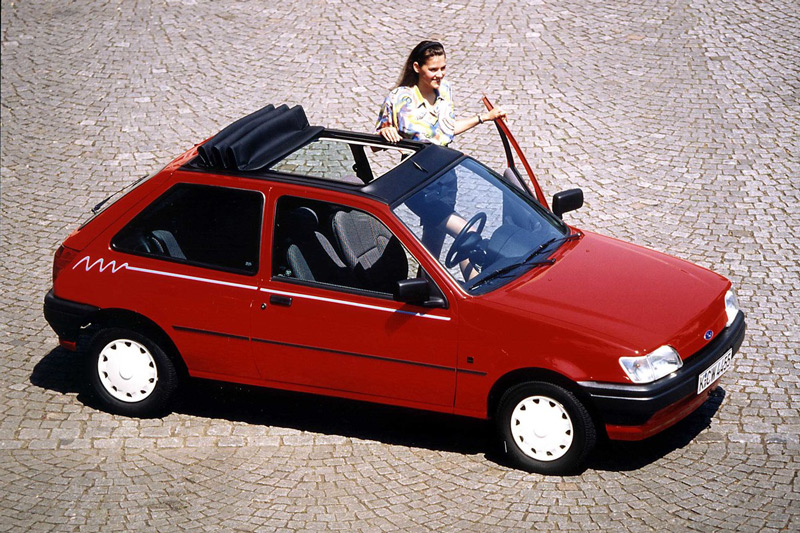
The party is over. Production of the Ford Fiesta will end in June 2023. And for those wondering what this news is doing on a classic car website: 47 years after the original start of production, even the third generation of the Fiesta, launched in 1989, is now reaching classic car age.
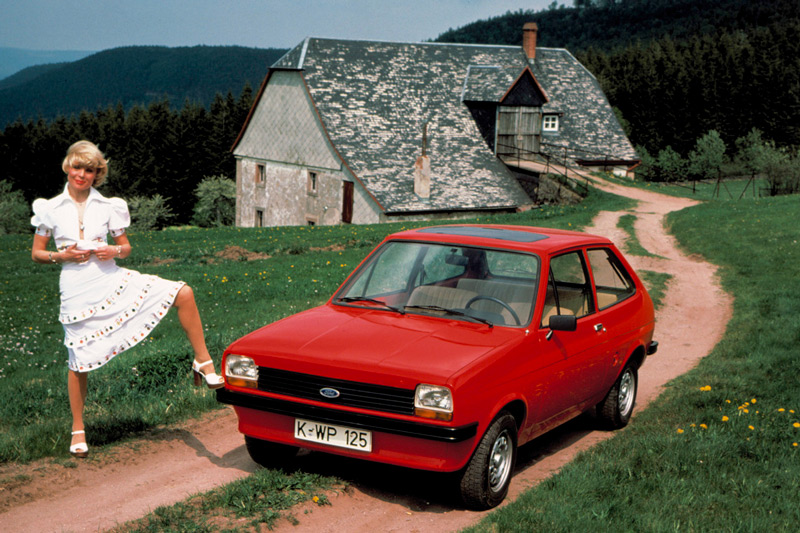
Even if for some critical observers it may only be the two-and-a-halfth, model updates and model changes cannot always be separated with surgical precision in the history of the Fiesta. Launched in 1976 as a pure and angular model, the second generation followed after "only" seven years in 1983, somewhat rounder and with many modified parts, albeit on the same basis. More far-reaching structural changes were not made until 1989.
For those who don't have the Fiesta on their radar as an innovator, it was sometimes a leader in the German competitive environment, especially in 1984 with the first diesel engine in its class and in 1987 with an automatic transmission. It functioned continuously with two conical pulleys and a push link belt, whereby the word "thrust" remained an empty promise. The diesel did not satisfy dynamic demands and the automatic transmission certainly did not.
The German segment colleagues VW Polo and Opel Corsa were later with both. The Corsa as such was only available from 1980, the Polo from 1975, as a kind of historical continuation of the Audi 50, which had already appeared in 1974 and was not part of the portfolio. In other words, it never fitted into the Audi range, which was later proven once again with the A2 and A1. But Audi's rather hapless experiences with small cars deserve to be honored elsewhere.
Even looking outside the box to the neighbors with real small car expertise, i.e. Italy and France, is surprising. Fiat Uno diesel? Yes, from 1983, Renault 5 Diesel only from 1985 in the second generation. Automatic? From 1979 in the Renault 5 with a classic torque converter, in the Fiat Uno there was a similarly creepy, continuously variable automatic transmission as in the Fiesta, but only from 1989. The small car nations had not set any trends that the Fiesta would have missed out on.
Nevertheless, very few people had the Fiesta on their radar as an innovator. However, no one will take away its reputation as the first world car in the Ford Group. The idea of producing a standardized answer to the mobility requirements of the most diverse nations never really caught on. But Ford was not the only one to try it repeatedly, and the Fiesta was the first model in a series of experiments that continues to this day.
The history of this always solid small car, which is only innovative at second glance, is now coming to an irrevocable end. The last Fiesta will be built in June 2023, and can still be ordered, albeit only as a five-door model. Production began in Valencia at the time, but the Fiesta is now only built in Cologne, more precisely in the Niehl district. In the plant that the then Mayor of Cologne, Konrad Adenauer, had courted Ford-Werke to build in 1930, the traditional engine production and Fiesta assembly will be discontinued in around seven months. The combustion engines will then come from the Romanian Ford plant in Craiova. Adenauer's Ford plant will become the "Cologne Electrification Center". Ford is not yet revealing which electric Fords will then be built on the Rhine. One thing is clear: the Fiesta is over - terminado.
P.S. An extensive Ford Fiesta review was published on zwischengas to mark the 40th anniversary of the Ford Fiesta.