On the wrong track - when politics dictates the technology

It is well known that the electric car timetable has been set by politicians; the EU, for example, only wants to register new electric cars from 2035. Even more ambitious targets have been set in various countries. These new cars should be emission-free and low in CO2, which is certainly a good objective. But of course it cannot be implemented 1:1. Even an electric car produces emissions, e.g. particulate matter (tire abrasion, brakes) or noise (up to 20 km/h even enforced by the registration regulations). In addition, electric cars cannot yet be manufactured CO2-free and disposal is a completely different matter. In fact, the construction of an electric car is even more energy-intensive than that of a car with a gasoline engine, which is mainly due to today's complex (and expensive) battery technology. For this reason, a considerable number of kilometers must first be covered before the electrically powered vehicle can overtake its competitor with a combustion engine in ecological terms. However, politicians are ignoring much of what we actually know today. Instead of motivating car buyers to buy the "ecologically correct" vehicle by means of taxes, subsidies and framework conditions, the technology was specified or another was condemned.
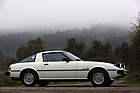
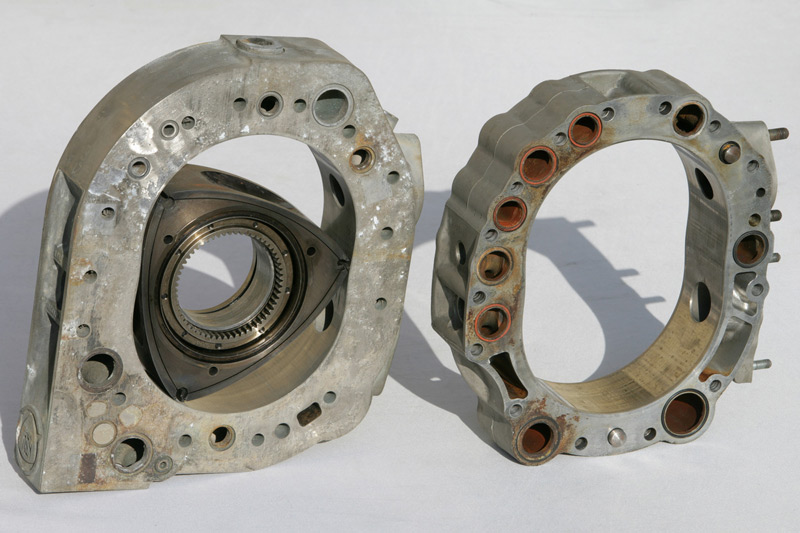
Now imagine if, in a similar euphoria and with good motives, the same had been done around 60 years ago. The Wankel engine could certainly have been specified as the right drive technology back then, as this engine was quieter, less vibrating, more compact and also simpler in design, i.e. consisting of fewer parts. A legislative decree could have required that only new cars with rotary piston engines would have been registered as of 1975. The "Schüttelhuber" would have been banned. Of course, this would have led to disaster, because we know today that the Wankel engine is not necessarily the best drive technology and the classic piston engine has made progress in the last 40 years that nobody would have dreamed of back then. The fact that a modern four-cylinder two-liter turbo engine today can easily produce 400 hp and only a fraction of the exhaust fumes of a 2CV two-cylinder boxer from 1965 is quite impressive.
Thank goodness, however, that 50 years ago politicians insisted neither on the standardization of the Wankel engine nor on the implementation of gas turbines or nuclear power units. They simply tightened the framework conditions from time to time and the engineers rose to the corresponding challenges. Why deviate from this tried and tested path, given all the problems that such a drastic technological change as the one we are currently experiencing can trigger?
P.S. This is not to question the efficiency or the advantages of electric drive systems. When used correctly, electric cars can actually be significantly more environmentally friendly and even more comfortable. However, we probably won't save the world with three-ton cubes with three motors, 600 hp and more ...