Plea for a classic car with soul

Recently, there have been heated discussions (also) on zwischengas.com about how electric cars will develop, whether they will/can really catch on and what the effects will be on classic cars and youngtimers.
Our reader Christof Bergmann has written a very well-founded commentary on this, which many other readers may not have seen, but which summarizes very well where we stand today with electric cars and where the problems lie.
Here is Bergmann's analysis of the situation:
"The fuel cell is already largely mature. And this technology - as it looks now in purely technical terms, absolutely not driven by politics or the market economy - will not be what drives passenger cars in the future. The future of the passenger car is battery electric. This is becoming clearer by the day. What is still lacking, what has always been lacking and why the combustion engine has been able to continue its century-long triumph is: the battery. The battery has always been the Achilles heel of the electric car (as early as 1882, by the way, when two Englishmen, almost five years before Carl Benz, put an astonishingly similar electric car on three wheels).
Now finally - through evolution, not revolution - a battery technology is on the test benches that will make the battery competitive in terms of energy density, power density (minimized charging times!), operational safety, service life and price level. In the near future (widespread and affordable from 2027), the electrolyte of Li-ion cells will be a new one, a so-called solid electrolyte. With falling prices from around 2035, the battery electric car will then make the combustion engine superfluous or even pointless, even without political decisions.
However, we do not have enough renewable, green energy. And that is exactly what we have to make do with. This is where the big difference between batteries and fuel cells comes into play. At its optimum point, a fuel cell today has approx. 60% efficiency (overall system sometimes only 50%). This means that 40% of the energy content of the hydrogen is lost in heat. Consumed. For nothing. A battery has 99% efficiency. An electric motor approx. 97%, the inverter now also almost 99%. In other words: with a battery electric vehicle, we only consume approx. 4-5% of the valuable energy during operation! What's more, the production of hydrogen from renewable sources has so far been associated with enormous losses, which is why around 95% of hydrogen currently comes from the petrochemical industry ... As far as CO2 emissions during production are concerned, fuel cells with their complexity and batteries (with their weight) are not much different.
However, from today's perspective, there are limits to battery technology. The battery will not have a particularly good weight density in the future either. It takes a lot of energy to transport large loads over long distances. With today's technology, a 40-ton truck would need around 40 tons of battery for 1200 km. So there is hardly anything left over for the transported goods. But even with newer technologies on the horizon, things will only improve to a limited extent. You can't put a 20-ton battery on a truck. You can't fit a 500-ton battery into an airplane. This is why large loads and long distances ("the long haul") are likely to become the domain of the fuel cell.
For comparison: Optimized combustion engines today have an efficiency of approx. 40% at their most efficient point. 60% of the energy is therefore not converted into drive power. The potential for improvement has already been largely exploited over decades (in the case of the fuel cell, there could theoretically and physically be a further 10-20%). For this reason, e-fuels are unlikely to win the race for new cars.
At present, all of this must still be seen in the subjunctive and with reservations: Firstly, the solid electrolyte for cars is not yet in series production. However, the risk that something will happen along the way is minimal. Secondly, when the first (expensive) solid electrolyte e-cars come onto the market around 2024, the infrastructure will reach its limits! Where will I be able to charge a car with 1 megawatt of electricity? Not to mention the requirement to charge five cars with megawatts of electricity each at the same time! That won't be possible by 2024, or at most in exceptional situations.
At the same time, discussions are underway to run the entire energy budget on hydrogen. Electricity grids have clear limitations in terms of energy density and also have considerable losses. If hydrogen is used to transport energy, cars could actually be powered by fuel cells in the future.
The reverse would then be the case: fuel cell technology would then be the bridging technology until the (charging and energy distribution) infrastructure functions properly and enables low-loss transportation.
Why no technology is converging today is quite simple: the electric car practically ceased to exist in 1912, with the invention of the electric starter motor, and it was not until 2013, with the start of Tesla production, that significant progress was made again in the application of battery electric drive technology. Today, we are where the combustion engine was in the 1920s to 1930s!"
This sums up the situation and development progress pretty well. Production problems (transition from combustion engine vehicles to electric cars) and the issue of scarce raw materials and unacceptable conditions in their extraction should be added. Here too, solutions will be found and batteries are already working in the laboratory that make do almost exclusively with widely available raw materials.
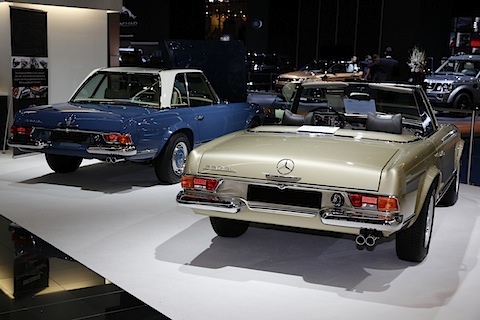
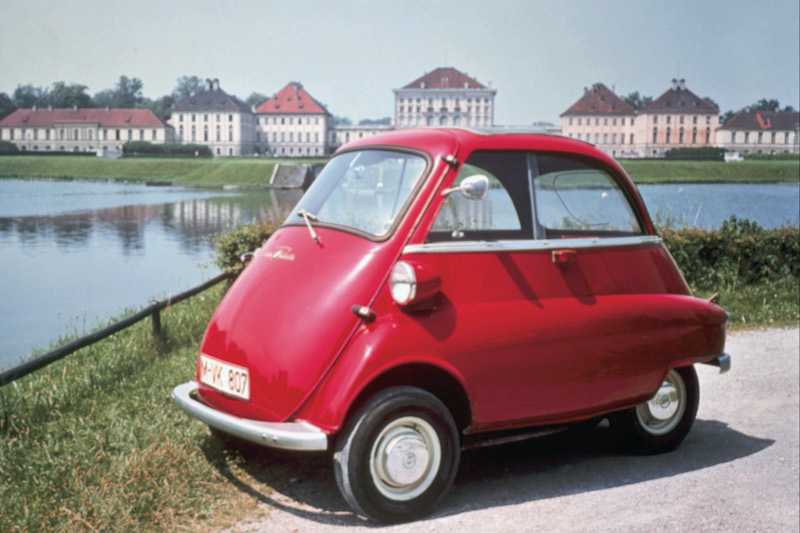
If we now assume that the future belongs to the battery-electric car, then further questions naturally arise from the perspective of car and classic car enthusiasts. For example: should you convert your classic car to an electric motor so that you can still drive it in the future? Won't the classic or vintage car lose its soul during the conversion?
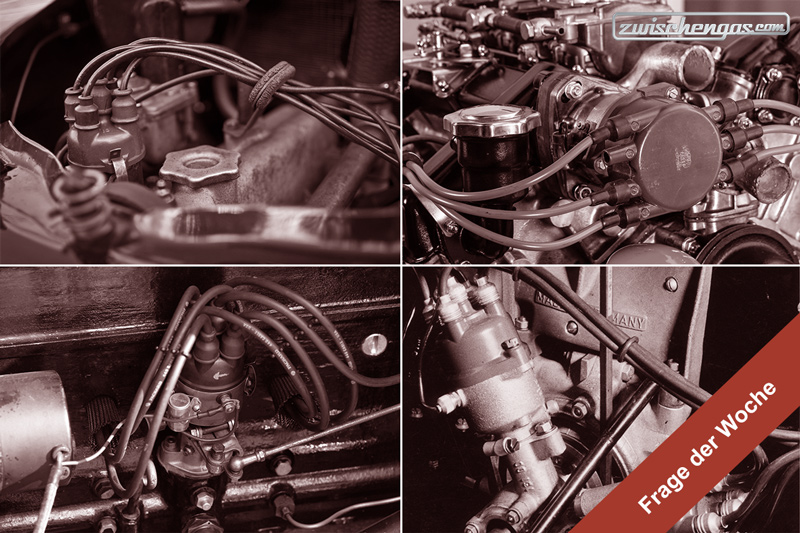
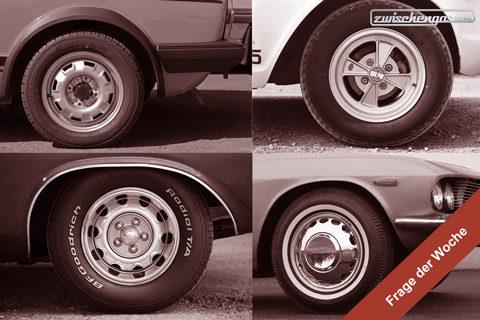
Here, too, opinions differ widely. For me, the "soul" of a classic car is much more than just the engine. It's all those aspects that give an old car its character and special features. This includes the gearshift and the clutch (if present) as well as the feel of the controls, the shaking of the gauges, the clicking of the indicators or the sounds of the starter, suspension and brakes. All this is part of the soul of the old car. Replacing the drivetrain removes many of these characteristics from the old car, often leaving behind an almost soulless vehicle. Of course, you can drive it around with a reasonably clear conscience and it is unlikely to annoy other people, but the essence of the old car, which consists of much more than just the shape and the seats, is at least partially lost.
Let the old cars keep their soul? If necessary, ride a bike or take the streetcar in everyday life, eat less meat and go without a vacation flight, but don't rob the old cars of their soul!