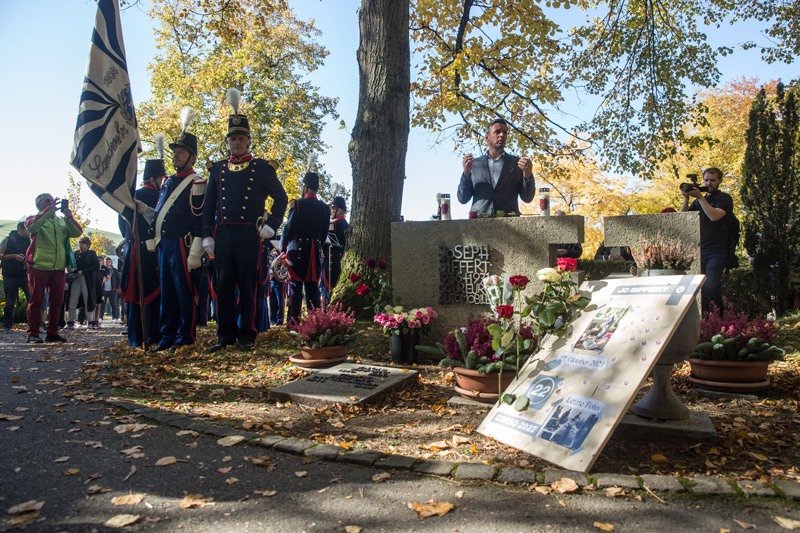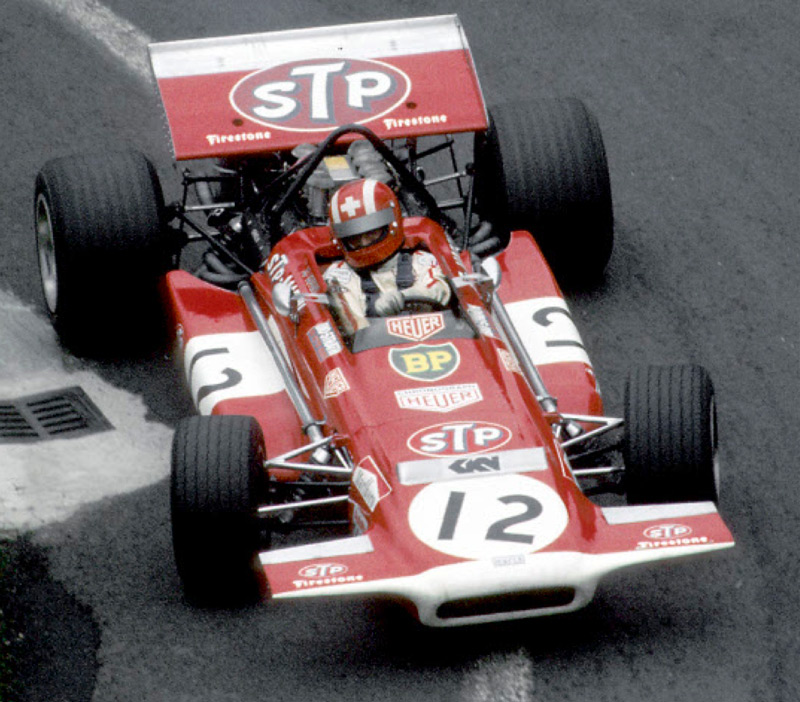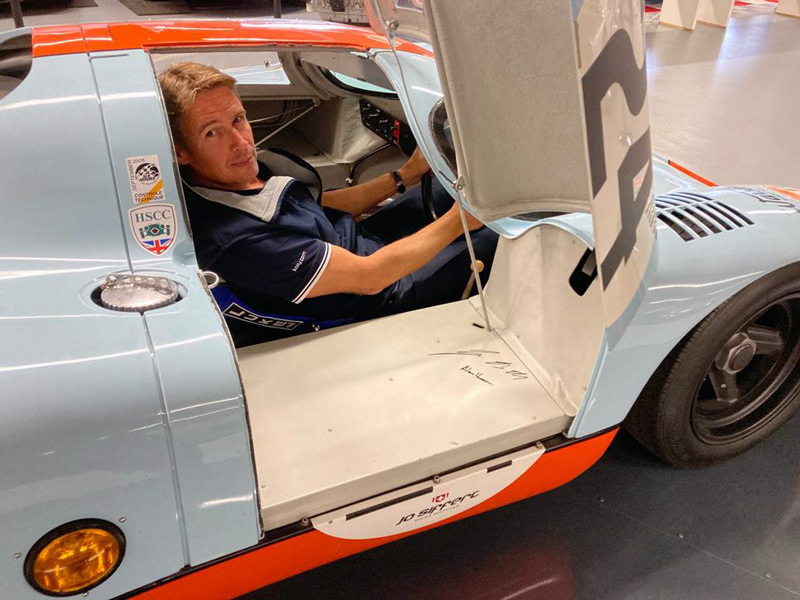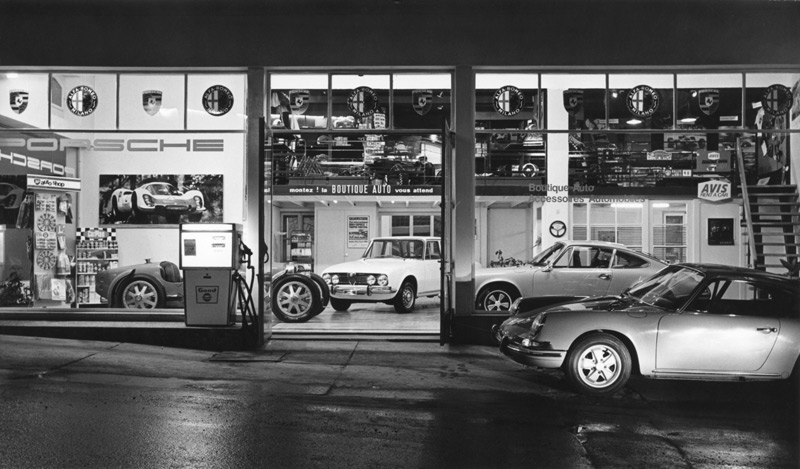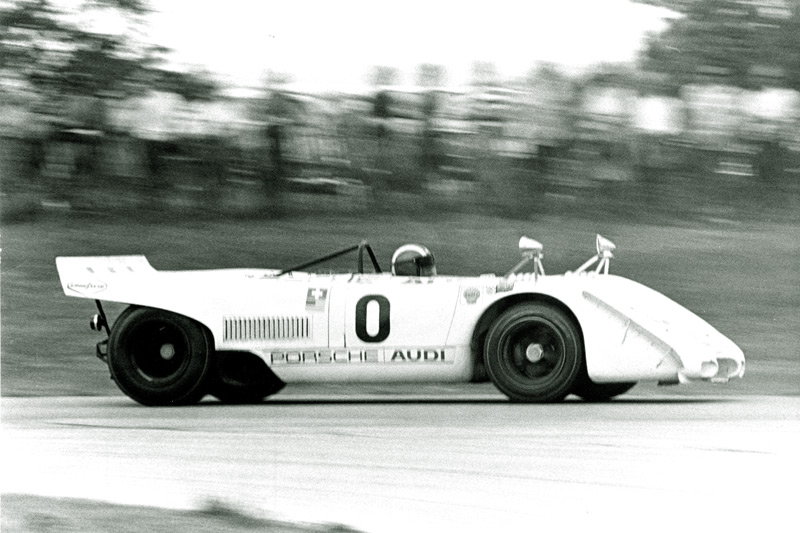
There are events when time stands still. And everyone can still remember the exact moment later. October 24, 1971 was such a date. The (Swiss) racing world held its breath and fell silent: on Sunday afternoon, Jo "Seppi" Siffert died in a fatal accident in a non-championship Formula 1 race at Brands Hatch - on the very circuit where he had celebrated his first major victory three years earlier.
Several reports on Jo Siffert have already been published on zwischengas.com, shedding light on his life and achievements:
Sunday morning on October 24, 1971 in Culver City, a district of Los Angeles - the CanAm home base of Jo Siffert with Edi Wyss and Hugo Schibler. The phone rings at the Holiday Inn where they are both staying. Wyss picks up the receiver and hears the impassive voice of Vince Granatelli, the son of STP boss Andy, through the receiver: "Jo had a serious accident at Brands Hatch, he didn't survive". 50 years later, Wyss still remembers that exact moment - as if it were only yesterday!
Within seconds, all the plans and projects that Wyss had agreed with Siffert for the coming period were shattered: the conversion of the Porsche 917/10 CanAm Spider for the 9-hour race in Kyalami was halted, as were preparations for the 1972 season. In shock, Siffert's manager Paul Blancpain (1943 - 2019) calls Edi Wyss and confirms Granatelli's phone call. "It's like this, take an inventory of everything, then come back to Switzerland," he instructs the two of them.
After Bruce McLaren, Wyss experienced Siffert's death as a racing driver for the second time in 16 months. "It was a wild time with unbelievable 'safety standards'. There was nothing, no safe fuel tanks, fragile chassis, unsafe tracks without crash barriers - usually still lined with trees, marshals whose fire extinguishers certainly didn't work when it mattered! It's hard to imagine it all today," says Edi Wyss, looking back. And yet he would not want to miss this time: "They were crazy and intense times, in a fascinating sport, constantly at the limit," is how he characterizes this period of his life.
The Zurich native had followed Siffert's career from afar right from the start. The young automotive engineer Edi Wyss really noticed Jo Siffert in 1968 at the "Daily Express Trophy", a Formula 1 race in Silverstone that was not part of the World Championship: "After completing my engineering degree, I went to England to learn English, went to this race and was completely fascinated. It was my key experience, it was clear to me - that's where I want to stay". He dropped by Siffert's team in the paddock and expressed his interest in a job in the Formula 1 scene. The Fribourg racing driver was unable to offer him anything and advised him "like a sturgeon shoemaker", as Wyss recalls, to go from team to team and ask for a job. He finally ended up at McLaren six months later via Joakim Bonnier's private team.
"I met Siffert again at the two Grand Prix in Canada and the USA in 1968," says Wyss. A small Swiss colony formed at the races with the journalists Adriano Cimarosti, Ernst Graf and Siffert - who was always accompanied by his mechanic Jean-Pierre Oberson and the artist Jean Tinguely - and Edi Wyss. The encounters intensified.
![Jo Siffert im CanAm-Porsche 917 im Jahr 1969]()
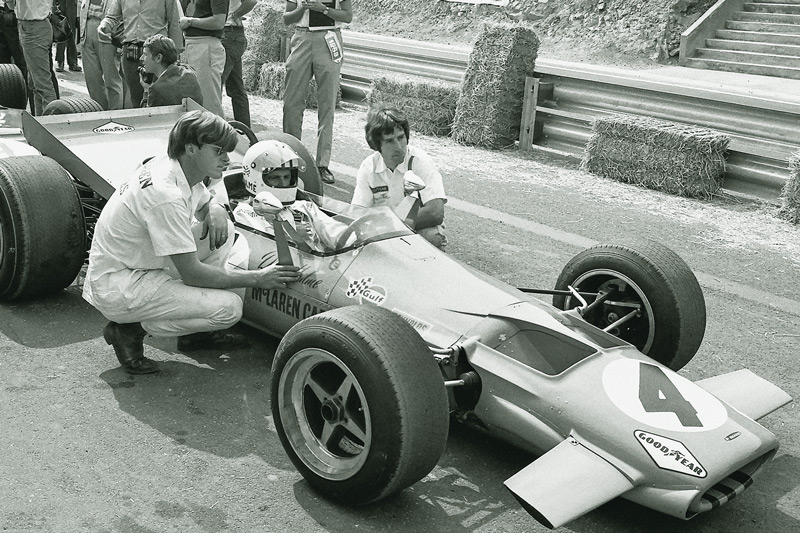
Siffert drove several CanAm races overseas for Porsche in the 1969 and 1970 seasons, while Wyss helped look after the McLaren CanAm cars for Bruce McLaren, Denis Hulme and Peter Revson. At the Targa Florio in May 1971, Siffert asked the Zurich car engineer, who was now driving the Lola T210 and David Weir's Ferrari 512 M, if he would like to come to the USA with him in the summer to race his new Porsche 917/10 in the CanAm. They agreed to talk about this topic again at Le Mans in June. There, Siffert revealed his deal with Porsche to Wyss: he had negotiated a preliminary contract with Ferdinand Piech. If he was not at fault for a possible retirement at Le Mans, he could purchase a Porsche 917/10 (rolling chassis) for 65,000 US dollars and enter it in the CanAm. He would have to pay for the entry himself, Porsche-Audi USA would cover the team's expenses. He then promptly dropped out "innocently" with crankshaft damage to his 917 - the deal with Porsche was perfect!
Wyss was looking forward to the races with the Swiss driver. "Siffert was already a star in those years. He was certainly one of the absolute 'top five racing drivers' in the world - this after he had made incredible personal sacrifices to get this far in the first place," recalls Wyss and continues: "He was a racer, always fast, no matter which car he was in. If something wasn't working properly or there was a lack of engine power, he would sometimes drive with a knife between his teeth...".
Wyss got to know the Swiss racing driver really well in Siffert's small CanAm team. One week after the 24 Hours of Le Mans, Siffert and Wyss signed the employment contract for the 1971 CanAm season. The plan was to test a Porsche 917/10 Spyder at Hockenheim, then the first race at the second or third race of the season at Mont Tremblant or Road Atlanta. Siffert had prepared in advance, signed sponsorship contracts and set up two bases in Kansas City with Art Bunker and later in Los Angeles with Richie Ginther, so that there were no longer distances to cover in the USA. Everything was very professionally prepared and organized!
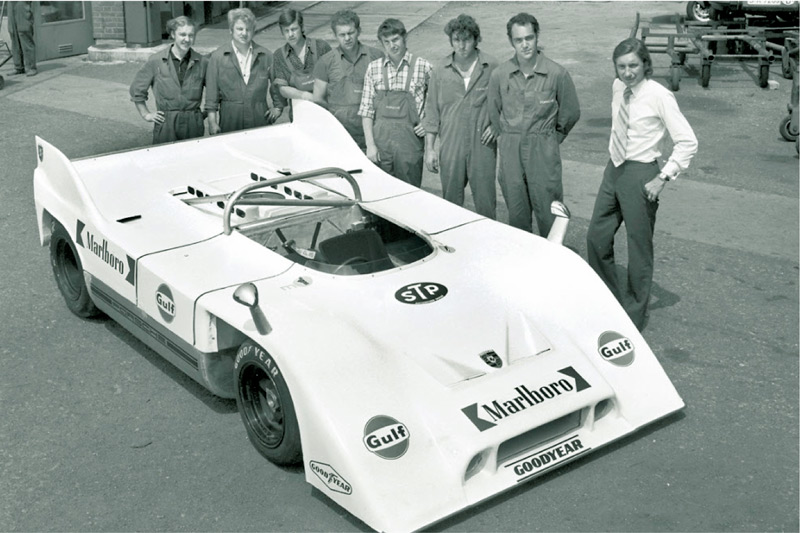
![Jo Siffert und der neue Porsche 917/10 im Jahr 1971 (© Porsche AG)]()
At the end of June 1971, Siffert sent Edi Wyss to Stuttgart with the task of "picking up the CanAm Porsche". When he arrived there, there was no sign of a racing car! He had the noble task of assembling the Porsche himself and doing it as quickly as possible! "Three weeks of hard work awaited me and the Porsche helpers until the tubular frame chassis was welded together. Then the 917/10, still white and provisionally covered with the stickers of the sponsoring companies, was ready for test drives in Hockenheim - after a delay of a few weeks it was shipped overseas. Instead of entering the CanAm at the second race of the season, the team only made its debut at the fourth race in Watkins Glen," says Wyss.
However, Siffert, Schibler and Wyss had to wait until then. "We waited for days at the hotel pool in Boston for the Porsche to finally arrive. It wasn't until the afternoon before the first practice session for what was now the fourth race that the time had come. We picked up the race car, drove all night and arrived at Watkins Glen in the morning, exhausted but in time for the first practice session," says Wyss, describing the Swiss team's CanAm debut. Not everything worked out yet, Siffert complained about the handling, it was only enough for ninth place on the grid, to the surprise of the McLaren crew, who were used to success, Jackie Stewart was at the front with the Lola-Chevrolet of the Haas team.
Together with Porsche engineer Helmut Flegl, whom Siffert had hired especially for the opening race, a remedy was found. Flegl and Wyss looked for a mechanical workshop in Watkins Glen on Saturday afternoon (!) after the final practice session and found what they were looking for. "The inventory of 'Frost Engineering' was more reminiscent of a museum than a serviceable workshop. Flegl found an ancient lathe, 'Frosty' - the owner, skillfully centered the shock absorbers, made the groove - and was done. It would have taken me much, much longer," says Wyss, still admiring the craftsmanship of the old company owner, while he was shortening the titanium springs with a cutting torch. Siffert reacted positively to the changes. McLaren drivers Revson and Hulme celebrated the expected one-two victory, with Siffert joining them on the podium in third place!
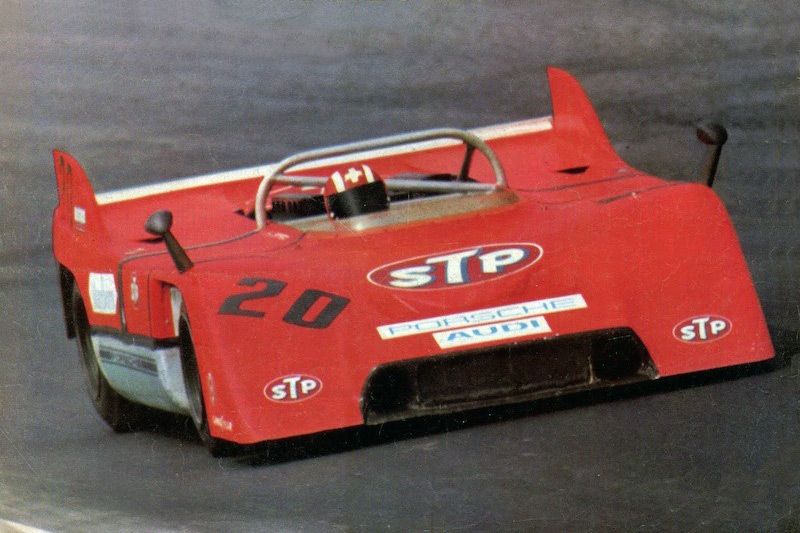
Siffert had another problem to solve at Watkins Glen: his white CanAm Porsche was to be given the special STP bright red livery of his main sponsor between practice and the race. "We never believed it would work," laughs Wyss. None of them had reckoned with Nat Reeder's cool-headedness. The STP man collected the body parts for the Porsche 917/10 on Saturday evening, looked for a paint shop in Watkins Glen and actually turned up at the race track the next morning with the bright red parts! Siffert personally made sure that all the sponsor lettering was applied in the right size and in the right place.
![Porsche 917/10 im STP-Look]()
The continuous, bright red was then occasionally supplemented with blue at other races. "We only had one hood. If Siffert damaged the hood during small excursions, we couldn't fall back on the original STP red. This was reserved for the official STP man Nat Reeder. So we had to use the blue from the best available color pot," smiles Wyss.
"Siffert trusted Hugo Schibler, with whom I looked after the Porsche, and me with everything. The man from Fribourg received an Audi saloon or a Porsche 911 from Porsche-Audi USA. When he arrived at the racetrack, he wanted to know exactly what we had prepared and whether everything was in order. He had an absolutely professional attitude and demanded the same from those around him," Wyss sums up. He rarely lost his composure. Wyss can only remember one incident where he of all people was to blame: "During the race in Minneapolis, I didn't calculate the fuel consumption correctly. Shortly before the end of the race, Siffert was in third place behind the unbeatable McLaren of Revson and Hulme. Hugo and I were already looking forward to the prize money. On the last lap, Siffert ran out of gas and third place ultimately turned into fifth place. Siffert came into the pits after crossing the finish line, swearing "Nom de Dieu, M...rde, eh bien, j'ai dit!". After a short time, the anger was gone...".
Edi Wyss also experienced Jo Siffert's business acumen at first hand: "At the race in Elkhart Lake, Siffert took second place ahead of all the other McLaren drivers behind Peter Revson, he had sponsorship negotiations with oil companies. Porsche stipulated that Shell was to be used. Whether another company stuck its badge on the racing car didn't matter to the Stuttgart-based company. In his camper, Seppi received company representatives from two different oil manufacturers at the same time. He made it clear to them: 'I'll close the deal with whoever is prepared to pay more!
The mood of the small Swiss delegation, which was visited by Siffert fans at several CanAm races, was excellent. "Siffert was a racer. Always trying to get the maximum out of it and win. He was brave, but never cocky. He had a great technical understanding, perhaps not as extremely great as Bruce McLaren at the time, but he was absolutely 'out-standing'. Siffert demanded professional, serious work from everyone, just as he gave his all in the cockpit. And he was always sociable and correct. We would all have gone through fire for him!" says Wyss.
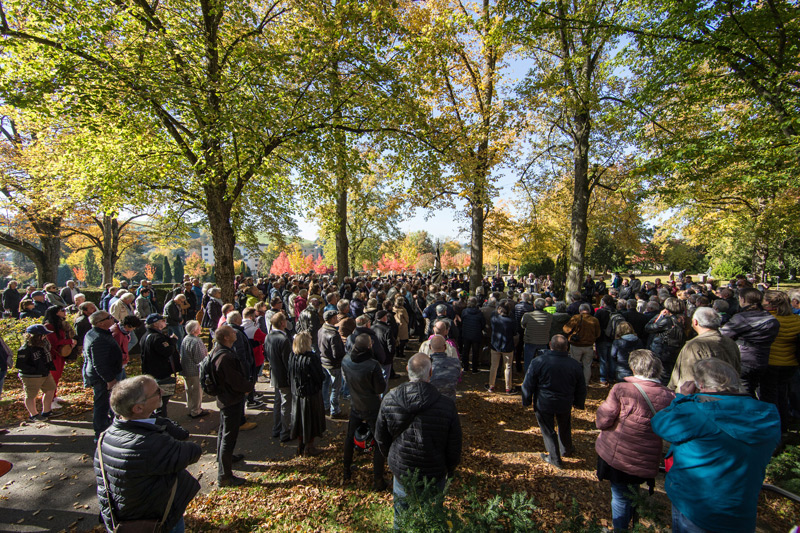
Jo Siffert drove his last CanAm race at Laguna Seca on October 17. He finished in fifth place. They said their goodbyes and looked forward to the last championship race on October 29 in Riverside, a home race so to speak and only 60 miles away from home base. The fateful Formula 1 race at Brands Hatch on October 24 was scheduled between the CanAm races. Instead of Riverside, Edi Wyss was one of the pallbearers at the funeral of his driver Jo "Seppi" Siffert in Fribourg on October 29...
During these days, Wyss received a telephone call from Tyler Alexander of McLaren - the Swiss was returning to the Indy Car circuits in North America with the Kiwis the following year.
Nobody suspected that the farewell at Laguna Seca on October 17, 1971 would be a farewell for ever.
Profile Edi Wyss
You can't tell by looking at him: In 2022, Edi Wyss will be 80 years old: fit, slim and steeled by countless kilometers on his racing bike every year, usually accompanied by Mary, his partner. After an apprenticeship as a precision mechanic, he studied in Biel and graduated as a qualified automotive engineer. At the age of 25, after a short detour via Joakim Bonnier's private team, he docked with his dream team McLaren. There he looked after Denny Hulme's Formula 1 racing car in 1969 and then had to switch to Andrea de Adamich's McLaren Alfa Romeo a year later. "You are continental and your tools are metric," explained Bruce McLaren. "I also spoke Italian," smiles Wyss.
He looked after the Porsche 917/10 for Jo Siffert for one season in 1971, returned to McLaren, built a Formula 1 car for Tecno, gave a brief guest appearance with Herbert Müller to convert the Ferrari 512 into a CanAm Ferrari Spider, designed the first Sauber with a monocoque chassis for Peter Sauber with the C4 and then had enough of racing.
He concentrated on restoring Ferraris, initially as an insider tip in the scene. Today he is the specialist for the brand with the prancing horse. He has sold his company in Hermatswil (Pfäffikon ZH), but can still be found there regularly - after all, the workshop is only a stone's throw away from his home.
At the moment, he is concentrating on his Abarths (one of his "life loves") and making sure that the Ferrari 365 GT4 2+2 for his Mary finally gets back on the road.
If you would like to find out more about Edi Wyss, please refer to the exciting book "The Swiss Wiz: Edi Wyss - A life with racing and sports cars " .