Jacques Deschenaux remembers Jo Siffert
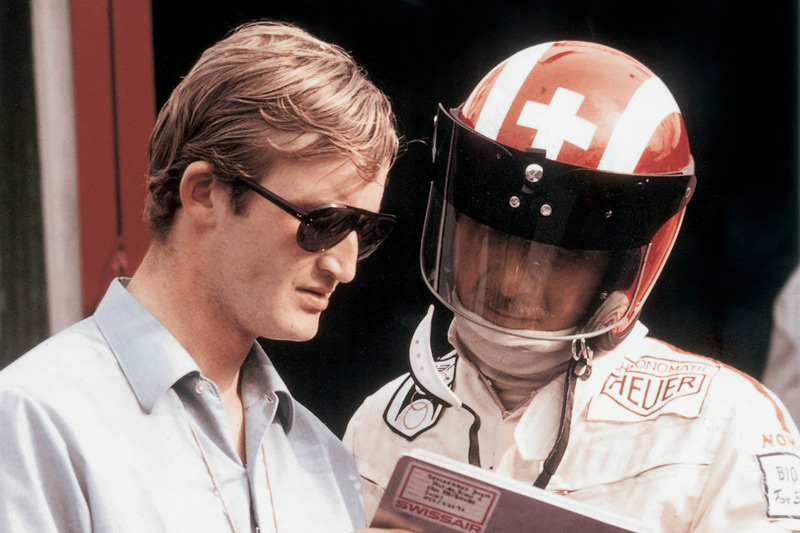
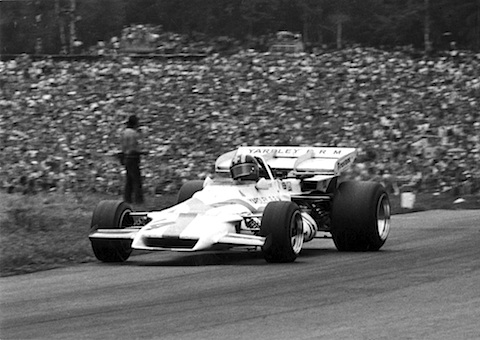
There are events when time stands still. And everyone can still remember the exact moment later. October 24, 1971 was such a date. The (Swiss) racing world held its breath and fell silent: on Sunday afternoon, Jo "Seppi" Siffert died in a fatal accident in a non-championship Formula 1 race at Brands Hatch - on the very circuit where he had celebrated his first major victory three years earlier.
Several reports on Jo Siffert have already been published on zwischengas.com, shedding light on his life and achievements:
- Jo Siffert, the exceptional Swiss talent
- Jo Siffert - Death at the peak of his career
- Mario Illien, Prof. Dr. Ferdinand Piëch, Klaus Bischof, Jacques Deschenaux and Paul Blancpain on Jo Siffert
Jacques Deschenaux still remembers October 24, 1971 as if it were only yesterday, even though it was 50 years ago: "I heard about Seppi's death at Fribourg station, where I had just returned from Bern. I think it was the worst and saddest moment of my life after the death of my mother.
His first contact with Joseph Siffert dates back to 1963. "I was 17 and a half years old, a high school student in Fribourg and asked Jo Siffert, whom I had seen a few times but didn't really know, if I could accompany him to the Ollon-Villars hill climb. To my surprise, he agreed. In Villars, the organizers had put him up at the Hotel Palace and I slept with a friend. We returned to Fribourg on Monday," recalls Deschenaux. It was the beginning of a friendship that lasted for years. Despite his great involvement with Siffert, Deschenaux completed his A-levels, went on to study law and graduated in 1970. "We got on really well right from the start. He passed on his passion for motorsport to me. I admired his courage and determination. He probably liked my enthusiastic attitude," says Deschenaux, describing their relationship.
Over the years, Deschenaux took on more and more tasks for Seppi Siffert's team. "I started writing for various newspapers, including the local paper 'La Liberté'. I wrote a column there after every race called 'Siffert tells us'," he recalls. Deschenaux attributes Siffert's popularity, first locally in the Fribourg region, then with a huge, nationwide appeal, to two or three important characteristics. "People appreciated Seppi's friendliness and simplicity. The fact that he worked so hard to finance his passion did not leave them indifferent. They also felt a certain pride in seeing a man from Fribourg and a Swiss man so successful in motorsport. It also reminded many of the time of Toulo de Graffenried and Benoît Musy," explains Deschenaux.
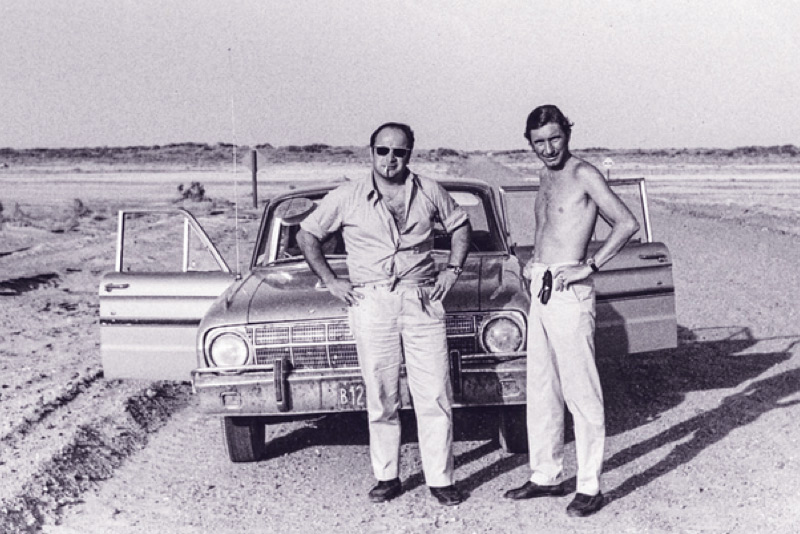
At first only sporadically, then from 1969 onwards on a large scale, Deschenaux accompanied the Fribourg racing driver to the races. "We usually drove there together or went by plane, but rarely stayed in the same hotel.
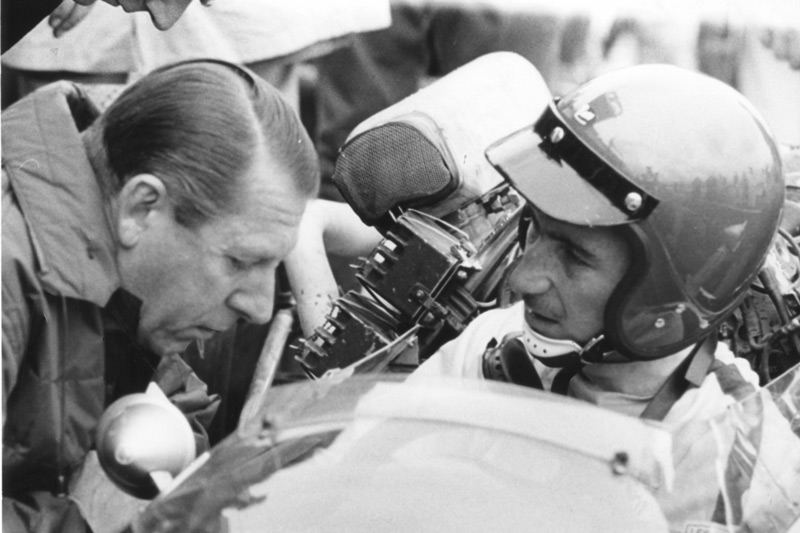
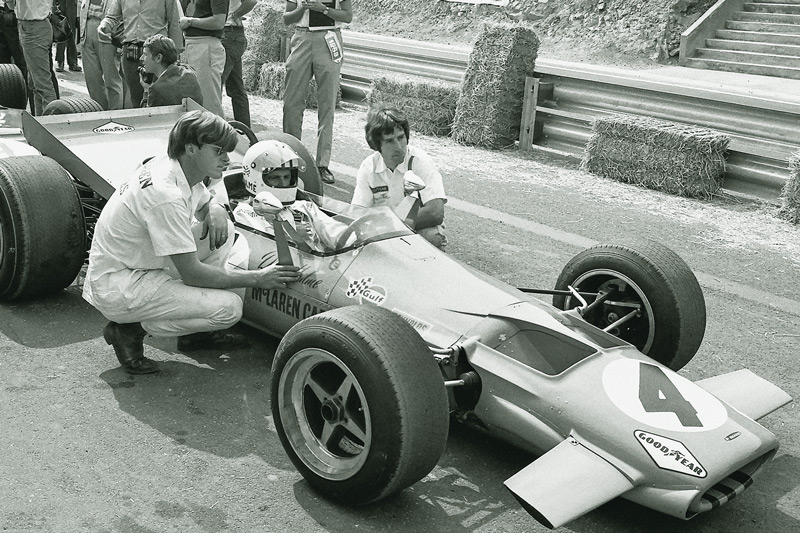
His room was booked by Porsche, Rob Walker or BRM, who also booked him appointments on site," he rummages through his memories. "I did various things for him in the pits and in the paddock. I also put stickers on his cars at the race track, prepared sandwiches, sewed a "Biostrath" signet on his overall and even fetched his rain visor from his hotel during the Monaco GP in 1969. We always met up for dinner in the evening. Sometimes he even let me take the wheel on the way back. A small detail in passing: at the 1970 British GP at Brands-Hatch, he asked me to look after a young Blick journalist who was attending a GP for the first time and whose name was Roger Benoit! Three weeks before his death, we were together at Watkins Glen for the USA GP. Siffert finished second behind François Cevert. I had T-shirts with his image on them - after the race I sold everything within 10 minutes. Over the years, my job developed into that of press spokesman. It was a fast and really great time with Siffert," he says.
In Fribourg, Siffert initially ran an Alfa Romeo agency, to which a Porsche agency was added with his status as a works driver. And here Deschenaux can't help but smile: "If I remember correctly, Siffert's Porsche branch was the second-best-selling in the whole of Switzerland after the big Porsche agency in Zurich! He was a tough negotiator, but people really queued up to buy a car from him". In Siffert's garage, Deschenaux "actually took care of a lot or everything", as he says: "I took care of answering the letters from his fans. Sometimes I accompanied him to the factories in Stuttgart or Munich, where each of us picked up a Porsche or a BMW. One day, in 1969, he sent me from Stuttgart to England to pick up a Jensen "4 wheel drive" from Rob Walker and take it to Porsche in Stuttgart. There everything was taken apart to study the functions. The idea behind it: To construct a racing car with four-wheel drive like Lotus, Ford or Matra, at best also a "road car".
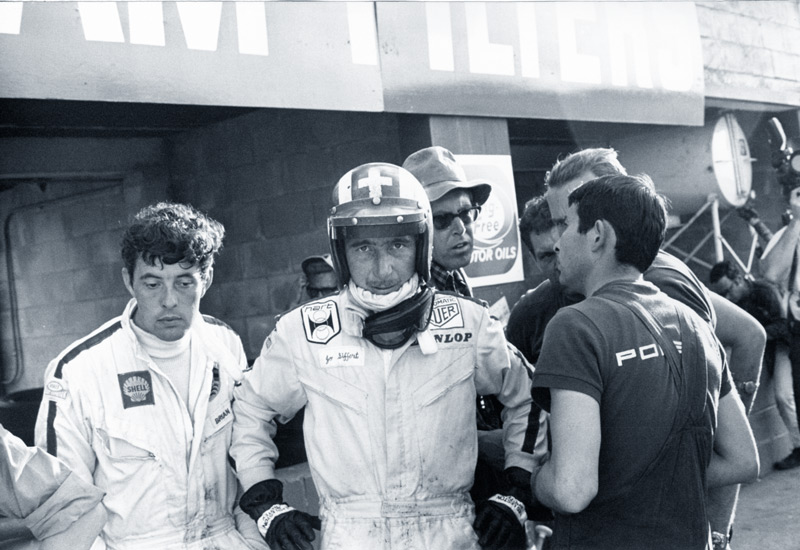
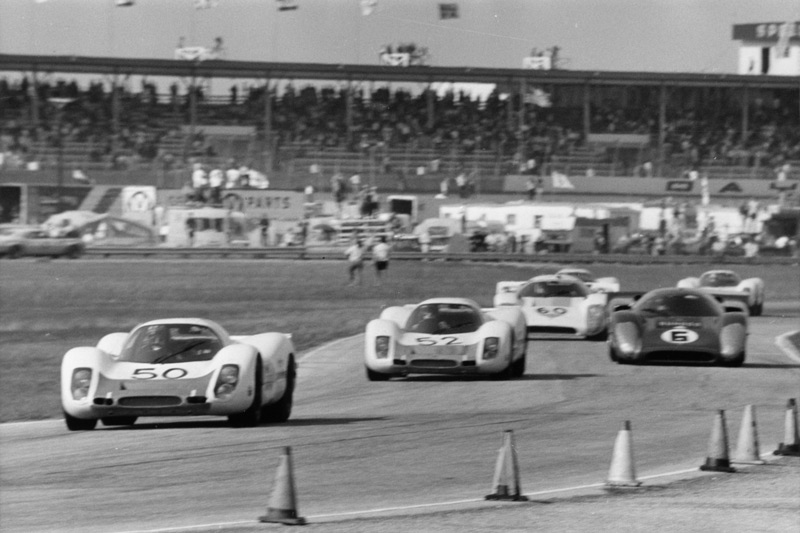
Deschenaux's presence on the racetrack was not always painless. He notes that "Siffert always wanted to win. That was what drove him". He still remembers the epic duel with Pedro Rodriguez at the 1000km race in Spa-Francorchamps in 1971: "Seppi battled with the Mexican for laps at the front, the two Porsche 917s touched several times, they crossed the Eau Rouge bend side by side, as they had done the year before - something that couldn't actually work! Nobody wanted to give way. David York, race director in John Wyer's team, resorted to stable management and allowed co-driver Derek Bell to finish the race in Siffert's place and Rodriguez / Kinnunen to win. Seppi was fuming in the pits, furious and convinced that victory had been stolen from him. With hindsight, you realize that York's decision to end the highly dangerous situation between the two drivers was probably the right one - unfortunately to Siffert's disadvantage," says Deschenaux.
Siffert was respected by the various racing teams he drove for. "His commitment to a smooth process was total. What he couldn't stand was when someone didn't do their job well. But his anger soon disappeared. In the team, he respected all the people he worked with. He was a leader who, conversely, was respected and appreciated by everyone," Deschenaux characterizes and continues: "He was tough but fair in sponsor negotiations. And it was thanks to him that Marlboro and Heuer got into motorsport".
From the end of the sixties, Siffert's racing calendar filled up. Up to 40 races were on the program, often even two races on one weekend and only possible with shuttle flights. In June 1971, he flew to Silverstone immediately after the first practice session for the 1000-kilometer race at Spa-Francorchamps on Thursday, qualified his Formula 1 March Ford on Friday, drove the race there on Saturday and returned to Belgium on time to drive the Porsche 917 at the start of the endurance race on Sunday...!
Did Siffert even get out of his "bubble" in this hectic rush and find time for completely contrary things? Jacques Deschenaux also has an answer to this question: "He led a crazy and fast life, but he was very well organized and didn't suffer too much from the time difference (jet lag). His sister Marguerite was his secretary, Paul Blancpain and others I was part of were always ready to support him when he needed us. We were all proud and happy to share his passion and enthusiasm. I witnessed his friendship with the artist Jean Tinguely. Of course, technology and motors were the focus there too, but they were also very good at discussing other things. And then he also found enough time for his family.
Everything came to an abrupt end on the afternoon of October 24, 1971. Jo 'Seppi' Siffert was killed in an accident during a sweepstakes race held in Brands Hatch in honor of Formula 1 World Champion Jackie Stewart. And cruel irony of fate: this race only took place because the Mexican Grand Prix was canceled after the death of Siffert's arch-rival Pedro Rodriguez...
Jacques Deschenaux again: "On the Wednesday before this race, Siffert had told me that he was going to employ me full-time and asked me to write his biography. I wrote this work, which was published in French (Paris), English (London) and German (Motorbuch Verlag in Stuttgart) and actually became an obituary. I was then employed as a journalist at TSR. In an indirect way, I owe Jo Siffert my journalistic activity on television and as a Formula 1 commentator, and I almost feel guilty at the thought that he had to die so that I could pursue my own career. Apart from my family, Siffert is undoubtedly the person who has been most important in my life.