Sir Derek Bell remembers Jo Siffert
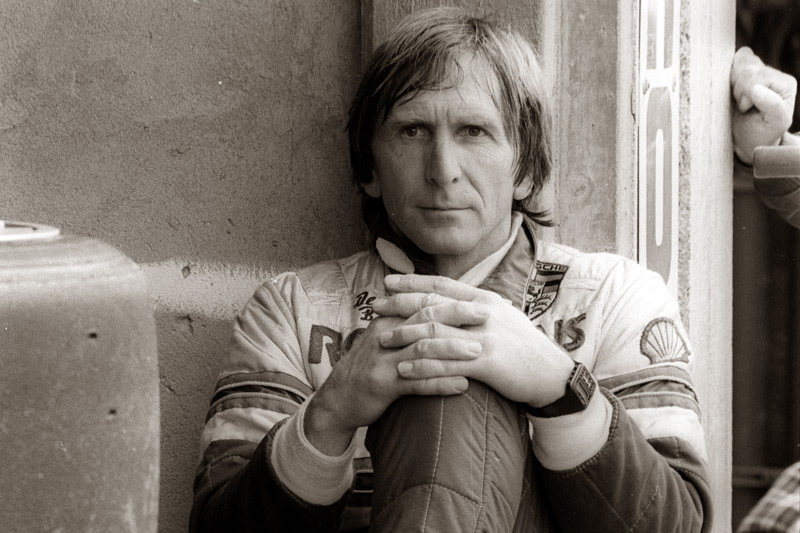
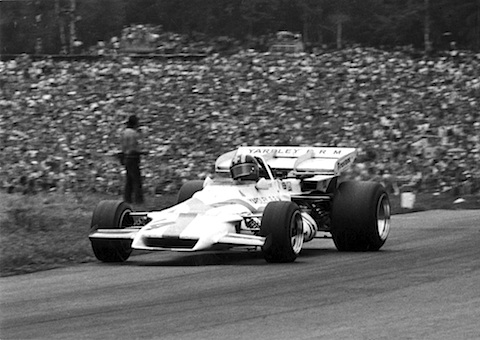
There are events when time stands still. And everyone can still remember the exact moment later. October 24, 1971 was such a date. The (Swiss) racing world held its breath and fell silent: on Sunday afternoon, Jo "Seppi" Siffert died in a fatal accident in a non-championship Formula 1 race at Brands Hatch - on the very circuit where he had celebrated his first major victory three years earlier.
Several reports on Jo Siffert have already been published on zwischengas.com, shedding light on his life and achievements:
- Jo Siffert, the exceptional Swiss talent
- Jo Siffert - Death at the peak of his career
- Mario Illien, Prof. Dr. Ferdinand Piëch, Klaus Bischof, Jacques Deschenaux and Paul Blancpain on Jo Siffert
One of the most successful endurance drivers (5 Le Mans victories alone) is Derek Bell, Member of the British Empire (MBE), who will be 80 years old on October 31, 2021. He shared the cockpit with Jo Siffert for one season 50 years ago - after the highly successful Siffert/Redmann duo with 9 wins in 19 outings in the two previous years was torn apart when Redman suddenly retired at the end of the 1970 season. John Wyer brought Derek Bell, one of his favorite drivers, into the team as Siffert's co-driver.

Before 1971, Siffert and Bell crossed paths in various Formula 1 and Formula 2 races, but also in the one-make world championship. However, they were always rivals. At Le Mans 1970, Bell sat next to Ronnie Peterson in a works Ferrari 512, Siffert in a Porsche 917: "I only really got to know Seppi in 1971, when I became his team partner in the Porsche 917 and Porsche 908". "Of course, I had known the name "Siffert" for a long time," recalls Bell. Siffert and Pedro Rodriguez were great role models for him. And he was delighted when John Wyer agreed to share the cockpit with Siffert for the 1971 season in the endurance races for the one-make world championship, but was also aware "that I had to deliver immediately", he explains, because: "I knew beforehand that Seppi was fast, but I only realized how incredibly fast he was when we shared the cockpit". A look at Sebring times shows that Bell was right to be worried: in 1970, Siffert drove his fastest lap in 2.38.3, Redman's fastest time was 2.37.9. The following year, Siffert's clocks stood still at 2.38.5, Bell needed 2.40.9!
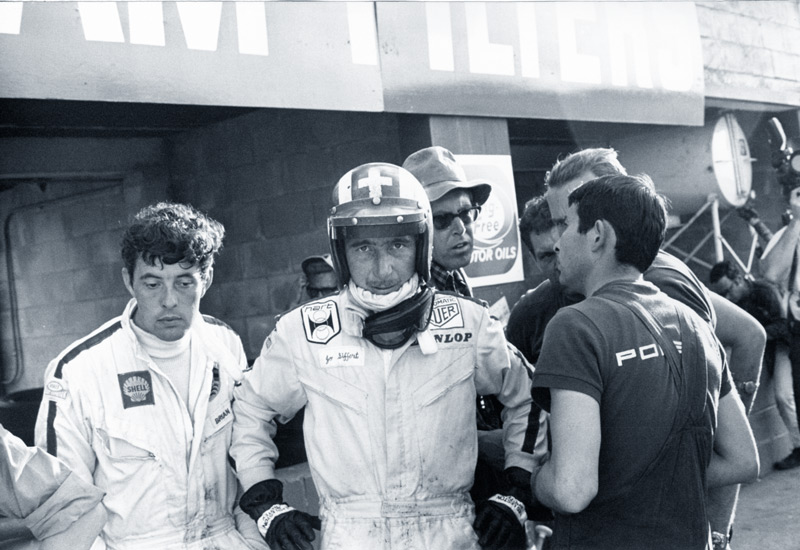
The two quickly became friends: "We had a great time together, but I also learned a lot from him". The pre-season began for the Siffert / Bell team in Daytona with extensive testing - it was the start of the Englishman's long career in endurance racing. "Jo showed me how it's done. I had the greatest respect, because both Jo and Pedro (Rodriguez) were unimaginably fast and I was afraid that this level would remain unattainable for me," he describes his start as Seppi Siffert's co-driver.
But these worries were in vain. It was on the demanding Spa-Francorchamps circuit (still the "old", dangerous 14,100-metre track) that Bell had his finest hour. Practice began on Thursday in 1971, as the Formula 1 drivers had to line up in Silverstone on Friday for practice for the "Daily Express Race", which was held on Saturday, and then immediately return to Belgium for the 1000 km race, which was held on Sunday.

In Saturday practice at Spa, Derek Bell put the Wyer-Gulf Porsche 917 on pole position with a time of 3'16''0. "That's when I realized that I had arrived in this sport and could keep up with the fastest drivers," he looks back with pride. He was ennobled - to Siffert's displeasure on Sunday - when Rodriguez said to him: "Derek, I think it's time for you to ride with me now...!". This statement came to a head as the race progressed: Siffert immediately took the lead after the start. Rodriguez, whose co-pilot had "only" qualified the Porsche 917 for the second row of the grid, replaced the Swiss at the front after lap 10. The two battled for the lead with a one-second gap (!) and even drove through the infamous "Eau Rouge" side by side, with their Porsches touching (Stefan Belloff paid for a similar maneuver with his death in 1985).
Siffert knew that his co-driver Derek Bell was much faster than Jackie Oliver, Rodriguez's co-driver. It was clear to him that they would win the race... Shortly before the end, he was stunned to discover that Bell was suddenly five or six seconds slower per lap and Oliver was the first to drive the 917 over the finish line!
What Siffert didn't know was the instruction that Wyer team boss David Yorke gave his partner Derek Bell: he demanded in no uncertain terms that Bell had to give way to the Rodriguez/Oliver pairing! Bell said in good faith that this deal had been agreed with Siffert. Siffert was furious and utterly disappointed - his new lap record of 3'14''6 (two seconds faster than Rodriguez of all people the previous year) was little consolation. However, Siffert's Spa record still stands: 50 years later, this race lap is still the fastest ever driven on a street circuit with an average speed of an incredible 260.842 km/h!
Bell skipped the next race after Spa-Francorchamps - he had too much respect: "I had never driven the Targa Florio in Sicily, a lap of 70 kilometers! If I had been supposed to do this in a decent way, I would have had to do a training camp in a Porsche 914/6 or similar for at least three weeks or more beforehand. And even then it wouldn't have been certain that I would have achieved competitive times," he laughs apologetically. John Wyer then brought Brian Redman out of retirement in South Africa for this one race - but he only just survived a terrible accident with the Porsche 908/3...
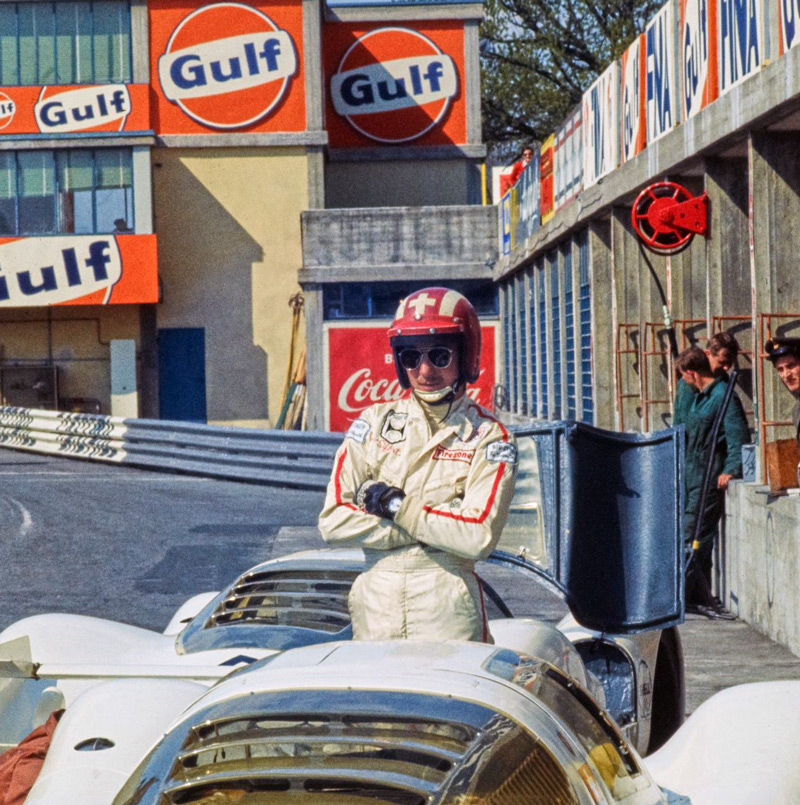
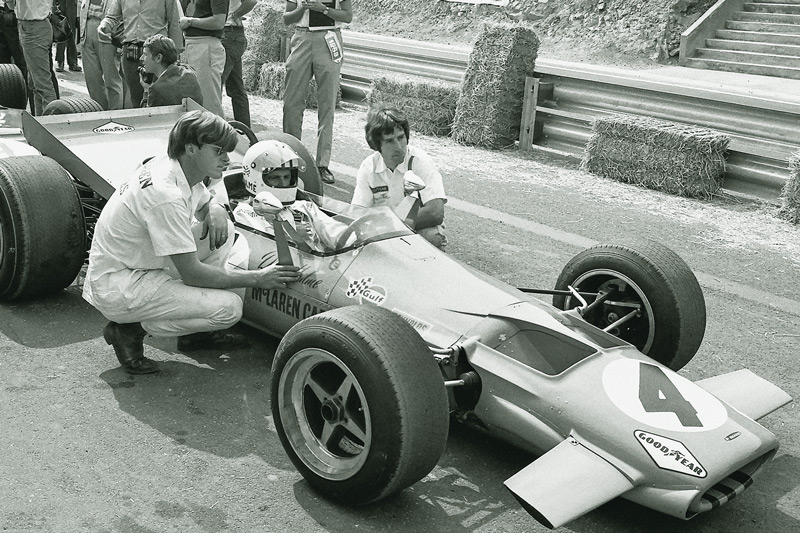
Siffert advised Bell, who had driven haplessly for Ferrari in the Formula 2 European Championship and a few Formula 1 races at the end of the 1960s, to get back into a Formula 1 cockpit so that he could make further progress in his monoposto career. "After a few unsuccessful attempts with poor material in underfunded teams, I let it go and concentrated on endurance racing," Bell looks back. He fondly remembers the time when Steve McQueen's movie "Le Mans" was being filmed. "Seppi was very enterprising and rented McQueen several cars for the movie. Despite the many races he drove, he showed up at Le Mans whenever possible to check everything out. I mainly moved the Ferrari 512 during the filming, which I already knew well, while Siffert and McQueen concentrated on the Porsche 917. "There was plenty of time for a chat with Seppi during the breaks in filming, away from the stress that normally prevails during a race weekend," says Bell. He also got to know the commercial side of the sport: "Siffert always thought about business. He was an example of how money could be made in racing. Thanks to him, I also got to know Jack Heuer, with whom I developed a friendly relationship over the years.
In the 1971 endurance racing season, only the season debut of the Siffert/Bell duo was successful. They won the 1000km race in Buenos Aires. After that, however, only a few more podium places followed. This showed above all that the stablemates Rodriguez/Oliver were preferred by Wyer. And at the end of the racing year, Bell had to brutally realize: "At the beginning of the season I was signed as number 4 in the team, at the end of the season I was number 1! Rodriguez and Siffert died on the race track, Oliver left the team. A shocking baptism in my first big season...". Bell proved in the last endurance race of the year that he was now able to keep up with the fastest drivers. In the six-hour race at Watkins Glen, he drove the fastest lap at 1:08.297 = 205.967 km/h, half a second faster than the pole position time of Mark Donohue in his Ferrari 512.
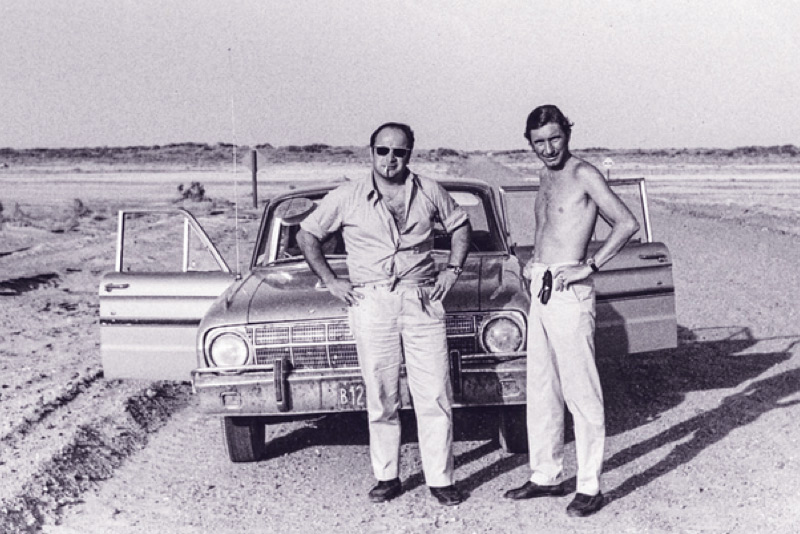
Bell was shocked on October 24, 1971: "With Jo Siffert's accidental death, I lost a friend who taught me a lot," the Englishman summed up after just one season together. "It was a point of honor for me to attend Siffert's funeral. I saw how popular and well-known the Swiss racing driver was - the crowds at the side of the road forming a trellis on his last journey were incredible," he recalls. "It's also nice that I got to know his son Philipp over the years and was able to talk to him about his father," Bell concludes.
Profile of Derek Bell
Sir Derek Bell celebrates his 80th birthday on October 31, 2021. He shared the cockpit with Jo Siffert in a Porsche 917 for just one season in 1971. This stint with John Wyer was the real career accelerator for the Englishman: after two unhappy years with Ferrari in the Formula 2 European Championship and two Grand Prix races, he was left with nothing. Periodic appearances (Surtees Formula 1, sports car racing with a Ferrari 512 and the Formula 2 European Championship in a private Brabham) were the only little he had left for the 1970 season, when a Formula 1 project with John Surtees came to nothing. With a ticket as Jo Siffert's co-driver, Bell made a career restart and over the years developed into one of the world's best sports car drivers. He won the endurance world championship title twice (1985 and 1986). In 26 starts at Le Mans, he won five times and finished on the podium a further four times, which he narrowly missed out on twice with fourth places. Together with his son Justin, he twice shared the cockpit at the 24 Hours of Le Mans (1992 and 1995). He now lives in the USA.