Brian Redman remembers Jo Siffert
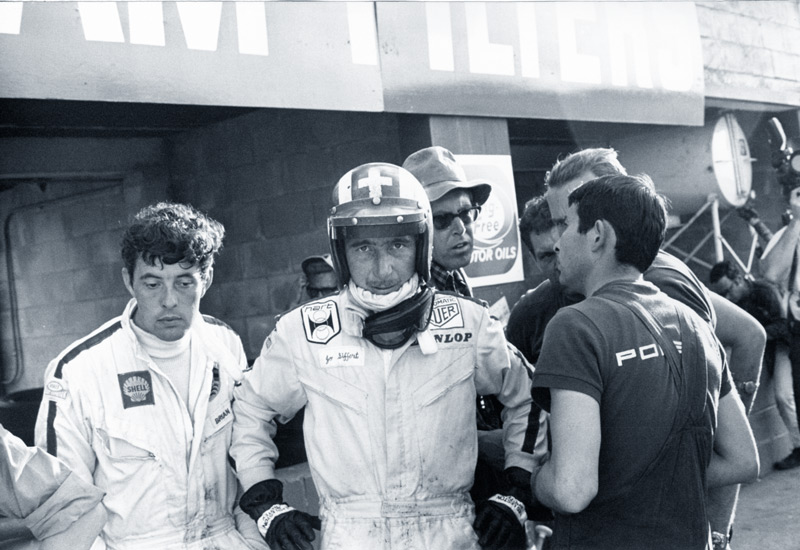
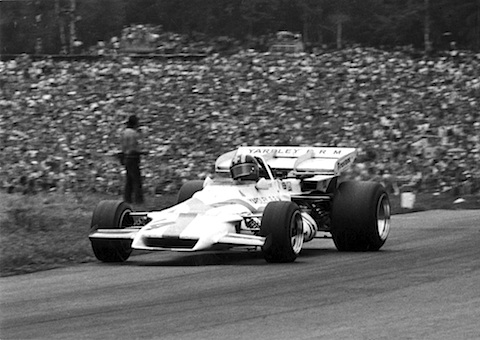
There are events when time stands still. And everyone can still remember the exact moment later. October 24, 1971 was such a date. The (Swiss) racing world held its breath and fell silent: on Sunday afternoon, Jo "Seppi" Siffert died in a fatal accident in a non-championship Formula 1 race at Brands Hatch - on the very circuit where he had celebrated his first major victory three years earlier.
Several reports on Jo Siffert have already been published on zwischengas.com, shedding light on his life and achievements:
- Jo Siffert, the exceptional Swiss talent
- Jo Siffert - Death at the peak of his career
- Mario Illien, Prof. Dr. Ferdinand Piëch, Klaus Bischof, Jacques Deschenaux and Paul Blancpain on Jo Siffert
Daytona 1969, first round of the one-make world championship: the morning after the race, which ended in a mediocre disaster for the Stuttgart team, Porsche race director Rico Steinemann asked Brian Redman whether he would prefer to drive as number 1 in his own car and choose his own co-driver in future or join Jo Siffert's team as co-driver. "Of course, I knew that as number 2 I wouldn't be able to achieve the same merits as number 1, but on the other hand it was a lot of fun to team up with the fastest driver in the Porsche crew. I opted for Seppi because I thought we would win more races. We went on to win 5 of the 10 races together. Siffert also won the 1000km at the Österreichring together with Kurt Ahrens," says Redmann, looking back on a highly successful season that culminated in Porsche winning the one-make world championship for the first time. The good fortune only lasted two seasons for Siffert / Redman.
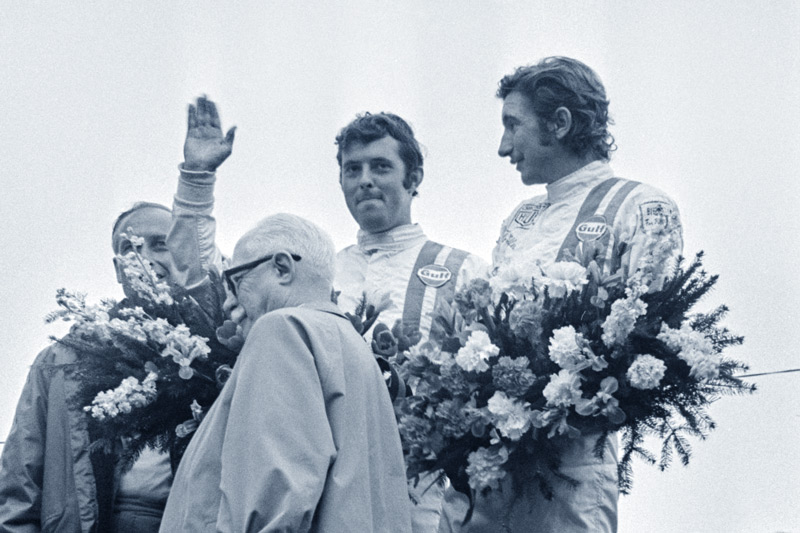
For 1971, Porsche handed over the reins and John Wyer Automotive Engineering was responsible for the Porsche 917 and Porsche 908 entries. "Seppi and I were paid by Porsche and Rodriguez/Kinnunen, who were in the team as John Wyer's dowry, were paid by JWAE," says Redman. This constellation was also reflected in the results. It is easy to see that Rodriguez was Wyer's preferred driver, much to the Swiss driver's displeasure. Siffert / Redman crossed the finish line first three times in 1970, Rodriguez / Kinnunen four times. And there was a great internal rivalry between the two teams.
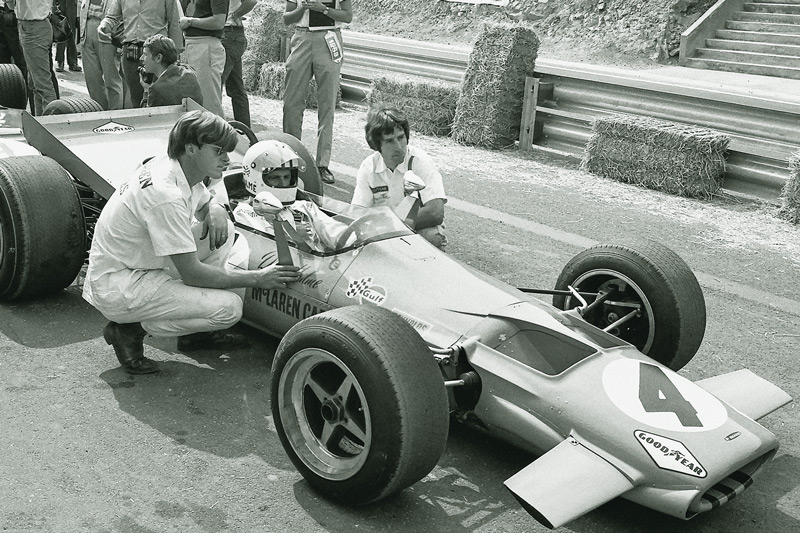
Siffert and Redman had met at the 1968 South African Grand Prix, the first round of the Formula 1 Drivers' World Championship. Redman was on the grid for the Cooper Maserati works team, Siffert also in a Cooper Maserati for Rob Walker's English private racing team. "All I knew about Seppi was that he was very fast, no matter which car he was in," recalls the Briton. The practice times from Kyalami show just how right he was: Siffert clocked a lap time one and a half seconds slower than Redman.
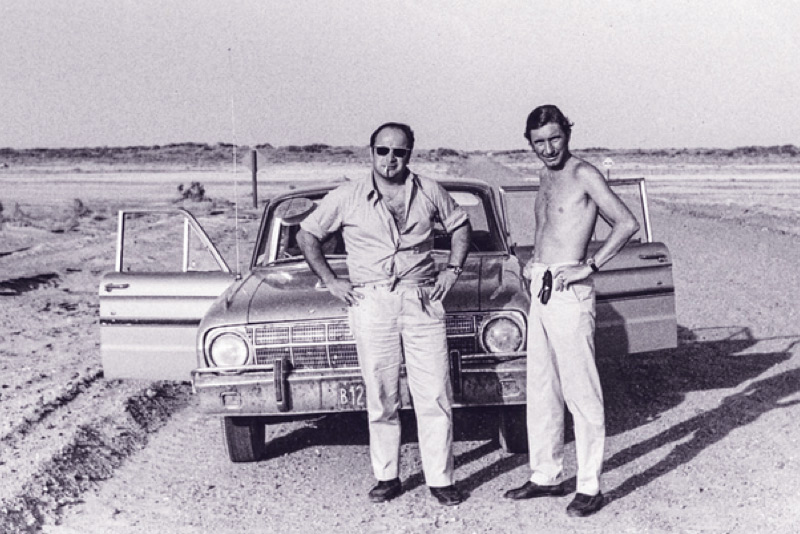
Contact between the two was mainly limited to the race track. "He was always very 'busy', even on the race track. And he was racing somewhere practically every weekend. He also ran his garage in Fribourg. I don't think he was ever bored...", the Brit describes and continues: "He really was very enterprising. I heard that after his talks with Ferrari in Maranello, Porsche offered him a considerable sum if he would stay with the Stuttgart-based company. No doubt it was a lot more than my modest 1000 dollars for Le Mans, Daytona and Sebring, then 750 dollars per race for all the others. Seppi was certainly the most enterprising of the works drivers. Redman also makes this clear in the deal with Steve McQueen: "The famous actor asked the Swiss driver if he knew how he could get racing cars for his film 'Le Mans'. No problem, said Siffert, organized the racing cars and rented them out to the film production for a horrendous amount of money".
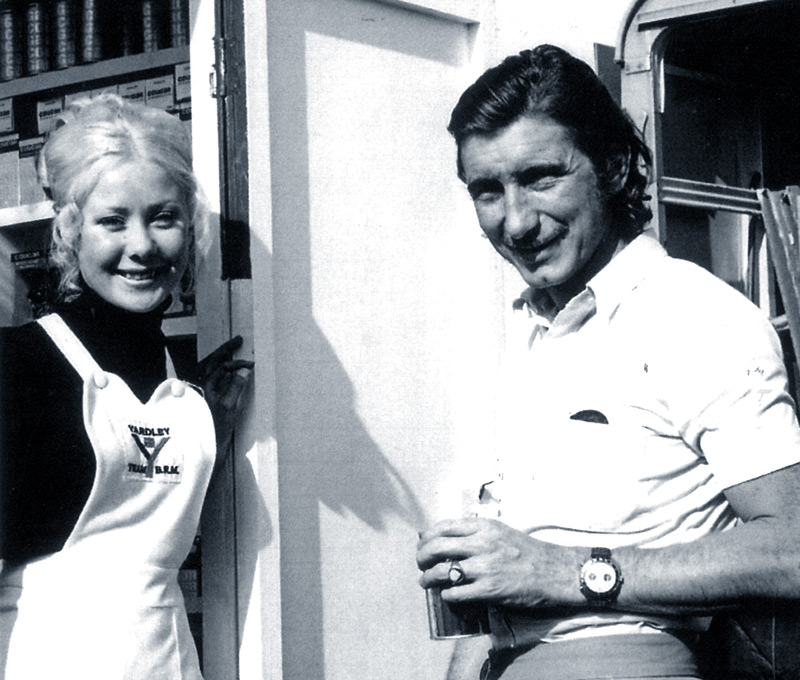
From time to time, Redman called the Swiss to discuss something about the racing car: "In March 1969, I received a call from Porsche. They wanted me to test the brand new 917. At that time there were 10 works drivers, six Germans, three English and one Swiss. I wondered why they wanted me when there were six German drivers living not too far away! I said I would get back to them in 30 minutes, called Seppi and asked if he had tested the new 917 yet. He replied 'no, no Brian - we'll let the others find out what's broken first' - so I canceled Porsche and saved myself a lot of trouble...".
Siffert's premonition was correct: the tests were then driven by Kurt Ahrens, who miraculously survived a horror crash in Ehra-Lessien. John Woolfe even lost his life in an accident with the 917 at the 24 Hours of Le Mans in 1969. The breakthrough of this model did not come until the 1970 season, when John Wyer Automotive Engineering was able to teach the Porsche racing manners with modifications to the rear fairing.
Siffert and Redman usually traveled to the races separately. For 1969 and 1970, Porsche provided the works drivers with a 911. Redman remembers: "We were supposed to travel to all the European endurance races on the road - even to the Targa Florio in Sicily, even though it was a long way from England. With one exception, Seppi and I never flew to a race together. We met at JFK airport in New York to drive to Watkins Glen together in an Audi rental car. Siffert got behind the wheel, we sped along the highway at over 100 mph and were pulled over by a police patrol. Seppi pretended not to speak or understand English, fortunately my passport was not checked. After a long back and forth, the police finally let us go with a warning," laughs Redman.
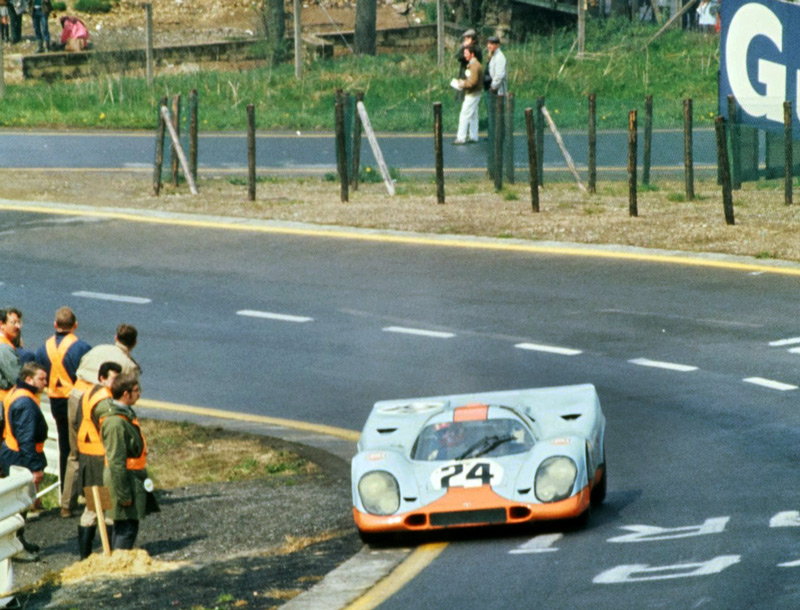
The Englishman only saw Siffert in a rage once, at the Spa-Francorchamps 1000km race in the 1970 season. In the "powerslide" from June 1970, the impressions of the training session are formulated as follows: "In a bend on the (Masta) straight that was fully taken by all the drivers, a blue and orange Porsche 917 appeared, made a jump to the side that was certainly not intended by the driver and came to a halt on the left-hand side of the track after endless skidding movements. A somewhat pale Jo Siffert emerged from the car, for understandable reasons, because even a world-class driver doesn't experience a puncture every day...". With the help of Leo Kinnunen, a journalist and a photographer, Siffert's 917 was repaired. He returned to the pits, had all four wheels changed and returned to the track. And again he had a flat tire. The same procedure again, now Redman replaced the Swiss driver. "I protested, but the pit crew assured me that everything was fine," says the Briton with a furrowed brow. Long overdue, he finally returned to the pits from his practice lap, Siffert looked at him and began to laugh. An uncomprehending Redman asked angrily what else there was to laugh about. Siffert: "You've got the color of your overalls on your face!". No wonder - on the back straight, as Redman turned into the fast right-hand bend at 180 km/h, the left rear tire came off the rim again! Siffert / Redman won the race with a new record speed of over 245 km/h, although the John Wyer pit crew tried to keep Rodriguez / Kinnunen in the lead with (obviously?) botched pit stops for Siffert / Redman. After 45 of 71 laps, however, they retired with gearbox damage.
For Brian Redman, 1971 was a memorable season. In the spring - having returned to the Porsche works team to replace regular co-driver Derek Bell for one race - he had an accident at the Targa Florio: his Porsche 908/3 overturned. He narrowly escaped from the burning race car and came away with severe burns to his face and neck. "The doctor ordered me to take eight weeks off racing - right at the start of the actual racing season! I bought a caravan and relocated to the south of France with my wife. One Monday morning in July, I was in the washroom brushing my teeth and as I was walking back to the caravan, I was stopped by an English camper who knew I was interested in motorsport and asked if I knew the driver who had died the day before. When I asked the name, he replied 'Rud something' and when I said 'Rodriguez' he replied 'that's the one'. Back in the caravan, Marion asked me why I was so sad and I told her that Pedro was dead.
Back home in Colne, Lancashire, I was watching the Formula 1 race at Brands Hatch on TV on October 24th and saw Seppi die in an accident," Redman rummages through his terrible memories. And how did he deal with it? "So many racing drivers died back then that you couldn't let it affect you. You repressed it and hoped to get away with it," he describes the mechanism. "I didn't go to Seppi's funeral - I drove a Porsche 917/10 in a CanAm race at Riverside as a kind of distraction," he explains.
Profile of Brian Redman
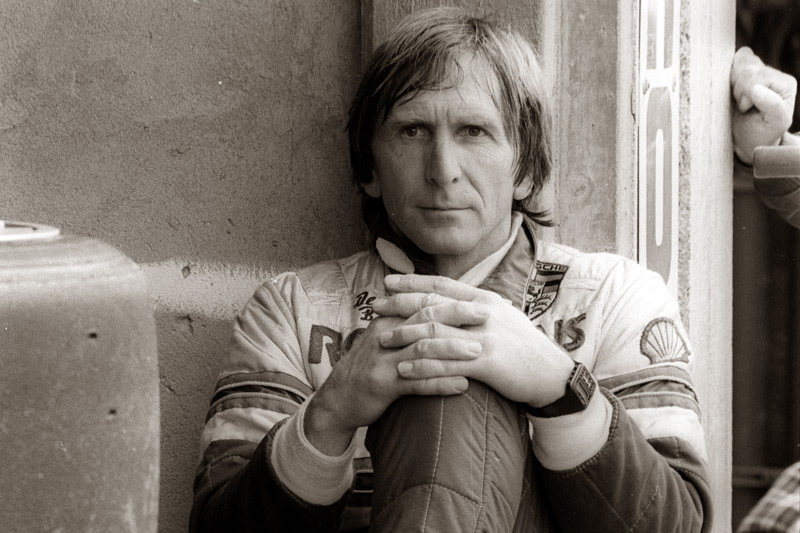
The Briton, who will turn 85 next March, shared the cockpit with Jo Siffert in a Porsche 908 and 917 for two years from 1969. Redman celebrated his entry into Formula 1 with a third place in the 1968 Spanish GP. In the Belgian Grand Prix at Spa-Francorchamps, Redman's Cooper-BRM flew off the track after the suspension broke, crashed into a parked car (!) and caught fire. It took the Englishman almost a year to recover from his injuries. Despite this long injury break, Porsche brought him into the works team for the 1969 season. Between 1968 and 1974, he contested 12 Formula 1 races, then successfully concentrated on endurance racing for 20 years with countless victories and podium finishes. He won eight of his 18 victories together with Jo Siffert. His talent in this category was appreciated: Alfa Romeo, Aston Martin, BMW, Ferrari, Ford, Jaguar and Porsche signed him as a works driver. Today he lives in Florida (USA).