Mario Cortesi remembers Jo Siffert
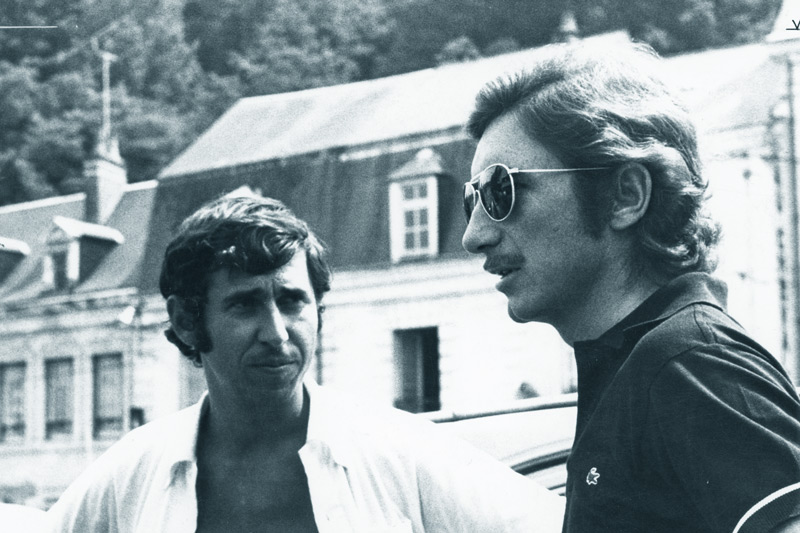
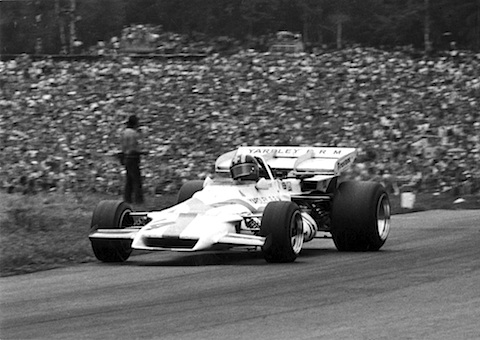
There are events where time stands still. And everyone can still remember the exact moment later. October 24, 1971 was such a date. The (Swiss) racing world held its breath and fell silent: on Sunday afternoon, Jo "Seppi" Siffert died in a fatal accident in a non-championship Formula 1 race at Brands Hatch - on the very circuit where he had celebrated his first major victory three years earlier.
Several reports on Jo Siffert have already been published on zwischengas.com, shedding light on his life and achievements:
- Jo Siffert, the exceptional Swiss talent
- Jo Siffert - Death at the peak of his career
- Mario Illien, Prof. Dr. Ferdinand Piëch, Klaus Bischof, Jacques Deschenaux and Paul Blancpain on Jo Siffert
Mario Cortesi, a multiple award-winner for his films and media contributions, who still works as a journalist and publisher today, noticed Jo Siffert back in the early sixties. "His driving style at a hill climb in Switzerland gave me the impression that there was a young, motivated man at work who would probably make his way. I had the feeling that there was someone at the wheel who knew exactly what he wanted," he recalls.
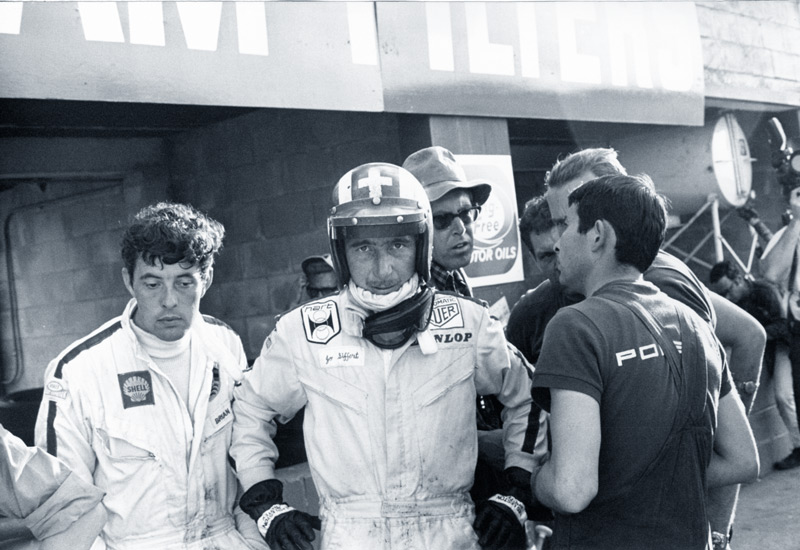
The Biel native made two documentaries about Siffert and had some close contact with him. He characterizes him as "modest, never demanding, immediately ready to cooperate, in short, really grounded". Cortesi can judge. In his career, he has had countless encounters with established stars, be it Gene Hackman, Robert de Niro, Steve McQueen, Martin Scorsese or the recently deceased Jean-Paul Belmondo and many others. "Siffert stood out here in a positive sense," he notes and continues: "He was usually together with Jean Tinguely on the racetrack, always engrossed in conversation with the artist. If we needed something from Siffert or wanted to discuss something, he was easy to interrupt, gave us his full attention and was always ready to respond. It was pleasant to see that he never doubted our attitudes or wanted to introduce other ideas. All in all, it was always a very constructive collaboration with him.
He remembers interviews with the racing driver a little differently. "Siffert wasn't a gifted speaker, the words didn't exactly gush out of him, we had to, as they say, 'pull them out of his nose'," he smiles.

The second documentary film about the Swiss racing driver also took Mario Cortesi to the 24 Hours of Le Mans in 1971. He not only accompanied Siffert on film - his connections in the film business also led to him having lunch with Steve McQueen. McQueen tried in vain to take part in the 24-hour race, but used Le Mans as an observer and for input for his film "Le Mans". "Unfortunately, Siffert retired, although he hoped to finally cross the finish line here in first place," Cortesi looks back and continues: "He was otherwise a very successful sports car and endurance driver who won many races."
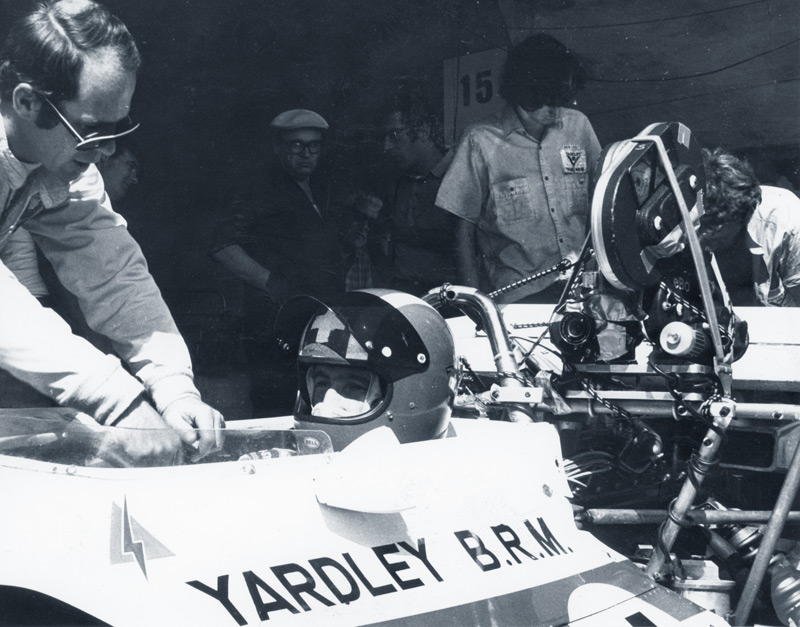
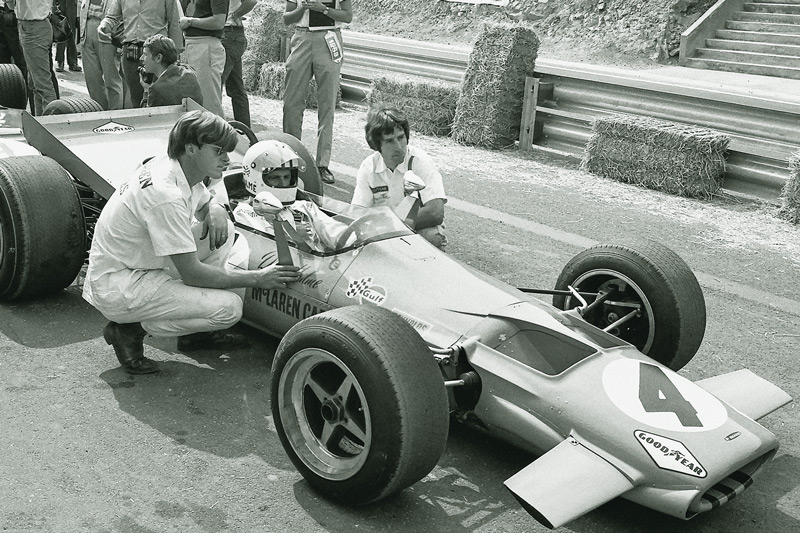
Siffert himself also made sure that Cortesi got some spectacular pictures. During the 1971 Formula 1 Grand Prix in Austria, the filmmaker from Biel had the idea of taking pictures of the drivers looking both in the direction of travel and looking back. He wanted to attach his Arriflex 16mm camera to Siffert's BRM on the roll bar. "The race organizer was, to put it politely, 'not amused' and we feared that nothing would come of this idea. We hadn't reckoned with the persistence of Siffert, who personally approached the organizer and managed to ensure that our 'moving camera' could at least be used in the practice sessions. We attached the camera to the roll bar with a jumble of adhesive tape," explains Cortesi, pauses for a moment, smiles and says: "It's absolutely unimaginable today - we would never get permission for it again. But those were different times back then...!". Siffert won the race with a start-finish victory and then beamed at Cortesi's camera: "It's a great feeling to see the world champion Jackie Stewart in the rear-view mirror as he gets smaller and smaller...!".
Just nine weeks after his last meeting with Siffert at the Österreichring, the man from Fribourg had an accident at Brands Hatch. He did not live to see the finished documentary film about himself. "The news of his death depressed me," says Cortesi, who is still impressed by Siffert's funeral today. "It was incredible. 50,000 people lined the path to the church. I don't think there has ever been a bigger crowd at a funeral in Switzerland," he is almost certain.
Profile of Mario Cortesi
Mario Cortesi, born in 1940, is an award-winning film director and journalist from Biel. At the age of 25, he founded the first media office in Switzerland, "Büro Cortesi Biel". Together with Cortesi, well-known journalists such as Frank A. Meyer and Peter Rothenbühler (and others) later jumped in at the deep end. Today, Büro Cortesi mainly produces the largest bilingual free newspaper in Switzerland "Biel-Bienne" and the local TV station "TeleBilingue", also in Biel.
Cortesi has always had an affinity for cars. His first car was a Lancia Aprilia, "which I drove to death and then had pressed into a handy format", as he explains with a smile. In the sixties, he had an Aston Martin DB5 and a Bizzarrini in his fleet at the same time. "By 1980, my automotive Sturm und Drang period was over. I sold both sports cars and have made do with smaller and more ecological cars ever since," he says, adding: "My radius of action with the car has become smaller. He currently drives "a small Mercedes", as he says.
Cortesi became known to a wider audience as a film critic for (German) Swiss television. Film was the medium that fascinated Cortesi even as a child. He used the vacations he spent in Parma as a child and teenager "to watch dozens of films each time", as he recalls in his memoirs. In 1964, he received his first professional film commission for Expo 64, after being awarded the Federal Council's prize for best amateur film for his amateur feature film "Geh mit der Zeit" in the same year.
In the sixties and early seventies, he made documentaries about the Formula 1 and racing scene (Die Rennfahrer / Le Mans / Clay Regazzoni / Jo Siffert), as well as many others. Cortesi is still active today in his office and on his TV channel.