The quiet renaissance of the rear engine

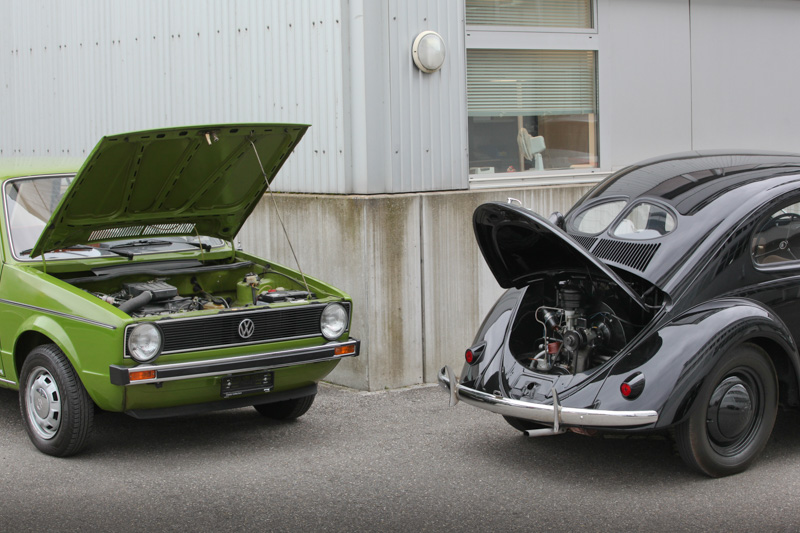
In the 1950s to 1960s, the rear engine was considered a technically efficient solution. The arrangement of the engine and drive in one place meant that the cardan shaft was no longer required and there was no need to supply steered wheels with drive power.
This made the rear engine with rear-wheel drive the simplest possible design, correspondingly economical and space-saving. The trunk was simply at the front instead of the rear (or in both places as in the VW 1500).
Of course, there were also disadvantages. The concentration of weight around the rear axle could lead to handling that was difficult to control, and cooling the engine hidden in the rear was a challenge.
With the Mini, the Autobianchi Primula and all the other front-engine concepts, a convincing alternative was then established and displaced popular cars such as the Fiat 600, the Fiat 850, Renault 8, the Simca 1000 and finally also the VW Beetle. With the VW Golf at the latest, the rear engine was also history at Volkswagen, only Porsche remained loyal to the rear-mounted six-cylinder engine in the 911.
There were also a few attempts in the 1980s to give the rear engine a new lease of life: the DeLorean DMC-12 (of necessity) had the engine right at the back and Subaru installed a three-cylinder transverse engine in the rear of the small Libero/E10 bus.
In the nineties, the Smart came along with the rear engine and today, with the Renault Twingo, there is once again a new everyday car with a combustion engine in the rear.
Quietly, however, the rear engine has become popular again, especially in electric cars. VW ID.3 or Kia EV6 have it together with the rear drive, if they don't come with two motors to drive all four wheels.
The former disadvantages no longer weigh so heavily today, because thanks to modern control electronics, rear-wheel-drive cars can easily be made less difficult to control and cooling is easier than with a gasoline engine, especially in electric cars.
Many car owners of today and tomorrow - especially with electric cars - may not even know where exactly the engine is located ...