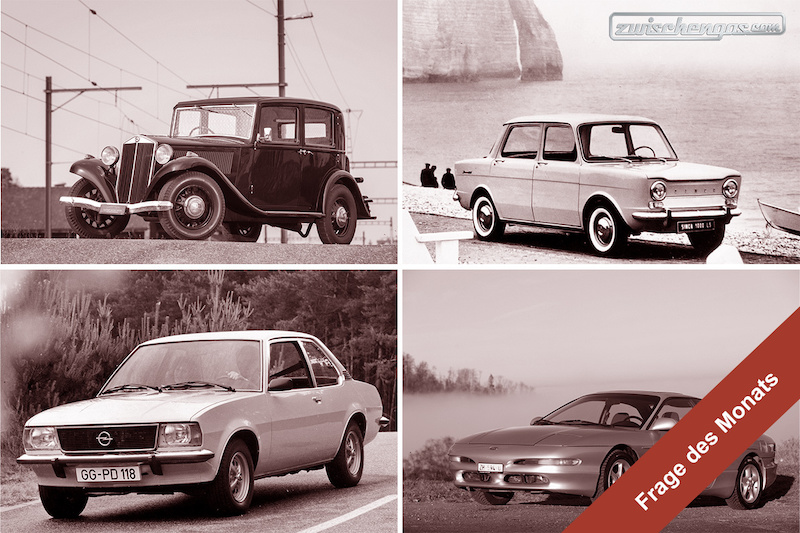
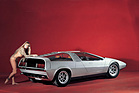
Are classic cars from the sixties or seventies suitable for everyday use?

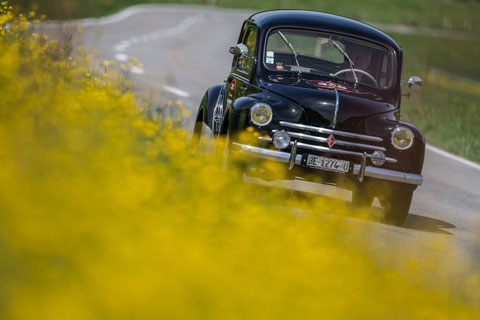
We often hear this question: "Is this classic car suitable for everyday use?". This usually refers to cars from the sixties or seventies, e.g. an Alfa Romeo 2000 Spider or a Triumph TR6, perhaps also a Renault 4 CV (rear/crème cut).
Of course, the answer is not so simple because, as any consultant would say, "it depends".
If a modern driver of today had to define "suitable for everyday use", then that would mean that you can get into the car in the morning, press the start button and then drive off, get through traffic jams and past all kinds of obstacles without any problems, drive fast or slow and finally put the car in the parking space without any problems, simply park it and lock it. That's it.
In the past, however, "suitable for everyday use" meant that the car functioned in everyday life and under the rules that applied at the time. For example, 50 years ago, many owner's manuals stated that you should check the fluids before setting off each day and top them up if necessary. Checking the oil level every 5000 km was certainly not enough half a century ago.
During the starting procedure, there were a few things to consider, such as operating the "choke" and possibly limiting the parallel power consumption. It was also important not to overload the starter motor or the battery, etc. A breakdown from time to time was not interpreted as "not suitable for everyday use"; in the past, people usually knew how to help themselves. And the occasional lack of power for starting was not a big problem, you just let yourself be pushed or looked for a downhill slope. And it was also clear that you had to take care of your brakes on long downhill rides. On the road, you always paid attention to the instruments and, above all, always worried about the engine's healthy temperature. Long story short: "suitable for everyday use" had a different meaning 50 or more years ago than it does today.
An old car in good condition, properly maintained and cared for, should still meet the requirements for "suitability for everyday use" from back then, but it still can't compete with modern cars in some respects. If you are aware of the differences, you can certainly still use an old car in everyday life.
However, anyone switching from a modern Toyota Prius to an Opel Kadett A without any prior knowledge should get a thorough introduction and find out how to handle a car that is over 50 years old so that it can perform its duties faithfully.