VW-Porsche 914/6 Tapiro - design wedge with series ambitions by Giugiaro


You have only
1 out of 24
images seen in high resolution


Summary
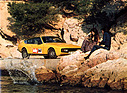
In 1970, Giorgio Giugiaro designed a wedge-shaped alternative only around a year after the VW-Porsche 914/6 was presented, which used the same technology but took a completely different direction in terms of form. Designed for series production, this concept car made it onto the road and into everyday use, but remained a prototype that even fell victim to a bomb. This report describes the history and characteristics of the unique VW-Porsche 914/6 Tapiro and shows the car in many historical illustrations.
This article contains the following chapters
- Showpiece
- Improved technology of the VW-Porsche
- Aerodynamics and safety as objectives
- Intended for series production
- Driven on the road
- No series production
- Burnt down
- Further information
Estimated reading time: 5min
Preview (beginning of the article)
The VW-Porsche 914/6 was only built for three years and yet there are more well-known concept cars based on this type than probably any Porsche 911 built for decades. Pietro Frua created the Hispano-Allemano, Graf Goertz an individual variant with an apparent estate rear end for Eurostyle, Heuliez the rounded Murene and Giorgio Giugiaro the Tapiro for Italdesign. Other conversions of varying quality and design were also created, but the Tapiro was certainly the most spectacular of all, although it was actually intended for series production. In September 1969, VW and Porsche presented their new people's sports car to the public for the first time, which was to form the bridge between the two brands and was available with both Volkswagen four-cylinder and Porsche six-cylinder engines.
Continue reading this article for free?
Images of this article