Is driving a classic car more sustainable than buying a new one?

When buying a car, the question always arises as to whether it should be a new car or a used car. In the course of the climate debate, environmental compatibility is now also being looked at more often. Car manufacturers have also jumped on the bandwagon and are advertising their new cars as being more environmentally friendly than previous models.
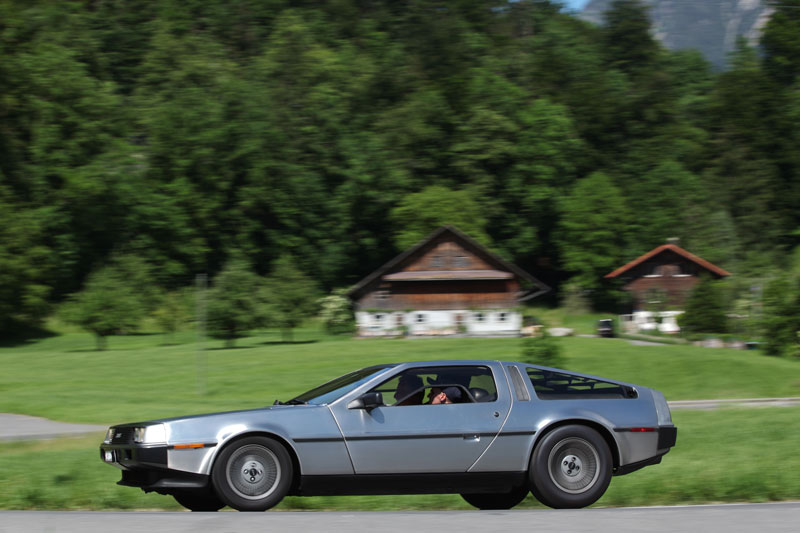
Owners of older cars, especially classic cars, are increasingly having to justify themselves. They are said to be polluters and don't care about the climate. But is this true? Are classic cars perhaps even more sustainable than new cars?
The question is not so easy to answer. There are numerous comparisons, studies and self-experiments on the subject on the Internet, which come to different conclusions depending on the assumptions and starting point. Some clearly favor new cars, as they are more economical and emit measurably less CO2. In addition, they are equipped with the latest technology and are therefore much more comfortable than classic cars, including in terms of safety.
Others cite the Co2 emissions that are already generated during production. These are understandably higher for electric vehicles than for petrol cars, for example, as a lot of energy has to be used to produce the battery.
VW calculated, for example, that the eGolf is only more sustainable than a conventional combustion engine after 200,000 kilometers have been driven. This is due to the high production emissions. Rare materials and toxic substances are also needed to manufacture the batteries, a hell of a cocktail for the environment. After all, an electric car is only as clean as the energy it "fills up" with. In Switzerland, for example, electricity tends to be more environmentally friendly than in Germany, where a significant proportion of electricity still comes from lignite-fired power plants.
The service life of vehicles is also a decisive factor when it comes to sustainability. If, for example, a VW Beetle is driven from 1951 to the present day, the total C02 emissions, including production, amount to around 122 tons. If six new cars of different brands were driven in the same period, the CO2 total can be significantly higher at 173 tons. And this is precisely the crux of the matter. Are we talking about the personal eco-balance of an individual vehicle owner or do we want to analyze the bigger picture? There is also no such thing as THE classic car, we are talking about an extremely heterogeneous mass with a wide variety of consumption values and exhaust gas qualities.
Classic cars usually have little technology. Compared to modern cars, they consist of fewer components and are easier to repair in the event of defects. In modern cars, it is often not possible to replace individual parts, but to remove/install entire modules. This is where the negative side of progress becomes apparent, especially as it can rightly be doubted whether even modern vehicles with their complexity can easily drive on our roads for another 30 or 40 years. On the other hand, it cannot be denied that modern vehicles have made enormous progress in terms of safety, for example in terms of lighting, airbags, brakes and the many assistance systems. This can prevent accidents, which can also have a resource-saving effect.
So is driving a classic car more environmentally friendly than buying a new one? In the end, everyone has to answer this question for themselves and the answer depends on their own assumptions and personal views. Everyone weighs up safety, consumption and responsible use of our resources differently. But the classic car driver is certainly not a priori harmful to the environment, perhaps his carbon footprint is even significantly better than that of the Tesla driver standing next to him at the traffic lights.