Man was not born to drive a car

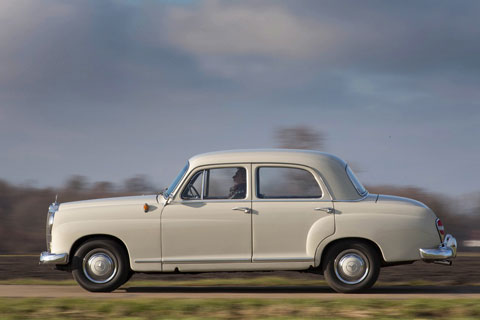
"A brief health lesson for motorized people" was the subtitle of an article in Automobil Revue 60 years ago . It discussed how to overcome the problem that people were not born to drive. We are reproducing the original wording of the article:
"The question today is no longer whether it would be healthier "in itself" if we had not invented cars, airplanes and rockets in the first place. Practical development has rolled over it, and we have to accept the fact that we move faster today than we did in the past! The fact that our bodies are not initially adapted to this, and ultimately not "built" for too much continuous speed, is reflected in all kinds of unpleasant complaints and health problems: There is no doubt that it has to "get used" to it - as it has to so much before. But we can make this adjustment easier for him and save ourselves a lot of discomfort.
Don't let your legs atrophy!
First of all, it is important not to turn the car, which is a commodity of our technological age, into a world view. You have to be able to "allow" yourself to be seen as a pedestrian without losing your nimbus and your credit. Even if you are a happy owner of a motor vehicle and don't skip your evening stroll and can park the car on the spot during your vacation and then go up the mountains on foot, you won't "perish because of your car".
However, there are a few things you need to bear in mind when driving a car to avoid damaging your health. These result from the special circumstances of driving in a fast-moving vehicle and actually affect all of our body's organs. Let's start with sitting in the car.
The car seat does not correspond to our anatomy
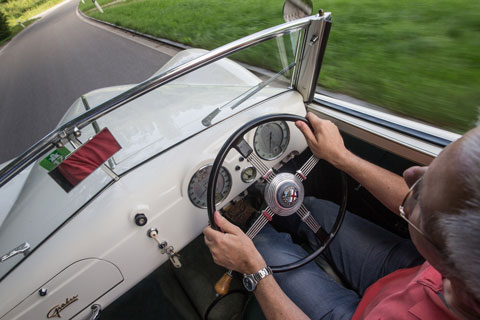
As much as efforts have been made to improve the car seat, it is still far from being an ideal solution - especially for the driver. This applies to the "very comfortable", low-slung seats of modern sports models as well as to the standard seats of series production. The driver must hold the steering wheel and have his feet on the pedals. He will therefore always push forward with his lower body (and the seat!).
As our bodies are not "built" for the sitting position anyway, this car seat does not suit our anatomical requirements at all. We have to strain our spine and at the same time subject it to the constant jolting that occurs even on good roads. Various additional car seats that can be used correct the posture, but again promote the constant draught between the seat and back.
What can you do about it?
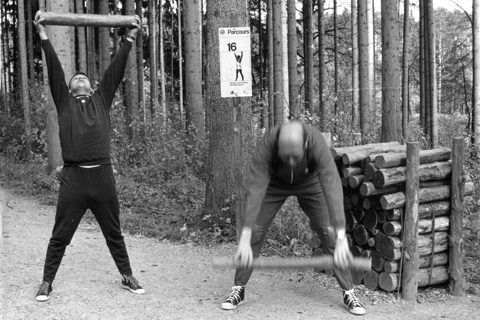
First and foremost: do enough compensatory gymnastics! Take breaks - especially on long car journeys - and then go for a walk, stretch and twist your hips.
Also: wear sweat-absorbent underwear that protects your back and hips from the draught.
Caution - too little oxygen!
The great advantage of modern carriages is that all their doors and windows close tightly, but this becomes a disadvantage if you forget to ventilate. The oxygen supply in a closed car quickly runs out. Especially if there are several people in the car. Of course, nobody will suffocate, but the increase in the carbon dioxide content of the air has a tiring and paralyzing effect on brain activity; this can have dangerous consequences for the driver of the vehicle.
You should therefore ventilate from time to time, even in cold or bad weather. Above all, if you feel tired, it is essential to stop and spend at least a few minutes in the fresh air. If the car heating is switched on with the windows closed, oxygen consumption will be accelerated and fatigue will set in even faster.
And don't forget to take a break!
The constant rush tempts people to travel long distances without stopping. In most cases, this also means forgoing a proper meal. Although it is true that you tend to be tired after a heavy meal, you need the energy boost from food, especially when driving. Replacing it with smoking, pills and stimulants is robbing the body. The demands on drivers today are so high that they have to be physically fit at all times.
Therefore: Take time to eat! Avoid alcohol at all costs while driving! Coffee and other stimulating drinks are recommended, as long as you can tolerate them. Do not drive long distances without stopping!
The passenger also has duties!
You should always have a small supply of dextrose (it works particularly quickly because it is immediately absorbed into the bloodstream), possibly also chocolate, peppermints, etc., in the car. This will help you get over small bouts of fatigue and weakness.
The co-driver should ensure that the driver is refreshed in good time, that breaks are taken, that fresh air is supplied and that the driver is kept entertained, fresh and alert. After all, his salvation, perhaps his life, depends on it."
These thoughts were formulated by a certain F. A. O. and the editors invited their readers 60 years ago to send in contributions to the article, to express their views on the issues it dealt with and, if necessary, to make their own suggestions based on their experiences. What came out of this would then be the subject of a small analysis in our magazine archive( with over 580,000 digitized magazine pages from 100 years).
Of course, it would also be interesting to consider whether the problem has changed significantly in modern times. Some things have certainly been improved, and the seats are probably much better supported today. But the fundamental problems still seem to exist, or do our readers see things differently?