The BMW kidney grille - how a brand symbol has changed over time

_Niere.jpg)
It was in 1933 that a BMWwith the "kidney grille" that has been used ever since was sold for the first time. The car was called the BMW 303 and it had a new six-cylinder engine on board.
_c_Daniel_Reinhard.jpg)
Since then, the "kidney grille" has adorned almost every BMW automobile. However, the two BMW radiator cut-outs never actually had the shape of a "real" kidney grille. And the shape was constantly changing anyway.
.jpg)
The elongated ovals remained until the 1950s, as can be clearly seen on the BMW 501, for example.
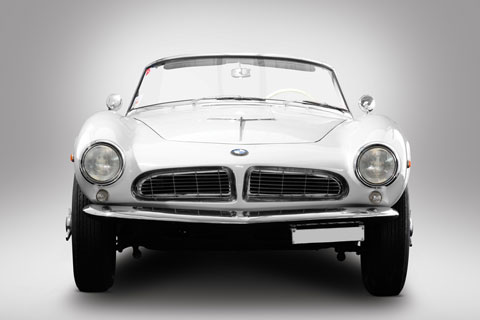
Then the BMW 507 broke with tradition; instead of elements that were drawn upwards, the two radiator grille sections became wider.
The BMW Isetta, the BMW 600 and the BMW 700 completely dispensed with the now traditional brand symbol. The kidney grille was also unnecessary because there was no radiator at the front.
.jpg)
In the 1960s and 1970s, the kidney grille became smaller and smaller and was usually only emphasized by chrome-plated or black elements throughout the radiator grille, as can be seen on the BMW 323i.
.jpg)
The BMW M1 had a small but offset kidney grille, as did the Z1.
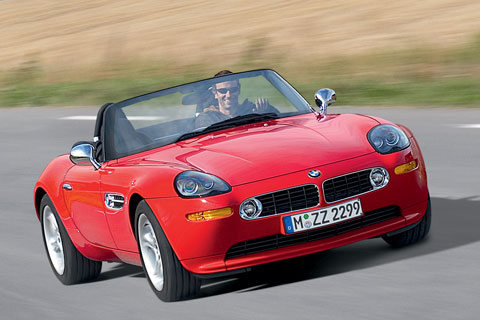
The BMW Z8 returned to the design of the 507, while the other BMWs of those years were based on the shapes of the 1970s.
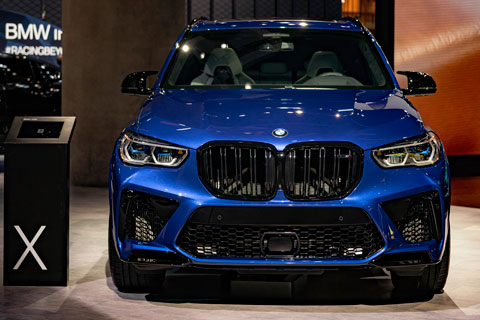
In modern times, the kidney grille seems to have grown enormously again and if the BMW Concept 4 Series Coupé, which was shown at the IAA in 2019, sets a precedent, then we can prepare ourselves for huge kidneys in "world design".
.jpg)