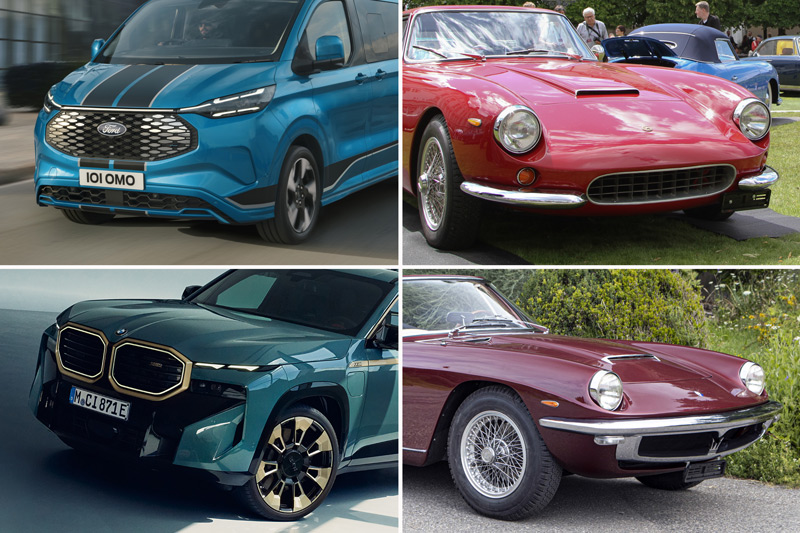
The cars of yesteryear were at least on a par with modern ones in terms of drag

New vehicles with an even more aerodynamic appearance are constantly being presented, manufacturers outdo each other with low drag coefficients ("cw value"). In doing so, they like to conceal one fact, namely that cars are getting bigger and bigger. This automatically results in an increased frontal area and, as is well known, air resistance is calculated using the formula cw value x frontal area.
While cars in the fifties and sixties were still 1.3 or 1.4 meters wide, today they are usually 1.8 or even more meters wide. The growth in height is comparatively small.
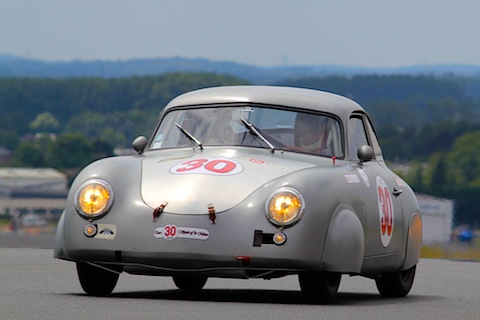
Want an example? The Porsche 356 A had a frontal area of 1.692 square meters, while its modern descendant, the 997 (as the GT3), has a frontal area of 2.04 square meters. And although the cd value of the newer car is only 0.32 instead of 0.37, its drag increased.
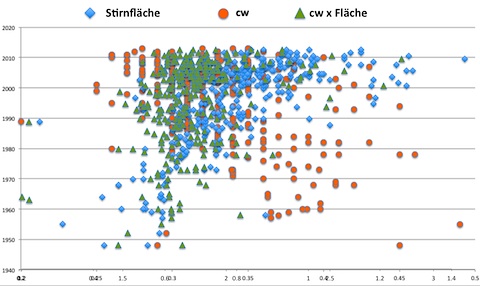
And so it is with the average car. What is gained by the aerodynamicist is lost by the increase in frontal area. We have analyzed this with over 300 vehicles. The graph shows the cd value (orange), the frontal area (blue) and the resulting aerodynamic drag (green) for each of these vehicles over 70 years. Unfortunately, there is less data available on vehicles from the fifties and sixties than on cars from the modern era, but even so it is clear that modern cars are in no way superior to their ancestors. The trends are clear in the graph: the frontal area (blue) increases, the drag coefficient decreases (orange) and the aerodynamic drag calculated from the product of the two (green) remains practically constant or increases over time.
So if today's cars are much more economical, this is mainly due to the drive technology, where enormous progress has been made. If the drivetrain of the latest Astra generation were to be fitted to a Kadett A, the classic car would be much more economical because, in addition to the aerodynamic advantages, it also carries much less weight than its modern reincarnation.
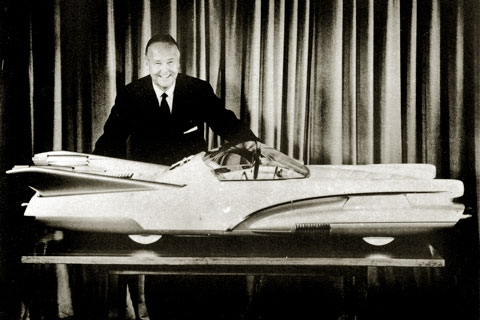
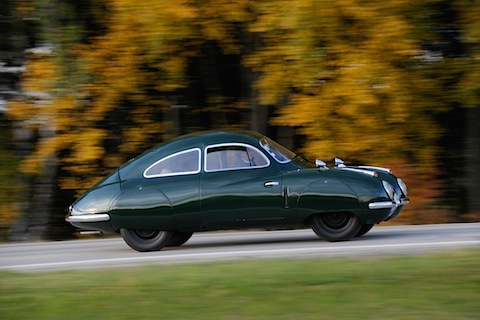
Of course, it should not be concealed that this increase in weight primarily benefits passenger safety and comfort. But of course you could also drive with less. This is demonstrated by the VW XL1 (, which, like one of its ancestors the Volkhart V2 (VW) Sagitta ( cw value approx. 0.22, frontal area 2.1 square meters, air resistance 0.455), combines good aerodynamics with a low frontal area, and in the XL1 there is of course also a super economical engine.
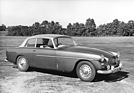
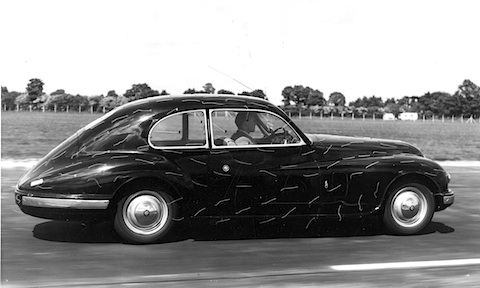
The importance of aerodynamics was recognized early on, but in the post-war years it became an integral discipline in the design of automobiles, as a picture of a Bristol 401 from 1950 with glued-on strips to indicate turbulence on the moving vehicle proves.
And a word about off-road vehicles, which naturally perform particularly poorly in the discipline of frontal area; a Hummer H2 has four times the frontal area of a VW Lupo. In general, sports cars offer the wind a smaller frontal area than normal passenger cars, but part of this advantage is often sacrificed to a deterioration in the Cd value in favor of more downforce. Like everything in life, aerodynamic drag is a compromise, because the car that would offer the least resistance to the wind usually does not offer an acceptable (and saleable) solution in terms of driving safety (including track width) and ride comfort (interior).