Because they actually know exactly what they're doing! - From the Porsche 550 to the Carrera GT - from James Dean to Paul Walker

Porsche connects in good times and bad. On November 30, 2013, the American actor and producer Paul Walker was killed in an accident in Valencia (California) in the passenger seat of a red Porsche Carrera GT. The actor, who was born on September 12, 1973, played the investigator in the film series "The Fast & the Furious". Like his predecessors, for example Steve McQueen in "Bullitt" or "Le Mans", Paul Walker also shows his great love of cars and speed in his film role as Brian O'Conner in "The Fast & the Furious".
The third in the group with a lot of gasoline in his blood was James Dean, known from the film "For they know not what they do". There was also Paul Newman in the film "Indianapolis - A Risk of Life and Death" and, last but not least, James Garner in "Grand Prix".
James Dean had an accident in a Porsche 550 Spyder in Chalome, California on September 30, 1955. He was followed 58 years later by Paul Walker in a Porsche Carrera GT. Steve McQueen died of cancer on November 7, 1980 at the age of 50.
With the exception of James Garner, all four had a close relationship with Porsche. James Dean, Steve McQueen and not forgetting Paul Newman were all involved in racing themselves. Steve McQueen, probably the most talented of them all, had his greatest success in 1970 with second place in the 12 Hours of Sebring in a Porsche 908. Even Jo Siffert had very positive things to say about Queen's driving talent.
In 1979, at the age of 54, Paul Newman took second place at the 24 Hours of Le Mans in Rolf Stommelen's team in a Porsche 935, at least according to today's statistics. This success is hardly diminished by the fact that it was almost exclusively the German professional behind the wheel.
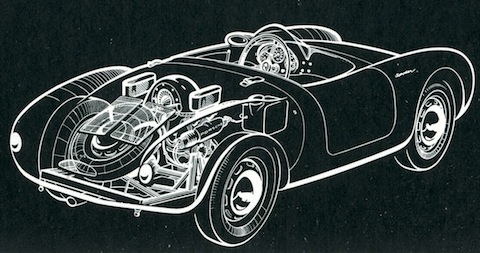
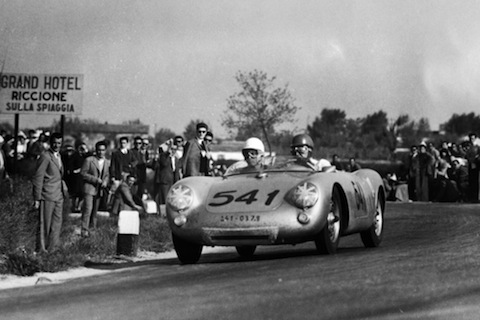
In September 1955, James Dean bought his second racing car, a silver-colored Porsche 550 Spyder. The number 130 was painted on the front hood of the car, while his nickname "Little Bastard" was written on the rear. Dean had traded in his old 356 Speedster for the Spyder and paid an additional 3,000 US dollars. He wanted to take part in a car race in Salinas, California, with the car (chassis number 550-0055) on October 1, 1955. It was not to be, because on the way to the race at the junction of California State Route 41 and California State Route 46 near Cholame, Dean and his co-driver Wüterich came across a Ford. After accelerating and braking several times, the driver of the Ford, Donald Turnupseed, suddenly turned left and took Dean's right of way. James Dean succumbed to his injuries.
When Dean was once asked what he thought of people who speed on the highway, he replied: "I used to speed quite a lot and take unnecessary risks. But since I started racing, I've become particularly careful on the road. People often have no idea what dangerous crap they're doing. You never know what a guy on the road is going to do next. There are a lot of people on the racetrack who are thinking about new rules and safety measures. I've been very careful on the road lately. I don't feel like racing at all anymore. They say you live dangerously as a racing driver, but I'd rather push my luck on the racetrack than on the highway."
His parting words in the commercial were: "Drive carefully! Maybe it's me you'll save one day."
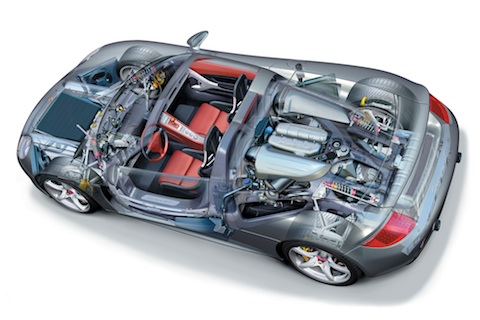
Paul Walker also died innocently, as he was not at the wheel himself. He was a passenger with his friend, racing driver Roger Rodas, on his way home from a car show, the "Reach Out Worldwide", which was being held in aid of victims of Typhoon Haiyan. Why and why Rodas lost control of the Porsche Carrera GT , then crashed into the lamppost, causing the car to burst into flames against a tree, will probably remain a mystery forever.

As Walker said: "If one day the speed kills me, don't cry because I was smiling!".
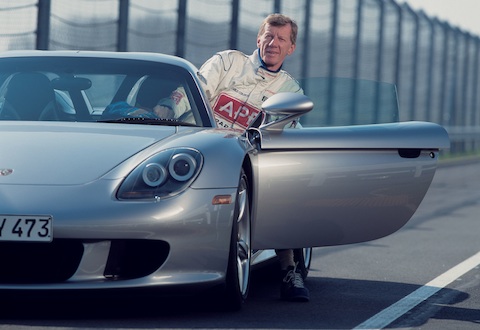
It shouldn't have been the car's fault, as Walter Röhrl had carefully tuned it. The Porsche Carrera GT - just like the legendary 550 Spyder - was actually intended for racing, but when this project was canceled, the mid-engined vehicle was converted into an ultra-fast road sports car and 1270 of them were built. Röhrl taught the car, which was originally difficult to drive at the limit, some manners and said after the tuning changes: "Anyone can drive it now if they're not a moron."