The art of breaking in a car

Modern vehicle manuals hardly say a word about this, but in the past the running-in rules were an important part of the instructions.
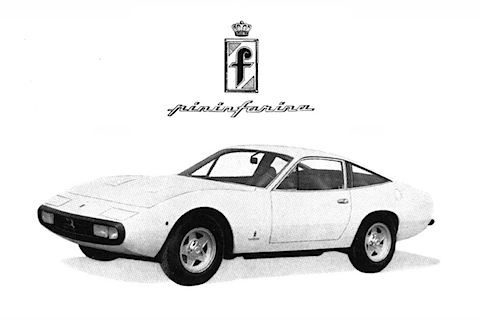
Let's quote from the manual for the Ferrari 365 GTC/4 from 1971-1972:
"A new car must be run in for at least 5000 km. During this period, the recommended engine speeds should not be exceeded."
In the printed table, 4500 revs were then specified as the rev limit for the first 1000 km and 5500 revs for the next 2000 km, and this for a car whose maximum power was only reached at 6800 revs.
It was also requested that short periods of full throttle should be avoided during the running-in period and that full braking should also be avoided during the first few hundred kilometers.

A few years earlier, the NSU company wrote in beautiful German prose in the NSU TT manual :
"Should you break in your new car carefully? Or should you go for it straight away? You will find that both methods have their advocates. And good arguments to boot.
"You have to break in the car carefully," say some, "because otherwise the parts that are not yet fully attuned to each other will be overstressed, can jam and ruin the engine."
"If you drive an engine quickly and spiritedly right from the start, it will become 'free' and efficient as quickly as possible!" claim others.
It's like so often in life: Both are right, but neither can avoid running in. Pistons and cylinders, gears and bearings should become familiar with each other over the course of the first few thousand kilometers. If you are not careful with them during this time, they will rub against each other, heat up and eventually kill each other. You know how it goes. But there are old hands at driving, experienced drivers who can afford to drive the engine quickly and smoothly after just a few hundred kilometers. They know exactly where the load limit of the new engine lies. (This is also where they become cautious).
However, this break-in recipe would be too risky for normal first-time drivers. You should therefore also adhere to the following break-in rules:
(a) Do not accelerate more than two-thirds on a hill!
b) In connection with this: Shift gears eagerly so that the engine always "pulls" in the right gear, is not over-revved in too low a gear, but also does not run too slowly in too high a gear, shakes and bucks.
c) The engine needs oil like you need your daily bread. More during the running-in period than afterwards. Therefore, check the oil level at shorter intervals during the initial period.
And follow all this very carefully during the first 1000 kilometers. And keep it in mind during the following 3000 kilometers! But then you should always take short full throttle stretches so that the engine realizes that you are gradually demanding something of it.
In city traffic you can hardly follow such rules. Smart drivers therefore use their new car for a longer, more leisurely cross-country tour. We also think this is the best way to break in the car."
Yes, breaking in was not something to be taken lightly, and the smaller the car, the greater the restrictions and hardships involved. Nevertheless, we stuck to the rules, because we wanted to give the car a long and low-repair life.