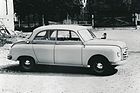
Fighting rust - stainless steel for Porsche, BMW and DeLorean car bodies


Rust was the main enemy of the automobile in the 1960s and 1970s, so it was no wonder that solutions were sought that could also withstand our salt winters.
Stainless steel proved to be a much more resistant material than normal sheet steel, which was commonly used in car body construction. However, no vehicle manufacturer wanted to take this bold step.
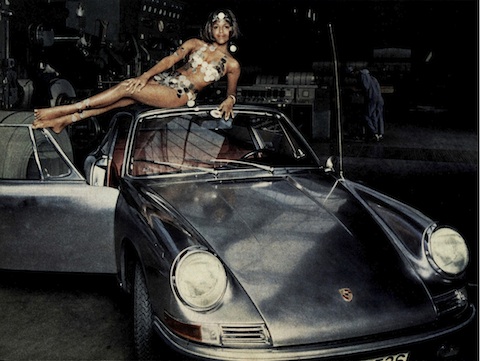
So the initiative was left to others, e.g. the Informationsstelle Edelstahl Rostfrei in Düsseldorf, which had a Porsche 911 with a stainless steel body built in 1967 . In 1972, Heinz Todtmann, the driver of the now four-year-old 911, proudly reported in ADAC Motorwelt 3/1972 that after 100,000 km, not a single stainless steel part on the entire car showed even the smallest particle of rust. The car looked as fresh as on the first day, without any polishing or preservation. The Porsche was only washed from time to time with water and detergent!
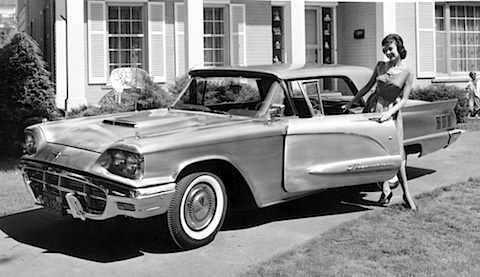
However, the Porsche was not the first stainless steel car, as a Ford Thunderbird with a stainless steel body had already been built at the Budd Company in 1960 on the initiative of Allgeheny Ludlum Steel. The normal presses and material thicknesses were used.
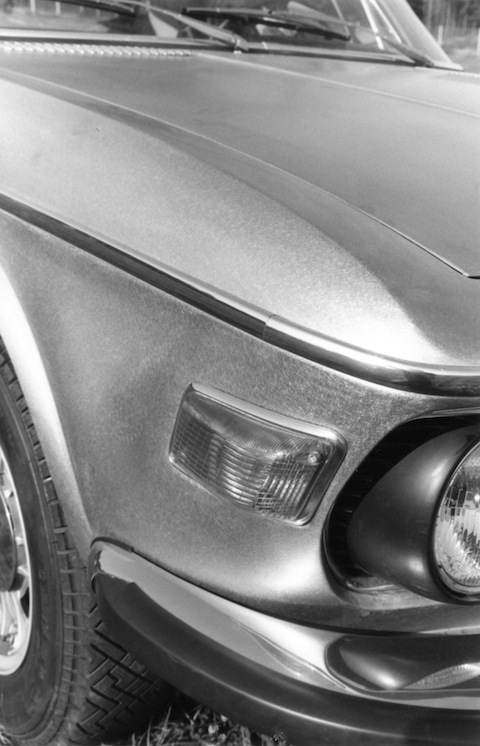
In 1970, a BMW 2800 CS was created, the body of which was also pressed from stainless steel using pressed parts from the series.

The BMW was created as part of a study by the German Edelstahl-Werke AG. Here, too, the body parts remained unpainted.
However, another 12 years passed before the first production vehicle with a stainless steel body was built. The DeLorean DMC-12, best known from the film trilogy "Back to the Future", shone with a stainless steel body and gullwing doors. However, despite good attempts, this car was not successful on the market for various reasons. And remained the last production car with a stainless steel body.
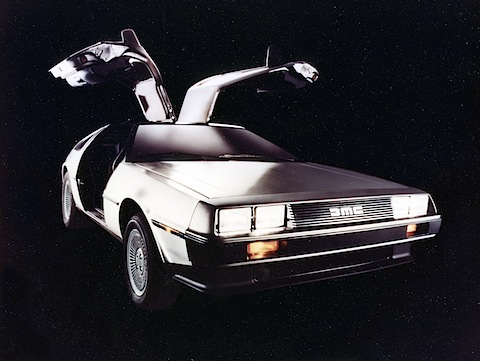
From time to time, designers used stainless steel for show cars or prototypes. The main reason for not using it in series production was the significantly higher cost of the base material. It was not believed that customers would be prepared to pay the extra price in order to own a more durable vehicle. In addition, car manufacturers naturally also benefited from the constant need for replacements.
An interesting question would be whether the Porsche 911 and BMW 2800 CS pictured have survived and are still in use. Perhaps one of our readers has more information here?
Further exciting facets of the development of the automobile can be found in our Zwischengas magazine archive, which comprises over 250,000 pages and covers the years 1903 to 1990.