Full steam ahead with the Rochester Steamer from 1901
Among the more unusual means of transportation I have used are a toy Bugatti pedal car, the propeller-driven Aerocar, a Citroën DS rolling along on three wheels, a DC 7C, with which I flew from South America to Europe in 1957 in the then record time of "only" 34 hours (Buenos Aires, Montevideo, Sao Paulo, Río, Recife, Dakar, Lisbon, Geneva), a hot-air balloon, the Gyrobus, a hovercraft, the Concorde (95 minutes from Buenos Aires to Río), caterpillar jeeps, wind karts (at 80 km/h with the butt ten centimeters above the ground, the Chrysler Turbine Car and the first Wankel car, which came to Argentina in 1963, as well as electric vehicles in the form of golf carts.
Every vehicle, whether powered by an internal combustion engine or human/animal power, loses power at higher altitudes due to the decreasing air pressure and oxygen content. With one exception: steam-powered vehicles do not run out of air even at Zugspitze altitude because water evaporates more quickly at higher altitudes and the external counter-pressure is lower.
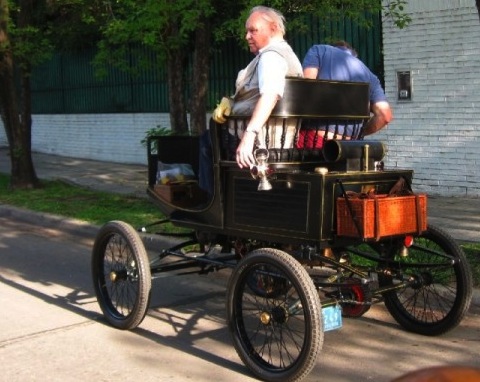
This was the only transport experience I had yet to have in 50 years of professional life: a vehicle with a steam engine. In November 2011, John Hampton kindly gave me the opportunity to catch up on this experience - and here is the illustrated short report.
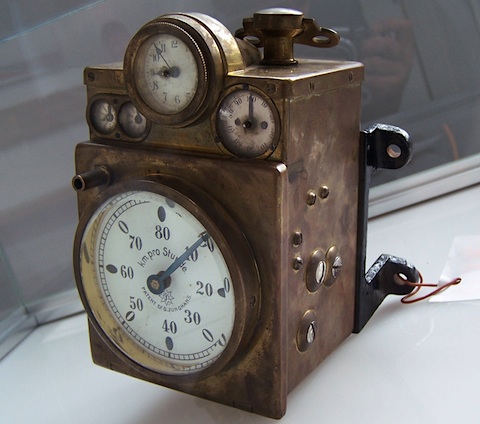
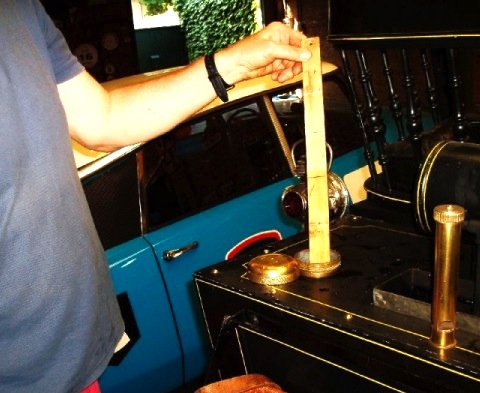
Hampton is working on getting the Rochester up and running. I follow the preparations from close up and take over the timekeeping. John fills the 45-liter water tank with liquid. The vehicle consumes two liters per kilometer.
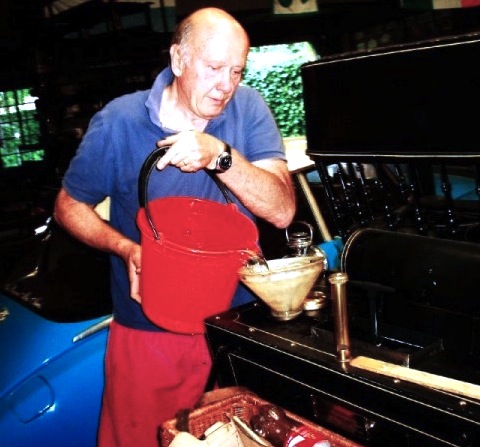
The Japanese "precision gauge" (a simple wooden stick) shows 21 liters. With a full tank, 45 liters of water add 10% to the 440 kilos of vehicle weight.
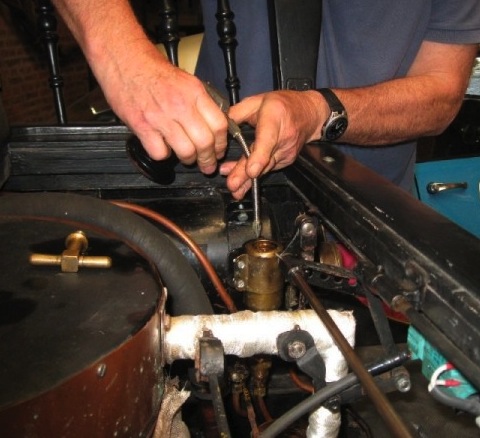
The engine is lubricated with a special oil .
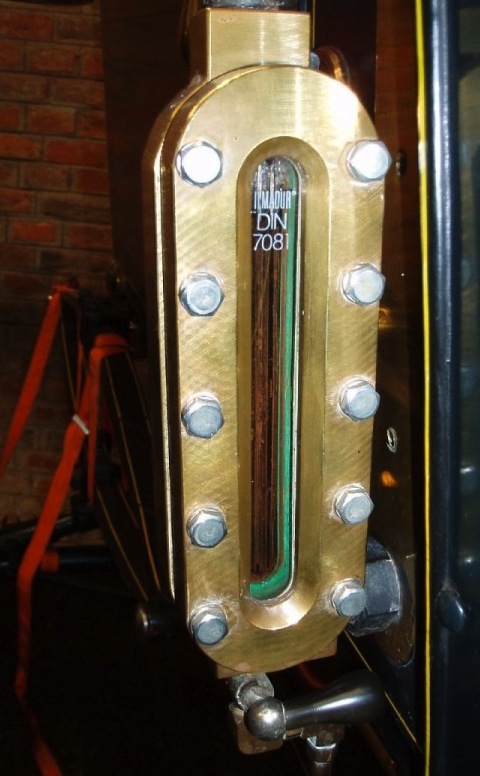
Here we see the water level indicator, actually the most important device. This gets up to 300 degrees Celsius, as do all parts that come into contact with the superheated steam. So you have to wear gloves when handling and driving.
According to Hampton, the Rochester's system works like a boiler/boiler, while others work like an instantaneous water heater with a heating coil and are ready to go immediately. The boiler begins to build pressure until 200 psi is reached. <b6>The Rochester took 55 minutes to become operational in this test. More modern steam vehicles started after just five minutes of heating up. And off we go for the test drive. The tire size is 28 x 3 inches, the tires are imported goods.
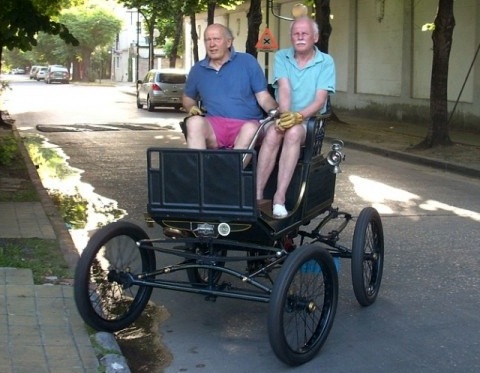
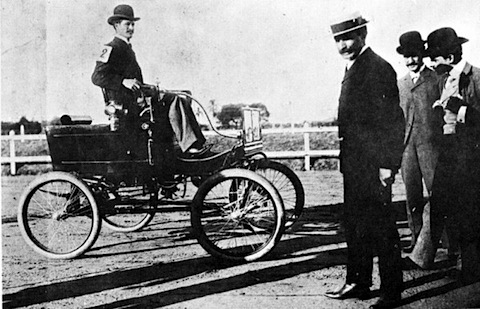
The vehicle is equipped with Ackermann steering. This steers the inner wheel further than the outer wheel, allowing the inner wheel to 'negotiate' a smaller curve radius (patented in 1817 by the German Rudolph Ackermann). As always, when something unusual appears, we were sure to attract a curious public and paparazzi. Here is a look at the first Argentinean car race in 1901: the winner was Casssoulet with his Rochester on the Belgrano racecourse.
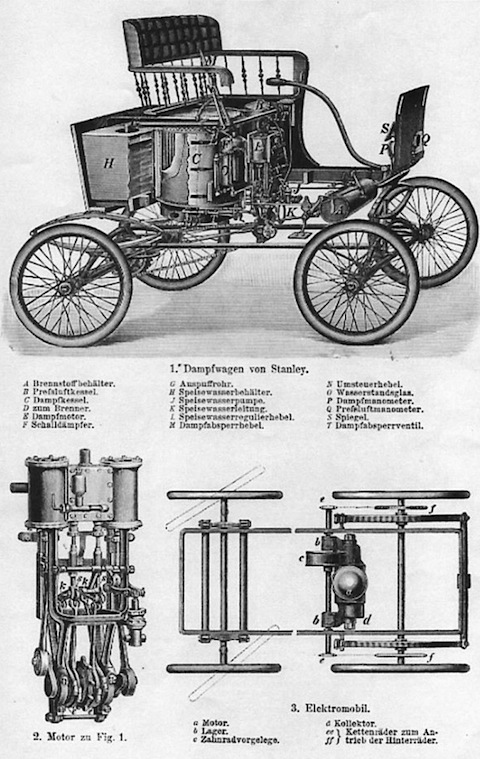
The Rochester reconstructed by Hampton has more torque right from the start and therefore has better acceleration than most other mobiles of the time. A diagram of a Stanley, which was similar to the Rochester, shows the structure of the vehicle.
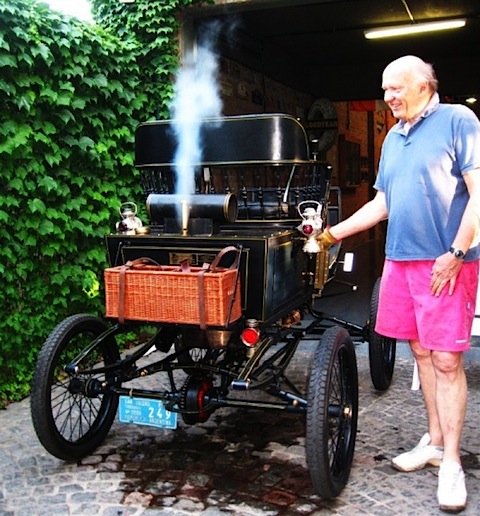
To announce the end of the test drive, John Hampton sounds the steam whistle. The water dripping onto the road indicates that he has already blown through and cleaned the engine. The general conclusion: excellent acceleration, very firm suspension and quiet operation, apart from the gentle chuff-chuff of the steam exhaust.
The photos were taken by Marlú Kirbus and Carlos Cristófalo. We thank them!