Protect and store or drive?


Millions of cars have been built since 1886, but only a few have survived. Some are now housed in collections or museums, others are still used almost every day. And many are in between. An automobile is actually a vehicle for driving, not standing, but there are also reasons why a car might be better left standing and resting instead of being driven.
Daniel Geissmann (Head of Exhibition & Collection / Curator Road Traffic at the Swiss Museum of Transport in Lucerne) and Thomas Meister (initiator of Autohalle Andelfingen and car collector) discussed this topic together in the Autohalle in Andelfingen on January 24, 2023.
It quickly became clear that although driving is often desirable, sometimes it is simply not an option. The Lucerne Museum of Transport has more than 160 cars in its collection, around a quarter of which are ready to drive. Keeping all of them in running order would incur high costs that could not be covered by museum operations. In addition, some historic cars simply lack the know-how to get them back on the road. Getting them back on the road can also mean that the originality of the car would have to be compromised.
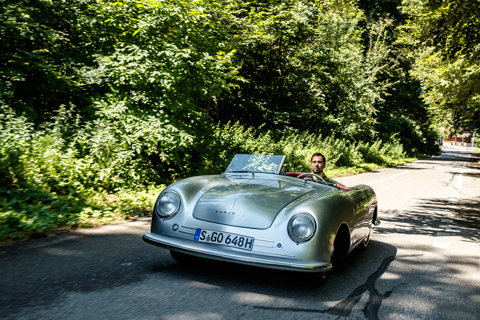
Anyone who wants to drive an old car will inevitably have to face up to this question. After all, parts have to be replaced again and again as the car is used. Old tires have to make way for new tires, which are often not even visually comparable to the original tires. Technical components have to be replaced, sometimes more modern components are used. And for registration reasons, even the paintwork or interior may have to be replaced. An automobile is only original in the strictest sense once, namely when it leaves the factory. As soon as it is used repeatedly, the vehicle has to be serviced, parts/components are replaced or worn out. In a good case, the spare parts are functionally and visually identical to those originally used. However, the older the car is, the more likely it is that compromises will have to be made. As a passionate classic car driver, Thomas Meister is prepared to make these compromises.
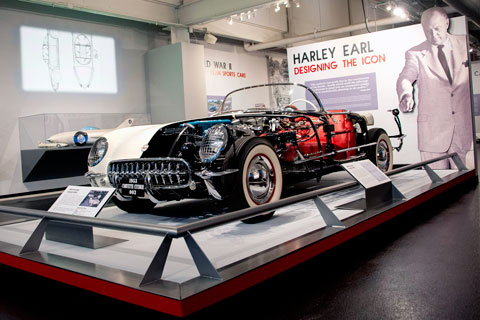
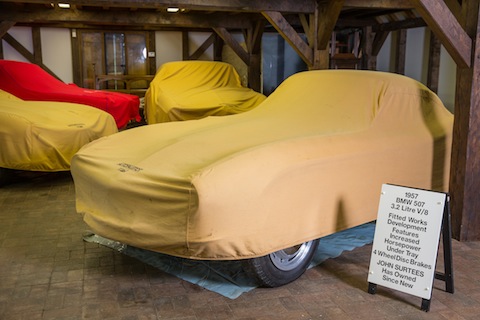
However, if you want to study a truly original automobile, you often have to resort to "stationary vehicles" that have not been used for a long time or have never been used at all. This is only possible in a museum (or in a collection) and is usually limited to a purely visual inspection; hearing or smelling is then not possible.
However, "originality" is only one factor that needs to be considered in this context, in addition to the cost arguments already mentioned. There is also the issue of "risk". As soon as you put a car on the road, there are also risks of accidents and theft. Driver-induced risks must also be taken into account: a car can burn down if it is handled incorrectly, a gearbox can give up the ghost if it is tampered with. Much or almost everything can be repaired, but some things cannot. People may not want to expose particularly rare or unique vehicles to these risks.
Most of us are drivers by nature. We own our cars so that we can move them, so that they correspond to the idea of "cultural assets on wheels". We are prepared to make compromises for this, but we try to keep them to a minimum. But it's also great that there are institutions that simply keep historic cars and preserve them for posterity, just as they were when they were taken out of circulation.