When family resemblance was still a foreign word

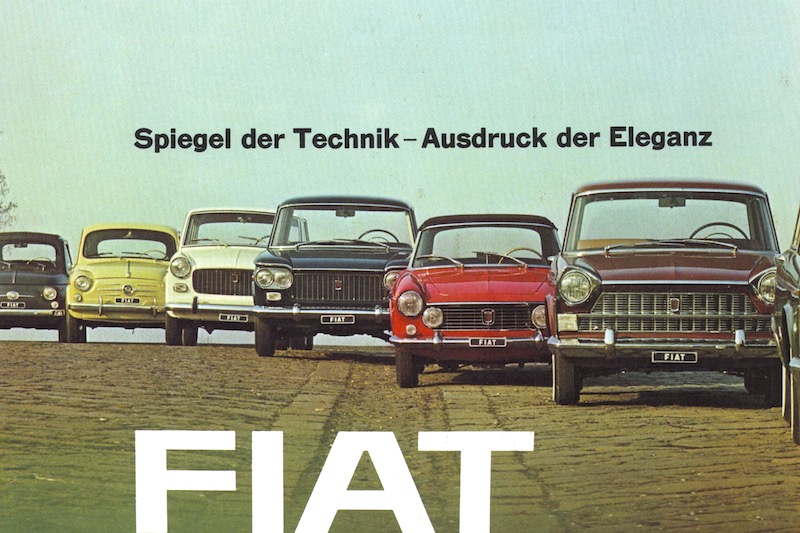
I admit that this topic is not all that original. But this excerpt from a two-page Fiat advertisement from 1964 illustrates far too beautifully how different cars from one brand could once look. On the far left, there are the bulbous 500 and 600 compact cars, which clearly differ in the contours of their hoods despite their rounded similarities.
In front of them is the simple 1100 D, which seems to consist only of circles and rectangles, next to the modern 1300 with its chic Corvair crease and aggressive twin headlights that cut the upper corner of the radiator grille. In front of the two saloons, the 1500 Spider combines the simple round lamps of the 1100 D with the cut-out air intake of the 1300.
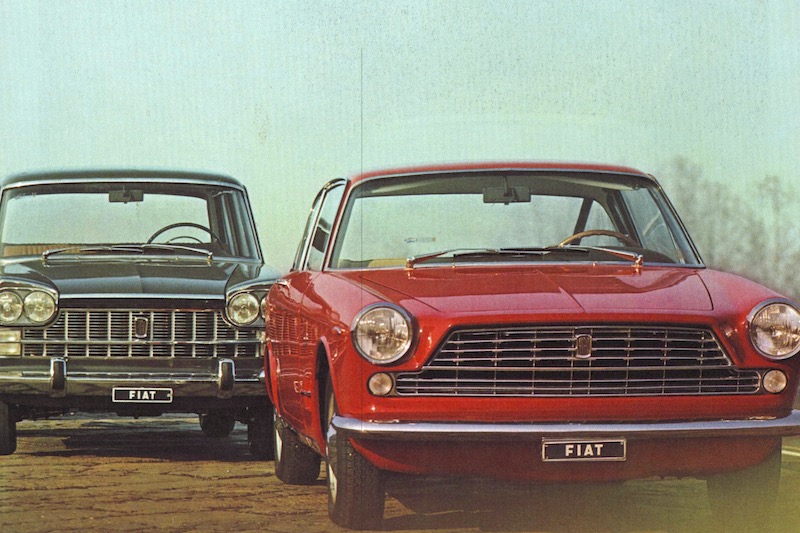
The dark red 1800 on the far right, with its pointed trapezoidal lines in the best rocket-bar style, is still a remnant of the 1950s and will nevertheless remain in the Fiat range for another four years. In front of it are the 2300, which combines the twin headlights of the 1500 with the pointed fenders of the 1800 and opens the second side, and the 2300-S Coupé, which wears the 1950s grille in the round spider style of the 1960s.
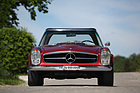
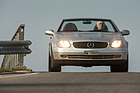
At Daimler-Benz, the family resemblance naturally had its own name, just as the "Kick-Down" was not called "Kick-Down" but "Übergas". Bruno Sacco coined the term "horizontal homogeneity" for identical design features in different model series. This meant that a Mercedes-Benz should always be recognizable as a Mercedes-Benz. This philosophy is still followed in Stuttgart today, even if it was probably meant a little too well. Because as much as the brand identity grew, the model identity shrank. Because let's be honest: could you tell the model series in the picture below apart without the names on the license plates?


_RM.jpg)