Range anxiety - not really a new phenomenon


A few weeks ago, I was able to travel a longer distance in an electric car for the first time. Although only as a passenger, I immediately witnessed a phenomenon that seems to be predominantly observed among users of battery electric cars: range anxiety. My driver felt a little queasy as soon as she set off when her car calculated that it would complete the 300-kilometre route with a surplus of less than ten kilometers - and the trend was downwards.
According to a user survey on the auto motor und sport website, she shares the concern of an uncertain arrival with 58 percent of e-car users. My curious question about what would happen if we ran out of juice on the road was followed by horror stories from acquaintances: under no circumstances should you drive a Tesla down to zero percent empty, as the doors would also open electrically. This had happened to a friend of hers once and he had to break a window. To be on the safe side, we should recharge in between.
Spontaneously, I think back to the time when only the driver was responsible for calculating the radius of action and was therefore in control of his own carelessness. However, there was always a certain residual risk, because even the best mental arithmetic skills were no guarantee of an uninterrupted journey. As a driver of an English classic, I know the problem all too well: just because the fuel gauge still shows a 25 percent fill level, it doesn't mean that the contents of the tank really still consist of a quarter of fuel.

Blessed are those who drive by the odometer. But even that doesn't protect you from involuntary breaks due to low fuel levels. On a long freeway journey, for example, my Nasenbär Passat once showed me an eighth of the original 70 liters of Super - enough for a relaxed drive to the next village filling station. And just as the three-digit counter was "zeroing" again and I was wondering about the unusual economy, the engine began to cough, turning the trip to the village filling station into a hike.
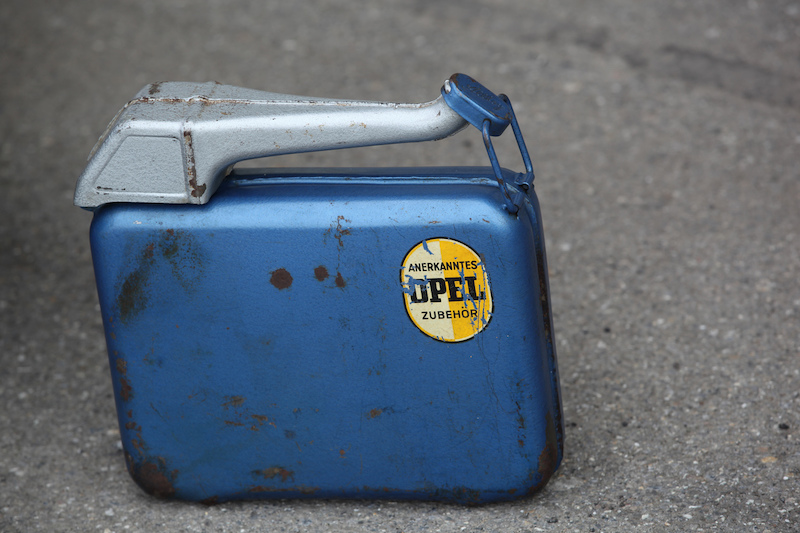
Of course, this also works in the other direction: for example, when the (as I now know very precisely) fuel gauge in the Opel Rekord P1 is unchangingly set to "L" without the slightest twitch, but the last filling of the 40-liter tank was only 200 kilometers ago. Since you naturally know your car better than it knows itself, you ignore the signal - until the Opel finds itself immobilized at the side of the road. A leaking fuel hose had almost doubled the fuel consumption - and the instrument cluster was unfortunately correct.
The worst moments, however, are those when both the odometer and the fuel gauge signal an immediate need for action - and of course there is no filling station in the middle of nowhere offering 98-octane petrol. As the operator of a combustion engine, you then have to decide which is the lesser evil: too much or no more willingness to ignite, knock resistance concerns or range anxiety. A miscalculation can also result in a longer walk. But at least all the windows remain intact.