The entry of the compact cassette into the automobile

In 1963, Philips launched the first compact cassette players on the market and began to revolutionize the music world with a thin and narrow tape inserted in a plastic sleeve. Only this development ultimately made the Walkman (much later, around 1980) and thus the forerunner of the iPod possible at all.
Until the 1960s, people mainly listened to the radio in their cars, although there were occasional attempts to play records in the vehicle.
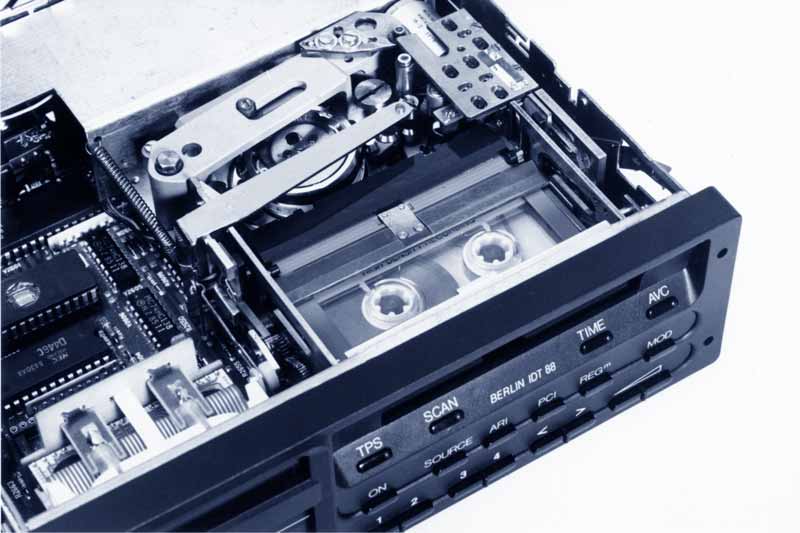
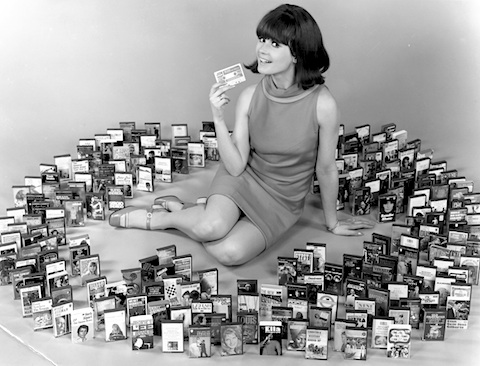
The large eight-track players were the first viable solution for listening to canned music in cars. However, the large cassettes also required relatively large devices and these and the tapes themselves were bulky to store. The compact cassette naturally offered a welcome alternative. These could be bought empty to play yourself or like a record with commercially recorded music (see picture above).

However, it would be almost the end of the sixties before usable cassette players for cars were developed. Philips was of course an early mover again and in 1969, among other things, presented combined devices that allowed cassettes to be played and radio music to be listened to. However, the first generation of cassette players for cars were often limited to one medium. Stereo devices (such as the 2602 shown above with 2 x 4 watts!) also came onto the market at this time. There were even dreams of high fidelity (hi-fi), but that was still a long way off in 1969.
The Automobil Revue published an extensive article about Philips' activities in issue 21/1969 on page 23.