Tools in the screwdriver workshop, a chicken-and-egg question?

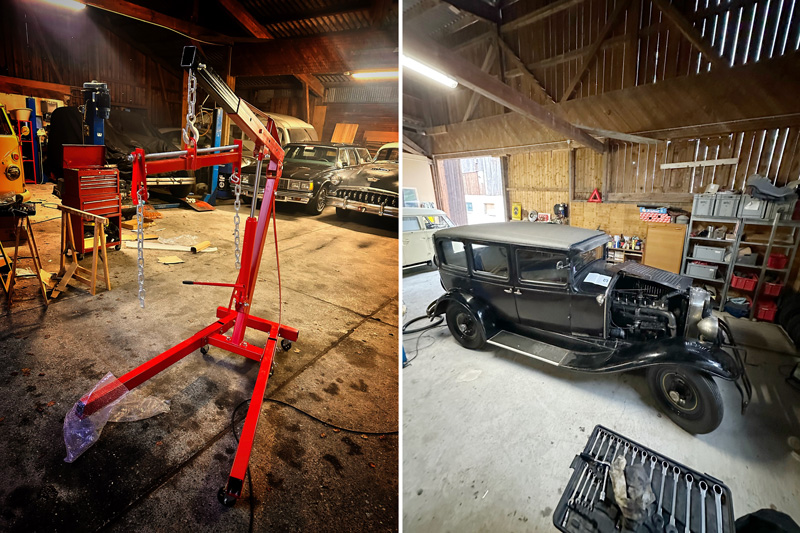
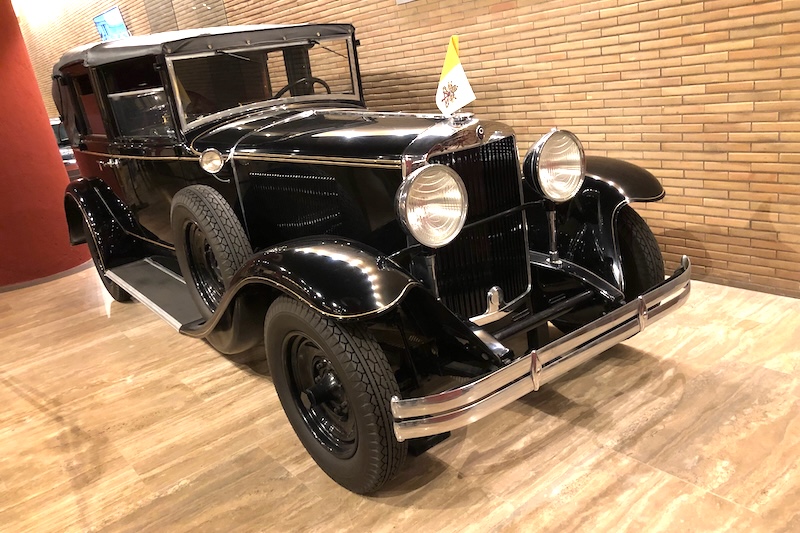
The noise was first heard under high load on an incline, and the metallic clacking sound was undoubtedly audible. A connecting rod bearing! The car with this problem is called the Graham-Paige 619 and has been part of my fleet since last year.
It was to be expected - a car that was parked in a shed from 1955 to 2006 can hold all kinds of surprises. I, on the other hand, was an optimist, bought the American from a friend and hoped that its recommissioning had been done according to all the rules of the art. Somehow, however, I expected to simply flush an almost 100-year-old engine and then fill it with fresh, classic-grade, i.e. low-alloy oil. Although I'm not even so sure that it had to go wrong in every case.
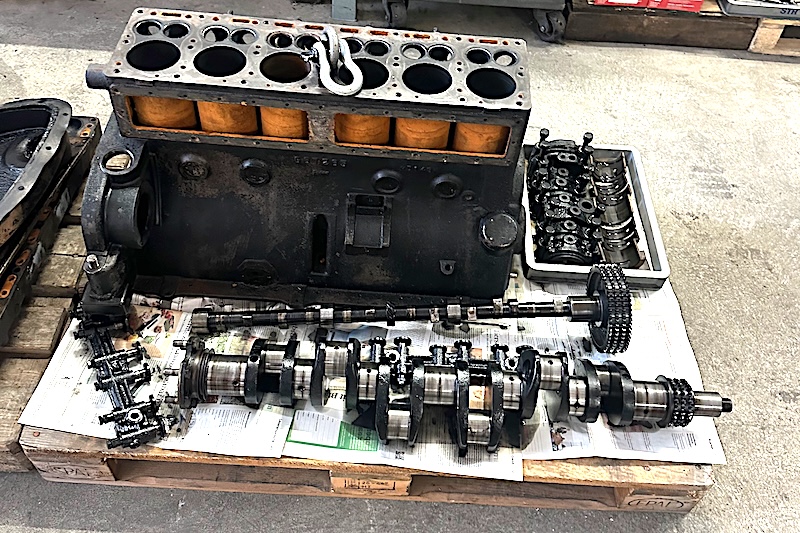
The fact is, when the three Graham brothers launched their Graham-Paige brand in 1928, they didn't mess around. The engine of my model 619, a 4.8-liter 6-cylinder with a seven-bearing crankshaft and upright valves, was quite a modern design at the time. It already had inset bearing shells - better than the cast bearings that were common at the time when they needed to be replaced.
In view of the many die-cast parts that have disintegrated around the car in its long life due to zinc plague, I do not suspect mechanical overloading of a bearing shell, but rather age-related disintegration of the same. The Johnson carburetor therefore probably went over the Jordan a long time ago, probably back in the 1950s. The ignition distributor almost collapsed, and even the Trico vacuum wiper motor was whistling out of all its holes due to the chemical reaction of the aluminum with copper and small amounts of magnesium, the ingredients that are typical of Zamak alloys. According to the founders of the English toy car manufacturer Lesney, this is one of the main causes of zinc plague. On their factory premises, where Matchbox cars were once manufactured, there was an absolute ban on lead, which was only allowed to be processed in isolated buildings. I don't know what's in the bearing shells - or what was in them back then - but the fact is that one of them has too much air and is rattling.
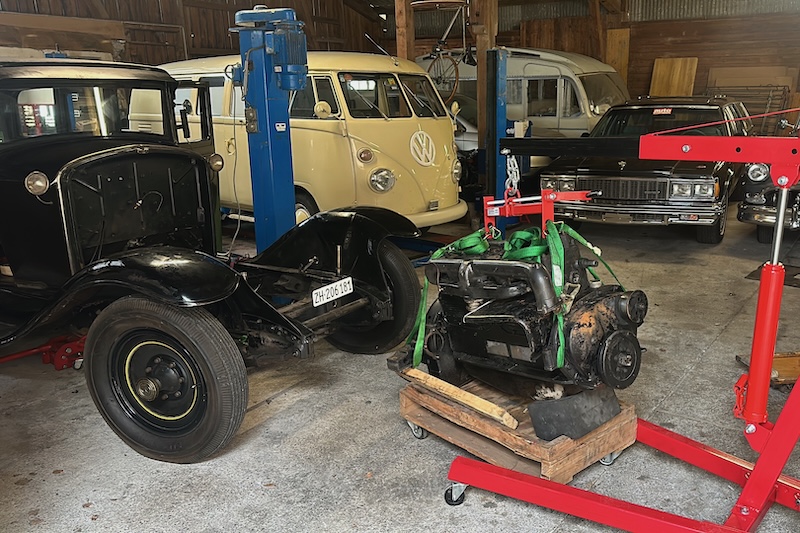
Now the engine is coming out and I need a workshop crane. Although I am otherwise rather averse to cheap Chinese products, I have decided to purchase such a 2-ton helper from the Middle Kingdom. Given the price, including a balancer to help me lift the gigantic cast iron block out of the chassis and place it on a pallet, I couldn't resist. With the pre-war car, removing the engine shouldn't pose too many problems; the entire front including the radiator can be easily removed. I will then roll the tool into a corner so that I can only use it again when, hopefully, the machine comes back from the engine builder next spring freshly overhauled. I'm not sure what I'll do with the crane afterwards, but I'll probably put it in a corner. It will give me a good feeling, because I could remove another engine if I wanted to, just in case. This makes me think about how my tools have accumulated over the years.
Some people who do their own wrenching will be familiar with this: Do you tackle things because you have the tools to do so, or does your own zest for action rather demand the purchase of the appropriate tool? It's a chicken-and-egg question.
I have three categories of tools. The first category is the basics, all the material that belongs in a proper workshop - such as a socket set or an air compressor, perhaps even a welding system. The second category consists of the "good opportunities", everything that once found its way to me from a workshop clearance, a parts market box or a bargain market. In my case, for example, a sheet metal beaver for cutting out body panels or an impact wrench - both of which I have never used. Finally, the third category is made up of items that I bought out of necessity, some of them from professional suppliers: Various pullers, special pliers, removal tools for sealing rings, the huge nut including socket wrench for the central castle nuts of the rear brake drums of the VW Transporter or a high-end airbrush gun including water separator for tiny touch-up work on the paintwork. All of this is stored in my man cave, i.e. workshop. And now this crane has been added. I'm now prepared for anything...