Perhaps we shouldn't be surprised, but we were a little taken aback by Jaguar's latest press release. We had already become somewhat accustomed to newly created C and D-Types, as well as factory-built new cars such as the Goldfinger DB5 and Lightweight E-Type.
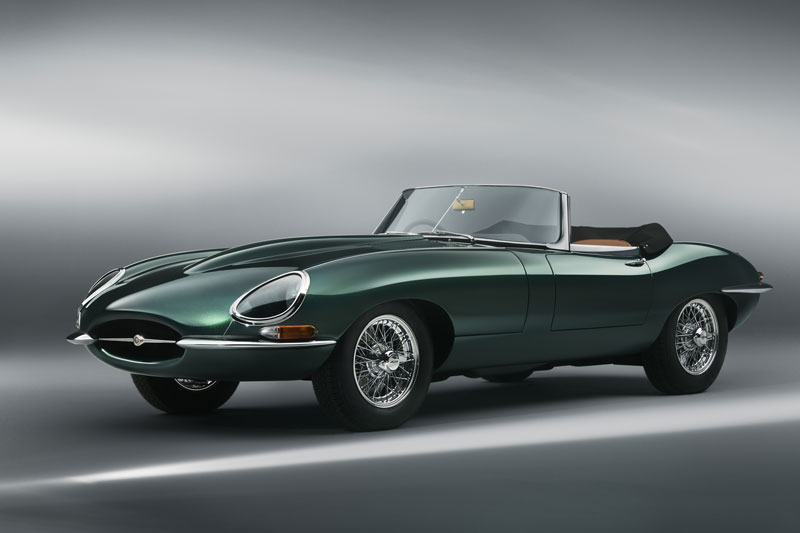
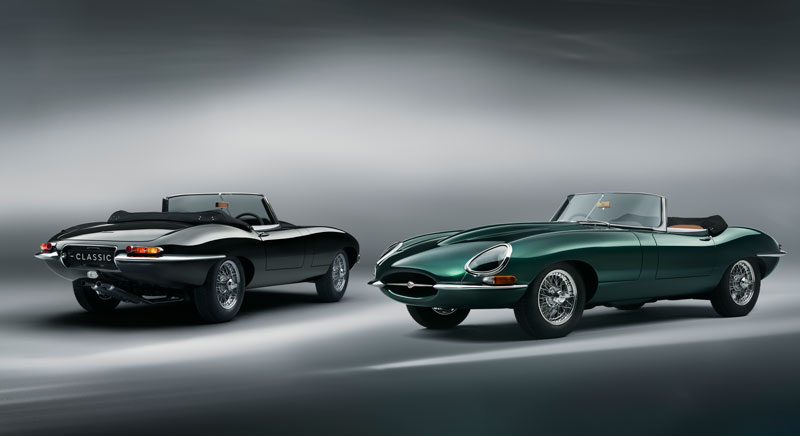
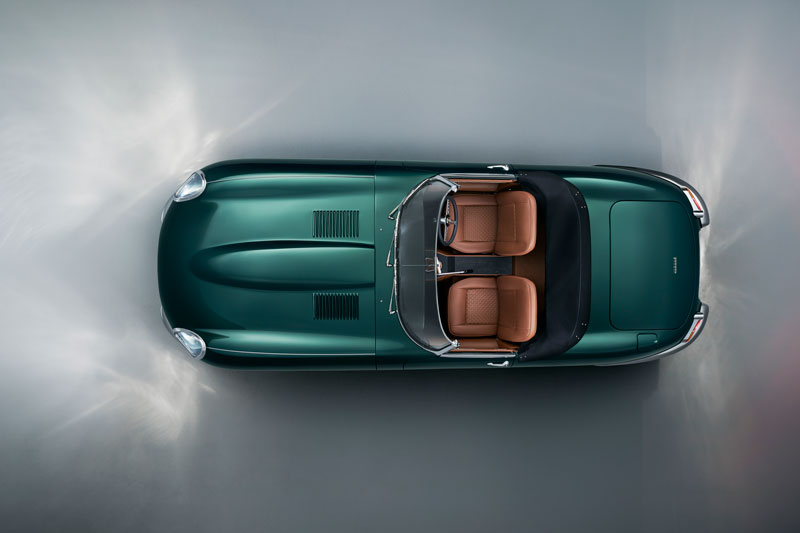
Now, however, Jaguar built two "commemorative vehicles" for a good and probably very solvent customer in Southeast Asia, namely two "Jaguar Classic Works E-Type Series 1".
In principle, the two E-Types were based on the original Series 1 blueprints, but the color scheme is based on the final 50 "Commemorative Editions" from 1974.
However, they did not want to leave it at copying, the "almost perfect design" was to be further refined. "As the inventors of the E-Type, we are in a unique position to integrate both aesthetic and technical improvements based on decades of knowledge, skill and passion," Lennard Hoornick, Chief Commercial Officer at JLR, was quoted as saying.
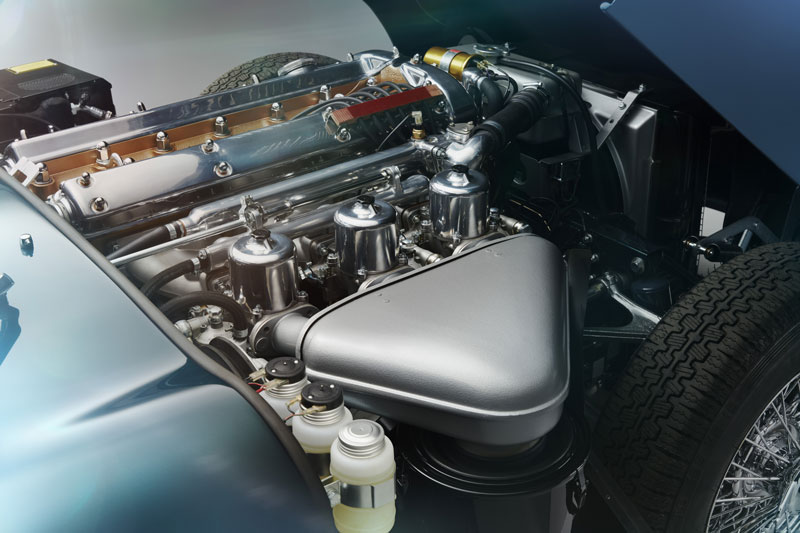
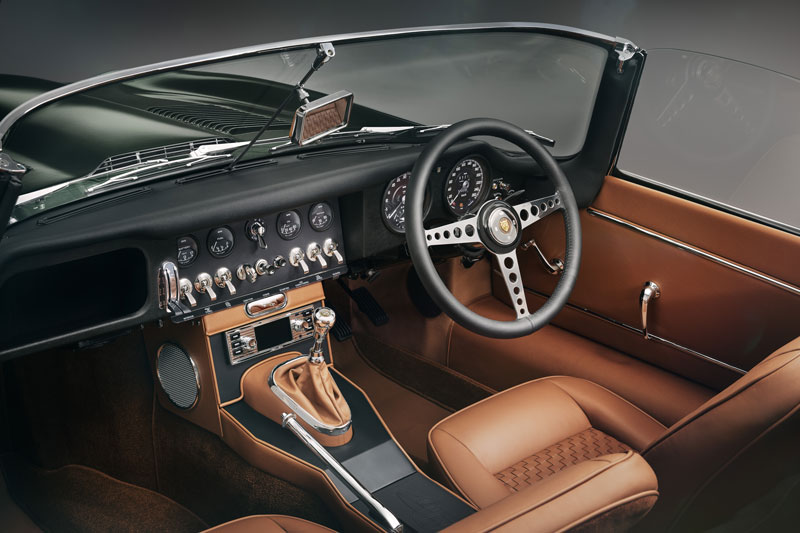
Although the engine is the famous 3.8-liter XK six-cylinder, it has been "refined" with electronic fuel injection and combined with a Jaguar Classic five-speed gearbox. A heated windshield, air conditioning and an "unobtrusive" Bluetooth radio also ensure contemporary comfort on board.
In any case, the interior was given more freedom, with sterling silver and mother-of-pearl as well as leather variations that William Lyons could hardly have imagined at the time.
In principle, the result is reminiscent of a "restomod", but as a new car ex works. Whether the result can be registered for road use in South-East Asia is beyond our knowledge; in this country it is likely to be more difficult. And we ourselves still prefer an early and original Series 1 E-Type with Moss gearbox (and without "bells and whistles") to all other variants.
But as we all know, everything is a matter of taste. And if you would also like a reinterpreted E-Type, you can simply contact the European JLR Classic Center in Essen ...
In the old days, people still had winter cars. I remember one of my colleagues buying a new Alfa Romeo Spider (Aerodinamica model) around 40 years ago. And after one summer, he thought the car was too good for winter use.
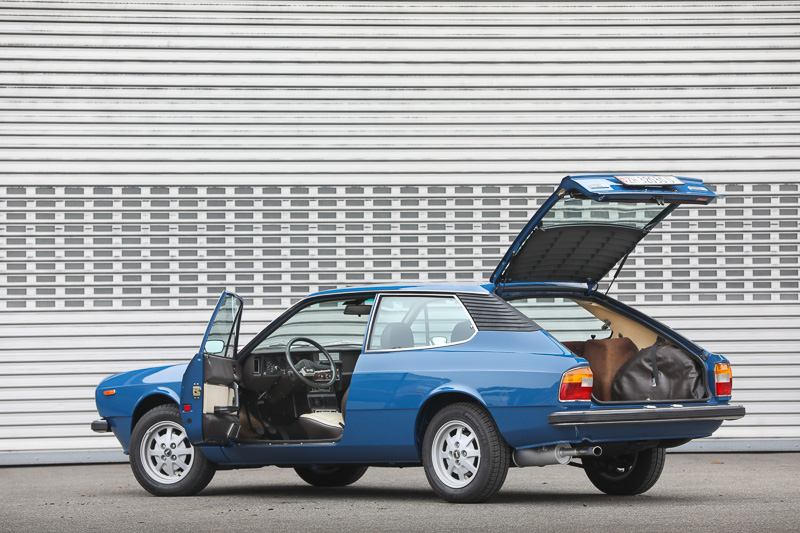
So he bought an inexpensive car for the winter, which was still full of salt and grit, a Lancia Beta HPE. With a few years under its belt, this Lancia was very reasonably priced and, thanks to its front-wheel drive, was also sufficiently suitable for winter use. It was also practical with its large tailgate. And it almost certainly didn't survive too many of those harsh winters and was then probably consigned to the scrapyard.
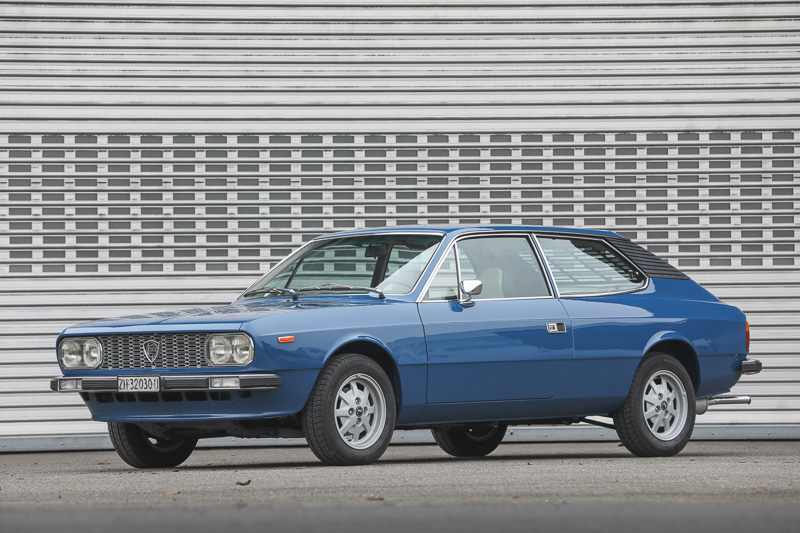
That was the fate of many cars back then, which is why they are so rare today. Like this Lancia Beta HPE from 1976 in the color "Bleu Antibes" shown here. When else do you see such an early Lancia Beta HPE?
Of course, we wanted to photograph it immediately. It will grace the cover of the next but one SwissClassics Revue, which will be published at the end of January. And in another way, it will also become a winter car again. May it enjoy many more decades! A great car.
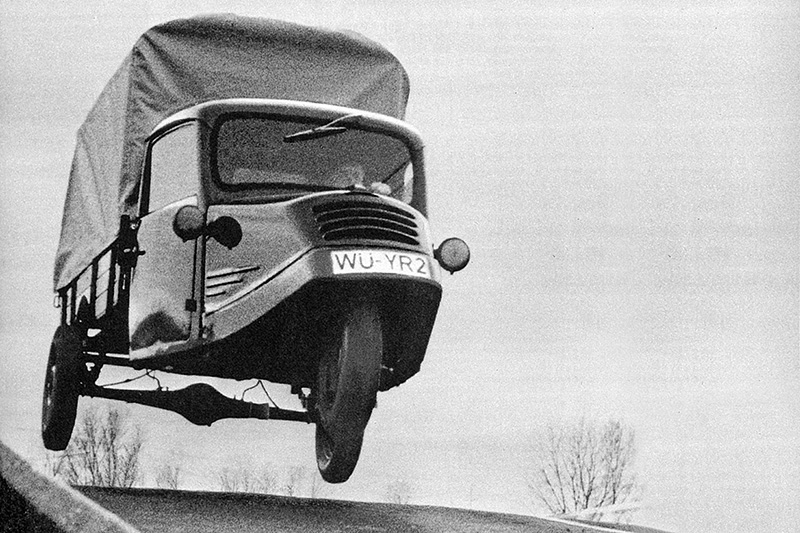
Nothing was as important to Theo as owning his own home. That's why he let his Tempo tricycle fly so that he could take out a home loan contract with wüstenrot as quickly as possible. They were so enthusiastic about it that they turned Theo's fast-paced flight into a double-sided advertising motif - and completely overlooked the fact that the supposed Tempo was actually a Goliath.
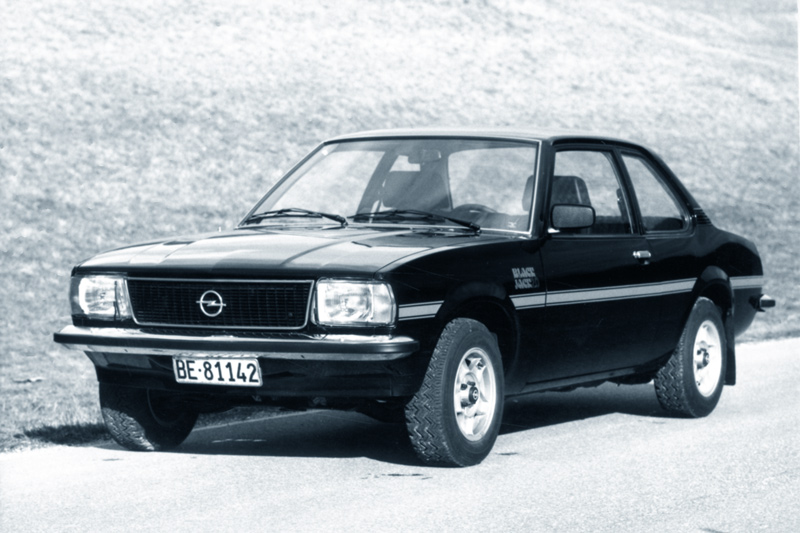
I came across this when I read the report on the new electric Renault 5. It will be delivered with four side doors, although it imitates the design of the original R5, which was initially only available with two side doors. But a sedan with only two doors on the left and right is almost impossible to sell today, I was told.
Oops, I hadn't noticed that before. Sure, today's SUVs and large saloons all have two doors on each side, but are there really no two-door normal cars left, apart from coupés and convertibles?
In any case, the offer is very thin. Opel Astra, BMW 3-series, Audis and even small Mercedes-Benzes have four (or five) doors. Only the Fiat 500e seems to be an exception, perhaps also the upcoming electric Renault Twingo.
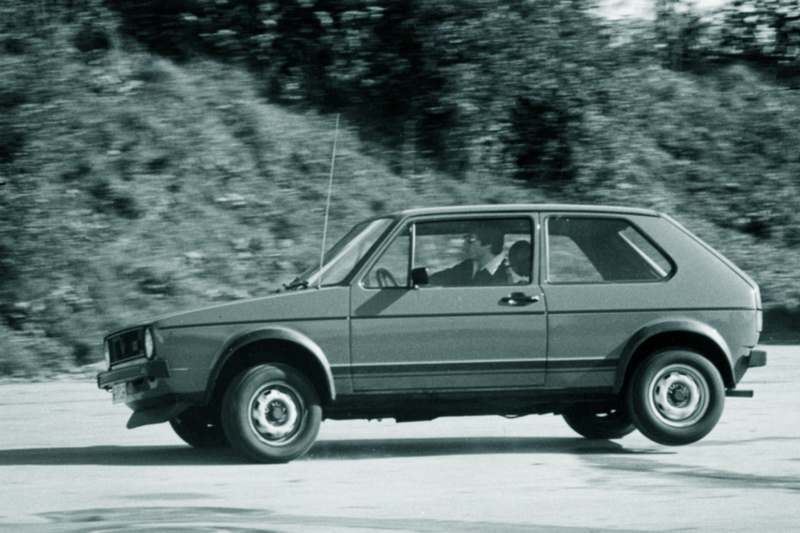
It used to be very different, the BMW E21 was only available with two doors, the Opel models were usually available with two or four side doors, the Beetle was only available with two doors anyway, the Golf with either two or four side doors. Even the Passat was once available with two doors. Tempi passati. The question of whether you want to pay a few hundred euros or francs for two additional doors (and slightly reduced body stability) no longer needs to be asked today. And yet two-door saloons looked quite good ...
For many, many years I have been keeping a "book" of the cars I have bought, driven and sold. At some point, I transferred the collected values to a Microsoft Excel spreadsheet (file extension XLS), which I have maintained ever since. This makes it easy to analyze the key data, but even without a lot of arithmetic, you immediately notice some things that you probably wouldn't remember so easily without a list.
For example, I have owned cars with 3, 4, 5, 6, 8 and 12 cylinders, but none with a ten-cylinder engine and none with fewer than three cylinders. But exactly 20 years ago I drove a Wankel sports car (Mazda RX-8). Diesel engines are clearly in the minority, and statistically speaking my preference is for petrol engines (ratio about 14:1).
Although I'm a big convertible fan, only a good fifth of the cars I've owned so far have been open-tops.
I have bought a handful of vehicle types twice, namely the Fiat 850 Spider, the Mazda MX-5, the Mercedes-Benz 300 SL (R107), the Honda NSX and the Peugeot 205 GTI, in each case at different intervals and for different reasons.
With the exception of a few Japanese, a Czech, an Australian and half an American and a Frenchman, all the cars I bought came from Germany, Great Britain or Italy.
Unfortunately, unlike the mileage, I didn't meticulously note the average fuel consumption, but it is surprising that a modern two-ton class estate car with over 300 hp and four-wheel drive hardly consumes any more fuel than a Fiat Panda with 45 hp did 40 years ago.
I've covered a total of around 1.05 million kilometers in my cars so far and spent huge sums on their purchase, some of which, of course, flowed back into my account when I sold them. I was only able to sell a few vehicles at a "profit", which would have been rather unusual for the many everyday cars. And from today's perspective, it is of course surprising how cheaply some of the then still young classics were available, which I naturally sold far too early, how could it be otherwise?
I kept trying out new technologies. My cars were equipped with a wide variety of transmissions (Multitronic, Selespeed, DSG, torque converter automatic, manual gearbox). Front-wheel, rear-wheel and all-wheel drive were used, as were naturally aspirated, turbocharged and supercharged engines. An above-average number of my vehicles had plastic bodies.
Of course, there are also some open points in my vehicle history. Not only is a ten-cylinder missing, but also a genuine pre-war car. I never owned a Jaguar or a Maserati, to name just a few examples. But there's still room for a few more cars on the list ...
The story of the Kienle case has just been covered in depth on SWR. We have already reported on it in previous articles. Nobody has been convicted yet, but the evidence hardly promises an unexpected twist in the case. On the contrary, the accusations are even more serious than initially suspected. Not only are cars alleged to have been forged, but further accusations have been added to the case of the fantasy yellow roadster, which used the chassis number of the 1961 Geneva Salon 300SL, but was in fact based on a white vehicle stolen in 1983. One of them is that expensive original parts were removed from customer vehicles by unsuspecting people at the Kienle company in order to use them elsewhere or to be able to sell them on.
This is the nightmare scenario for anyone who entrusts their collector's car to a company that is supposed to service, repair or restore it. Who is going to look under the dashboard or hood at the end of the work to see whether the original windscreen wiper motor is still in place or just a - possibly quite acceptable - replica? Certainly hardly anyone does this. Nevertheless, the certainty that you will drive away with your complete car has a lot to do with confidence, but also a very small amount with knowledge. In general, it's helpful to know a little about what you want to spend your good money on. This starts with checking vehicle specifications, corresponding chassis and engine numbers and sometimes ends with studying long lists, catalogs and the like.
In the case of the 300 SL in question, it would probably have helped if the current Southeast Asian owner of the counterfeit car had known exactly where to look for which numbers on the car. However, we don't know how important he thought this was in the first place. Perhaps not at all; a 300 SL is a 300 SL and that's that. Forging cars is certainly an act of high criminal energy, but if we are honest with ourselves, we might not be angry with our garage if the car makes it to the next official inspection despite a slightly leaky gearbox. Or if the veteran status, the code 180 in Switzerland, is emblazoned on the ID card thanks to a little persuasion from our trusted mechanic, or if the H license plate hangs on the car in Germany. This is perhaps despite the dual carburetor, which was not intended for this type of car and is now installed.
I think this is far from criminal, it is a service provided to the customer by a hard-working specialist workshop. Perhaps even the experienced expert knows this and lets the matter go, because after all, such conversions were not uncommon back then either.
And in most cases, it's not about big money. On the other hand, if this is involved, you might well expect a buyer to take a deeper interest in the item they are buying. It is precisely in this respect that I am sometimes more than amazed when I act as a judge at beauty contests. I remember the case of a car declared as a Porsche 911 Turbolook, which was nothing more than a 1980s G-model as an SC - with a rear spoiler. Who knows where the owner got the idea of driving a Turbolook? The feature, which was definitely on the Porsche surcharge list at the time, included both the chassis and the wide body of the inflated 911, not just an engine compartment flap.
At another event, a participant proudly showed me his "all-original" DeSoto Convertible from the late 1930s. On opening the hood, the "all original" conclusion was quickly refuted: Two carburetors of unknown origin were sitting on the intake manifold of the L-head six-cylinder engine, which in principle could have been a great, era-appropriate "speed part". Unfortunately, the intake manifolds were crudely welded onto the original part and the original, central hole for the single Carter BB carburetor was sealed with a thick aluminum plate. I advised the owner to look around for an original twin carburetor intake manifold, as they were definitely available back then and would be a nice addition today.
So who is to blame for the fact that cars are being counterfeited? First and foremost, certainly and clearly the person who does this or, as the SWR documentary shows, demands this of their employees. However, there is a corresponding environment that encourages such behavior. The worst thing is "not asking". Because those who inform themselves, who demand detailed documentation or seek an independent expert and thus a third-party opinion, run less risk of experiencing a blue miracle - or in the case of the car that brought Kienle down - a "fantasy miracle".
P.S. For those who have not yet been able to watch the SWR documentary, we are showing the video here. It can also be found in the TV station's media library:
Copyright: SWR
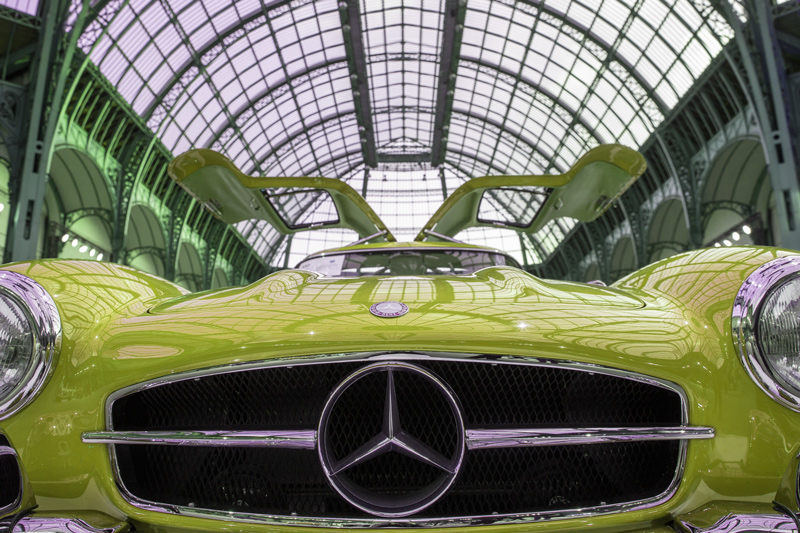
P.S.2 The gullwing above is for illustration purposes only and of course has nothing to do with this story.
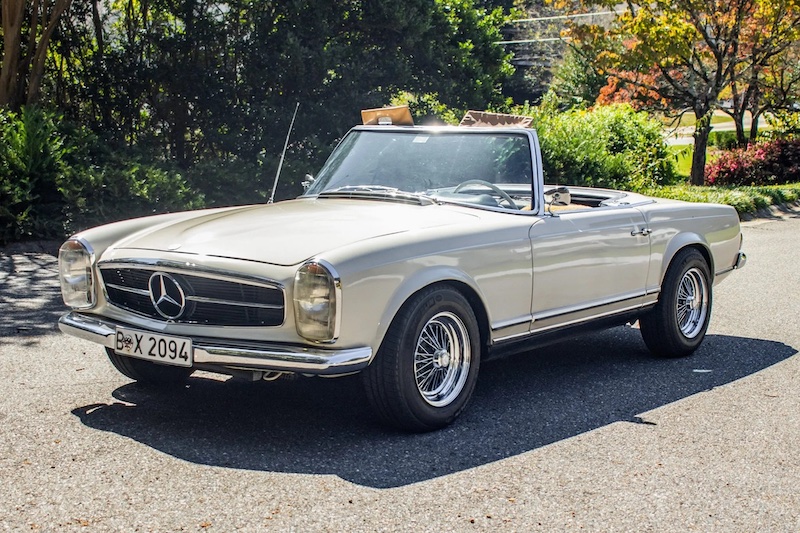
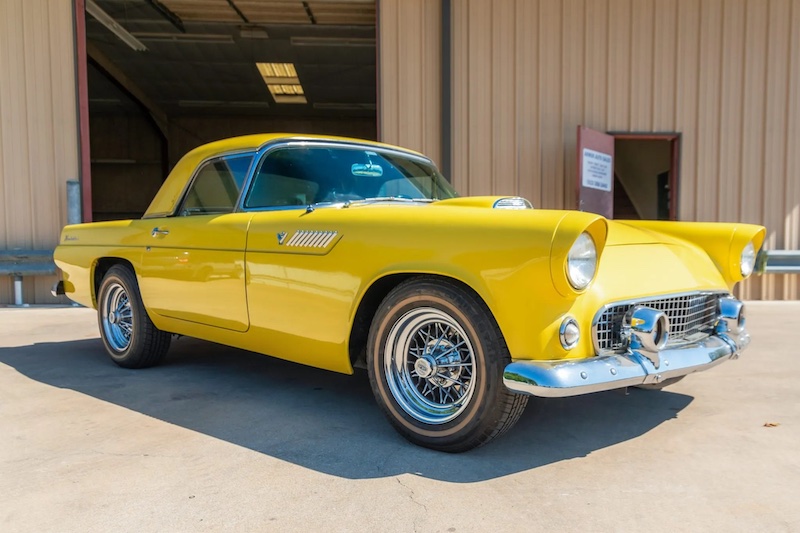
If you've been following my morning blog posts for a while, you'll know that I have a penchant for making unusual modifications to classic cars. This includes: wire wheels on cars that shouldn't actually have wire wheels. For example, the "Pagoda" from Mercedes-Benz. I think we agree on this point.
Somehow, instead of genuine classic elegance, they only lend the unobtrusive convertible their cramped, over-emphasized misunderstanding of those Excalibur nostalgia coaches from the eighties. And yet I can't help but respect the owner for his courage and independence. How many others would have simply bolted on "baroque rims"?
Even the '55 Ford Thunderbird looks somehow more honest with the factory-fitted hubcaps, which only imitate the filigree wheelwork, than with real wire wheels. Incidentally, both cars were auctioned exactly like this on bringatrailer.com.
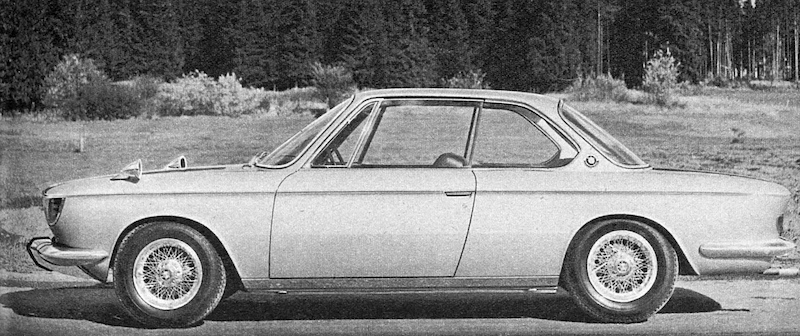
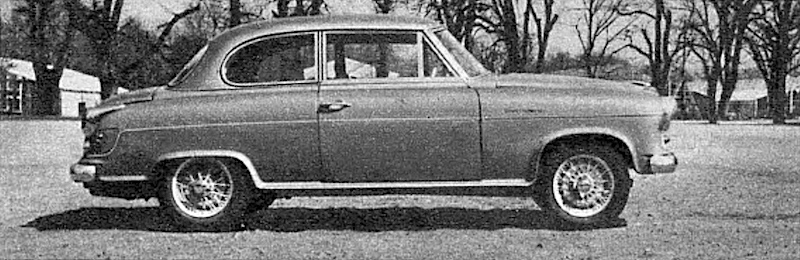
"Yes, yes, those uncultured Americans have no taste," some people might say. However, we Western Europeans were no better in the past. There was this AMS reader from Augsburg, for example, who actually bolted 15-inch spoke wheels onto his Isabella TS in 1958. Even Burkard Bovensiepen fitted the BMW 2000 CS Alpina with the wiry wheels on request in 1967 - from Borrani, after all.
In the last two cases, the conversion would therefore even be "historically correct" and perfectly compatible with the H license plate. But whether anyone will ever dare to do it again is another question. I think I need an Isabella...
When I was finally able to get my driver's license, I was of course already well informed about which cars were available to buy. An important parameter when evaluating vehicles at that time was the so-called "power-to-weight ratio", measured in kilograms per horsepower. You simply divided the unladen weight of the car by the horsepower produced by the engine and you could compare the car with competitor models.
At the time, 10 kg/hp was considered the limit between more sporty and less dynamic cars. An Alfa Romeo Alfasud TI with 85 hp, for example, just managed the 10 kg/hp, a Sprint Veloce with reserves. The VW Golf GTI was, of course, a car with a very good power-to-weight ratio, 110 hp met around 750 kg in the first series, no wonder it managed the sprint from 0 to 100 km/h in less than 10 seconds. Cars with around 10 kg/hp usually achieved a standard sprint time of between 10 and 13 seconds.
That was all a long time ago and the limits have clearly shifted. Modern hypercars are moving towards 1 kg per hp, while 5 kg per hp is almost mediocre for a sports car; a Lotus Emira, for example, is currently at around 4 kg per hp. The true masters of power-to-weight ratio are the fast electric cars, but even weak models typically manage the 10 kg per hp easily. However, electric cars in particular seem much more spirited when accelerating from a standstill. Of course, this is where the high torque, which is available practically from a standstill, comes into play.
Even today, however, a really light car with a sporty power-to-weight ratio is hard to beat in terms of driving feel. Of course, modern hybrid or electric sports cars also whizz up hills quickly, but they require an incredible amount of technology, whereas a Lotus Super Seven from the sixties, for example, only relies on low weight and a simple off-the-shelf four-cylinder engine.
Over 40 years ago, I thought that 10 kg per horsepower was a reasonable entry threshold for me, but over the years I also bought a few cars that weighed considerably more per horsepower and were still a lot of fun. Examples were the Fiat 850 Spider or the Fiat Panda, but also the BMW 320i Cabriolet (E30).
What I can clearly say from my own experience, to come to a conclusion here, is that a better power-to-weight ratio does not automatically mean more driving pleasure ...
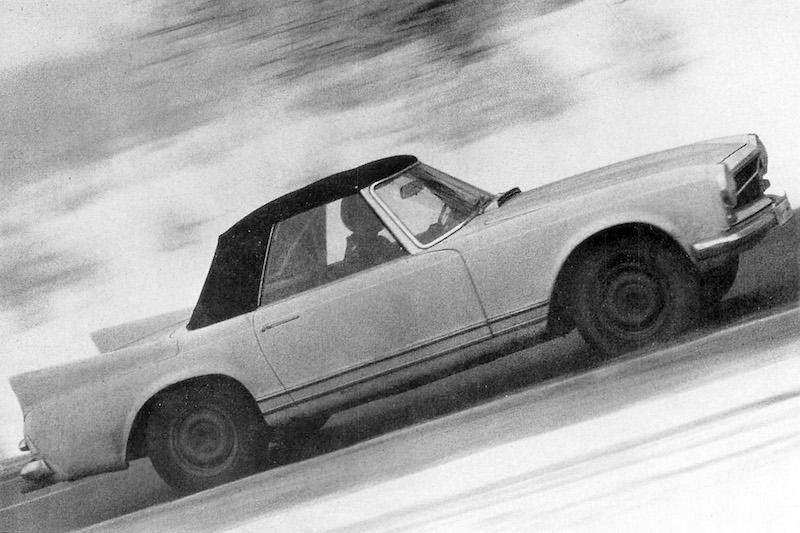
In 1959, the large saloons were not yet the pinnacle of tail fins at Daimler-Benz. This tailfin-less convertible could still be photographed on the test site in Sindelfingen in the winter of 1962. By then, the high pseudo-tail fins had long since gone out of fashion - and in this case, fortunately, they were just camouflage.
I'm sure you've already recognized it: This raging aberration of taste is a test model of the new 230 SL, which was finally unveiled in March 1963 - without fins, of course. Another, far less conspicuous detail also differs from the later production model: the circular headlights in the style of the 190 SL. Was this the right decision?
From 1964 to 1971, Swiss driver Jo Siffert drove exactly 82 races for Porsche. He was at the wheel for the first triumph of the Porsche 917 - a model that was to change the brand's image from the ground up.
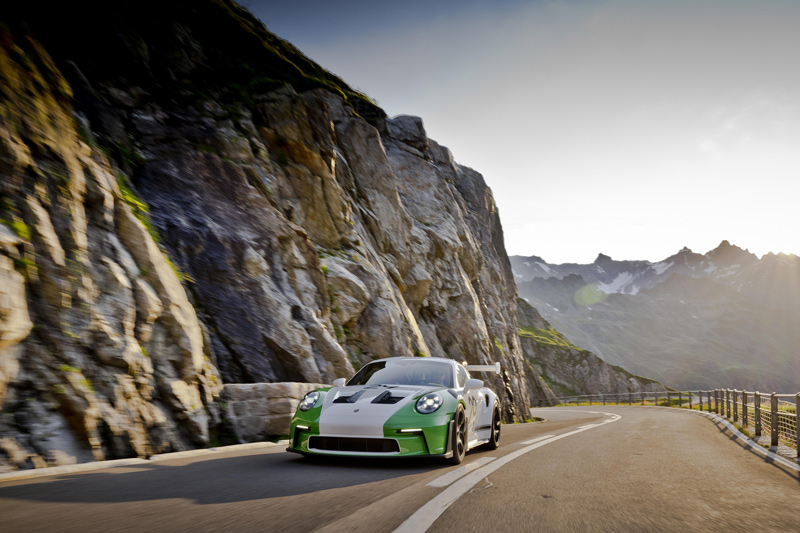
With a unique Porsche 911 GT3 RS "Tribute to Jo Siffert", Porsche is paying tribute to the Swiss racing driver who died far too early and at the same time commemorating that very first victory of the legendary 917 almost 55 years ago.
In 1968, the FIA surprisingly changed the regulations for the one-make world championship and the engine capacity limit was raised to five liters - in addition, the number of cars required for homologation was reduced to 25. The three-liter Porsche 908 was no longer competitive.
A new five-liter car was needed - the 917. Its track record remains legendary to this day: after the Sports Car World Championship in its first year of use in 1969, Hans Herrmann and Richard Attwood achieved the coveted triumph at Le Mans in 1970. Helmut Marko and Gijs van Lennep were able to repeat this greatest motorsport success for Porsche to date in 1971. George Follmer dominated the North American CanAm series in 1972 and Mark Donohue in 1973 with the 917/10 and 917/30 turbo versions with over 1000 hp as a further development of the 917.
"We owe the 1969 World Sports Car Championship in large part to Jo Siffert. He was clearly the fastest man in our team," recalled former chief race engineer Peter Falk of the Swiss in 2018. Porsche won seven out of ten races this season.
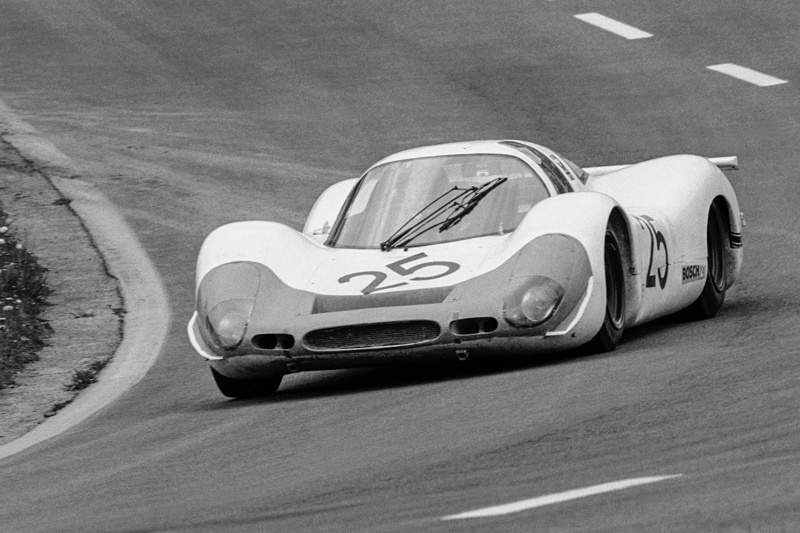
Siffert took five of these victories together with Britain's Brian Redman and one with Kurt Ahrens - the one on August 10, 1969 at the opening race of the new race track in Zeltweg. "Our victory in Zeltweg was the start of the 917's success story and it was a great pleasure and honor for me to share the cockpit with Jo," says his companion Ahrens.
There was also a Swiss double victory with Herbert Müller in second place in the Lola T70. Just one year later, Siffert celebrated one of his greatest ever successes at the same venue, winning the Austrian Grand Prix.
This was the first of many racing successes for the 917, which was initially considered difficult to drive due to its high speeds and aerodynamics.
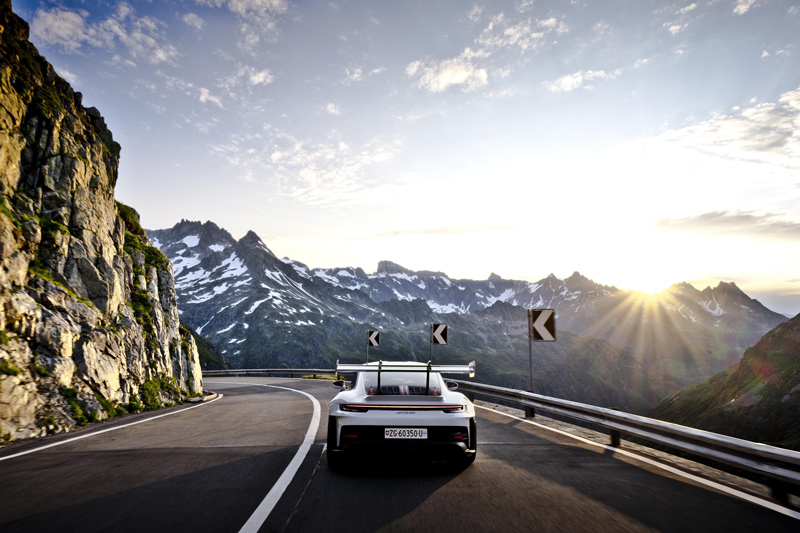
The one-off 911 GT3 RS "Tribute to Jo Siffer" was built by the experts at Porsche Exclusive Manufaktur as part of the special request program. From August 2024, the vehicle will initially be on display in Swiss Porsche Centers before being one of the highlights at the Auto Zürich trade fair (November 7-10, 2024). The buyer will then be drawn at random from all interested parties.
Joseph "Jo" Siffert enjoys cult status in Switzerland even 50 years after his death. Born in Fribourg, he was an extremely talented, charismatic racing driver. Siffert lived his love of motorsport to the full: he contested a total of 298 races in eleven years. Sometimes he took part in several competitions on the same weekend. "Jo Siffert, together with Kurt Ahrens, heralded the success story of the 917 with his victory at Zeltweg in 1969.
Jo Siffert's family was closely involved in the development of this very special 911 GT3 RS. In addition to his son Philippe, who drove Formula Ford and Formula 3 races himself between 1991 and 2003, his grandson Jérémy Siffert also accompanied the project workshop in Zuffenhausen.
"Witnessing the creation of this Porsche in honor of my father was extremely exciting," says Philippe Siffert. "With a lot of love for historical details and craftsmanship at the highest level, the employees of Porsche Sonderwunsch Manufaktur have transformed an already rare 911 GT3 RS into an absolutely unique piece - Jo Siffert spirit included."
Incidentally, the picture above is from the 1000 km race in Spa Francorchamps, which Jo Siffert won together with Brian Redman. The viper green already covered the entire nose of the car, whereas in the first race in Austria it only flanked the fenders, as now shown on the 911 GT3 RS.
Zwischengas has been publishing a daily blog post here since 2010
For more entries, please use the navigation by year and month.
Loading...
Information
Sign up for free to read more and access vast data pools
READ: More than 7000 articles and 420'000 images on vehicles, race cars, auctions, events, motorsport events & more.
AUCTIONS: Over 120'000 auction transactions are available in our auction database. Countless auction reports highlight the most important facts of each event.
MY ACCOUNT: Personal storage for saving articles and images, as well as managing listings and much more.