It's true: the most beautiful, interesting and sometimes weirdest discoveries are made on the back roads. This also applies to the byways of automotive history. This series brings you surprising facts from earlier times about technology, design and life with the car.
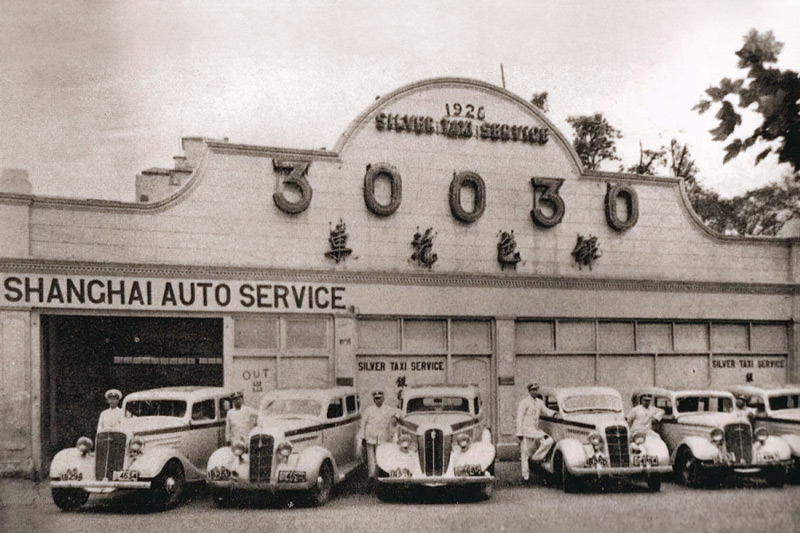
In 1921, the French Office for Foreign Trade published a study on the Chinese automobile market in order to motivate French industry to export. The official bulletin of the French Automobile Industry Association published some interesting facts.
Beijing
There are currently just over 900 cars of all categories and brands in circulation in Beijing. The Americans are dominant (Ford, Overland, Oakland, Buick, Chevrolet and King) because of their relatively low price and the payment facilities for customers.
The French brands are only weakly represented (Brasier, Clément Bayard, Renault), and that with pre-war models.
The selling prices are between 1500 and 5000 dollars. Due to the harsh winters and strong winds, these are exclusively closed vehicles (limousines).
The bodywork is often built on site or delivered in parts. The inner-city roads are passable for cars. In Beijing's surroundings, about 50 kilometers are drivable. A road between Beijing and Tientsin (approx. 83 km) is under construction. Tungchow (13 km) is already accessible by car. There are automobile services between Kalgan and Ourga (550 miles) in the Gobi Desert region. The most delicate passage is the Kalgan Pass to Hanaba, about 15 miles from Kalgan. The service is operated by the "Ta Chen Autobus". Each coach holds 4 passengers with luggage weighing 14 kg each. The price: 120 dollars.
It would be interesting for the French industry to build a coach for this service, adapt it for this region and sell it to the company. In Beijing, the Boixo and Chaperon brothers are in the car trade. Numerous Chinese garages rent out cars. And according to the police, there are around 40,000 rickshaws with pneumatic tires in circulation in Beijing.
Tientsin
The connecting road with Beijing is under construction. The region is mostly flat, with gradients of between 4 and 5%, only near Beijing 10-12%. Many roads are paved and suitable for car traffic. The bridges can carry up to 6 tons. There are numerous unpaved roads in the province.
Annual taxes: 2 dollars per car and concession, 7 concessions in Tientsin.
Media for advertising: Journal de Péking (French), Beijing & Tientsin Times (English) and North China Star (American).
Types of cars that might be of interest: Voiturettes 10 HP Torpedo 2 and 4 seater; 18 HP Torpedo and sedan.
The clientele is more demanding than in Europe. Demand is for well-maintained cars with spacious and well-equipped bodies
Shanghai
Few roads, but in good condition. No inclines, round trips around the city, no usable roads.
Duty: 5% on the value of the vehicle, next year possibly 10% to support the hungry in the north Current cars in circulation: 2522 cars, 290 trucks.
Types of cars in demand: Voiturettes for dealers, nice sedans for private individuals.
Kouang-tong province
Road traffic: Only in the city of Canton, where 30 km of boulevard have been asphalted in the last year and a half, with a width of 30-150 English feet.
Fuel costs: Gasoline 4 dollars per 4.8 gallons, motor oil 6.3 dollars per 4.8 gallons Imports: 1920 60 passenger cars, 2 buses and 2 trucks, all from America. Some French cars are also expected.
Advertising media: Local newspapers in Chinese. Canton Times is the only local English publication.
Cars in demand: No specific details. Buses should be compatible with the city's streetcar installations. There are plans to purchase camions for refuse collection.
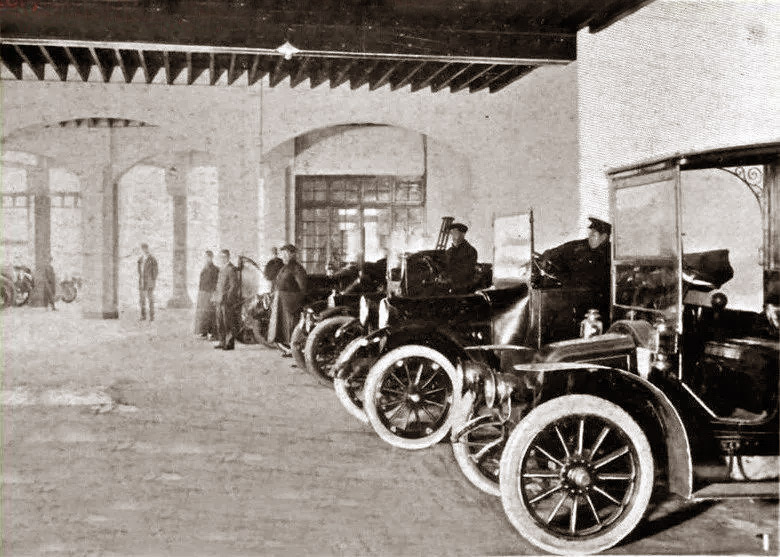
![Auto-Werkstätte in China vor 100 Jahren]()
Commentary
An interesting collection of facts. A few things stand out in particular: even back then, the Chinese buyer was demanding. The construction of asphalt roads was in its infancy and was limited to cities. Information about gradients was relevant.
Newspapers (for advertising) were also published in French and English. Chassis were imported. Bodies were built locally or assembled from imported parts. And also striking: even then, the Americans offered payment facilities.
So these were China's beginnings with the automobile. Back then, the Europeans would never have dreamed that 100 years later they would find themselves under pressure from Chinese electric cars. 2023 was a turning point: VW lost its market leadership in China to BYD. BYD? This Chinese manufacturer not only builds electric cars but also batteries. And BYD is the abbreviation for Build Your Dreams. BYD instead of BMW? Dream factory instead of engine factories? And will BYDs lead to bidding battles at classic car auctions in 100 years' time? Questions upon questions...