Interpretation


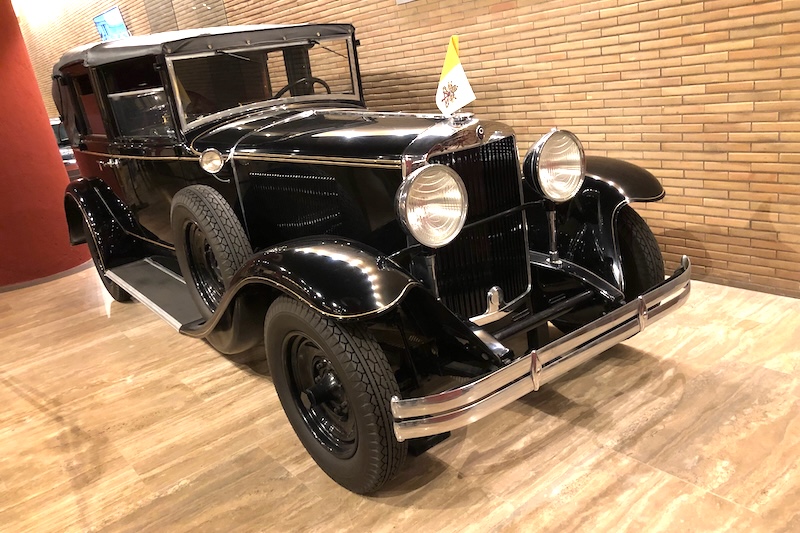
I was amazed at how many parts are installed in my Graham Paige engine, which is actually very straightforward. At the beginning of last year, the 4.8-liter in-line six-cylinder American engine had started to make a very subtle and initially barely audible rattling noise. My suspicion was a connecting rod bearing. After a steady increase in the noise level, especially under load, I removed the oil pan. On the 1929 5-passenger Sedan, it is hardly possible to get a first impression by a normal oil level check, as it only has an external oil level indicator: A small aluminum ball slides up and down in a slotted sleeve, tapping it tells you the oil level. You can't see the oil itself.
The findings were clear, silver metal plates on a black background, so it could only be bearing material. After checking with the previous owner, it turned out that the engine had only been flushed through before recommissioning, it had not really been dismantled. In view of its smooth running and moderate oil consumption, I might have made the same decision.
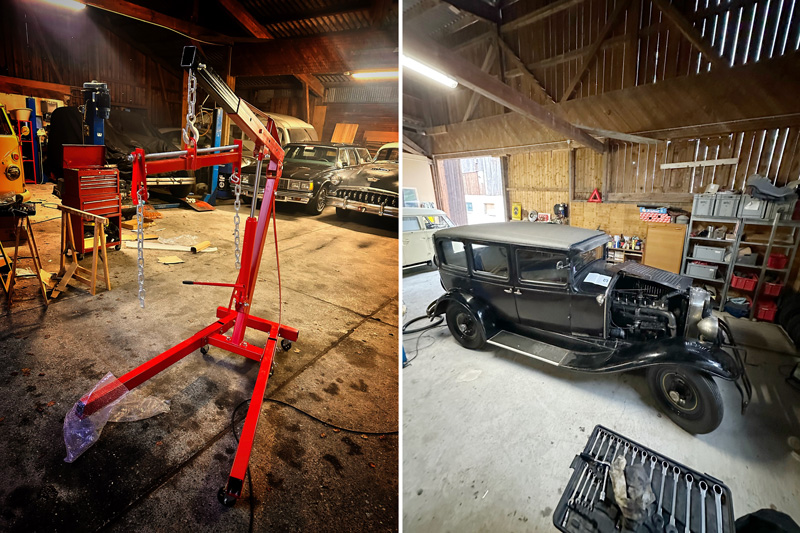
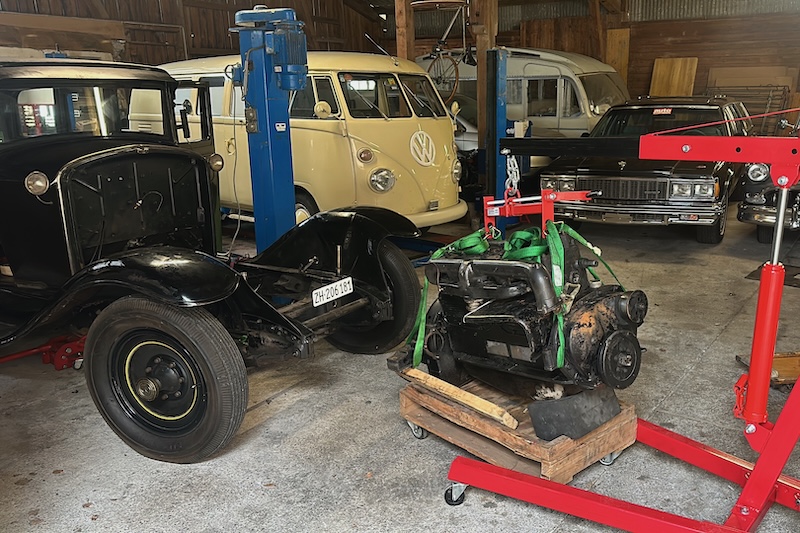
But now the case was clear, the engine had to be taken out and disassembled to take stock and for fear that there might be more metal somewhere in the oil circuit. This has now been done, I removed it myself together with a colleague, and the Durrer-Motoren company in Neuheim (ZG) was commissioned with the task of dismantling, inspecting and overhauling it.
Mike Müller, the mechanic of company founder Franz Durrer, showed me every single component. The aim was to clarify what makes sense, where I prefer the original condition - for example in terms of appearance - and what I would like to use the engine or the car for after a general overhaul. This creates trust, because whether you like it or not, the thought of a core component of your beloved car being subjected to the fate of someone else's hands somewhere else is unsettling at first. A car without an engine gives me a strange feeling in my stomach.
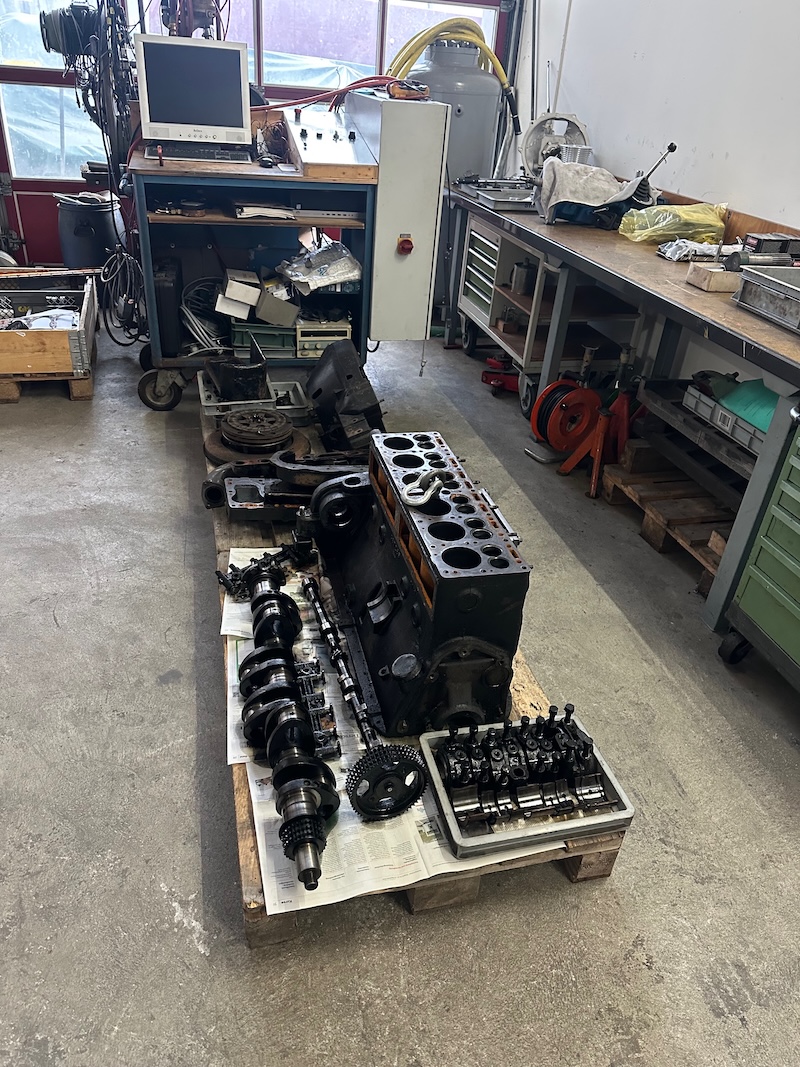
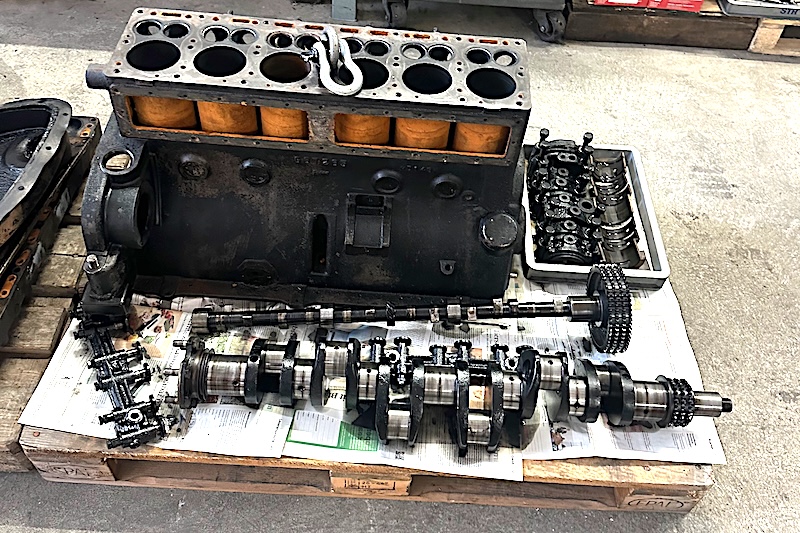
Cleanly dismantled: The engine of the 1929 Graham-Paige 619 shows normal wear and tear
And it takes a completely unemotional realism: we realize that it is hardly worth reusing the cast connecting rod bearings, which are actually showing material breakage - we suspect age as the cause - and recasting the corresponding bearings. Durrer, who also joined a little later, says it would be the same effort to make new connecting rods and fit them with a suitable bearing shell. The same applies to the pistons, which are real works of art. But here too, replacing them makes more sense than trying to reuse the old ones. Well then, I have to grudgingly come to terms with it.
On the other hand, the stocktaking reveals a positive result: as the engine presents itself, it has so far only been subject to the usual wear and tear, with no anomalies to be noticed. All the better. But Franz Durrer makes it clear right at the start that things will take as much time as necessary. There are no shortcuts. Well, so now it's time to wait. I can probably already tick off the 2025 season for the Graham-Paige.