Once upon a time ... the turbo lag

The term did not actually appear, at least in the literature known to us, until the problem had already been (almost) solved. The "turbo lag" describes the delay that occurs between pressing down on the accelerator pedal and the generation of usable power from the forced-aspiration engine. Because the turbocharger only really starts to rotate as the exhaust gases flow through it and can then supply the engine with additional compressed air, the turbo engine reacts to the throttle response with a delay. And it was not until the 1980s that we read about "turbo lag".
This was particularly pronounced in the early turbos, especially the racing cars, and the larger the turbocharger was in relation to the displacement, the stronger the effect was. The effect was intensified in early turbo engines by the lowered compression ratio, which further reduced performance as long as the turbocharger was not working at a high level.
Incidentally, in the beginning, the term "delayed response when accelerating" was used and Gert Hack noted after his first test in ams 11/1975 that this problem had actually been solved quite well in the 930. However, later test drivers no longer saw it that way and today an early 930 is considered a classic turbo with a "hole". Other cars with Estgeneration turbo engines, such as the BMW 2002 turbo or the Mitsubishi Lancer, also exhibited significant delays in response to accelerator pedal movements. The forward gear was all the more foaming when the turbocharger really picked up speed.
Porsche improved the response behavior by constantly introducing new technical tricks with each turbo generation, until there was hardly anything left of the old criticism. Saab had also continued to reduce the delays in several optimization steps and modern four and six-cylinder turbos can be compared with naturally aspirated engines in terms of response. In any case, nobody needs to talk about the "turbo lag" today, unless they are nostalgic and, like me, can appreciate this delay in power delivery.

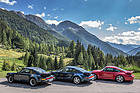
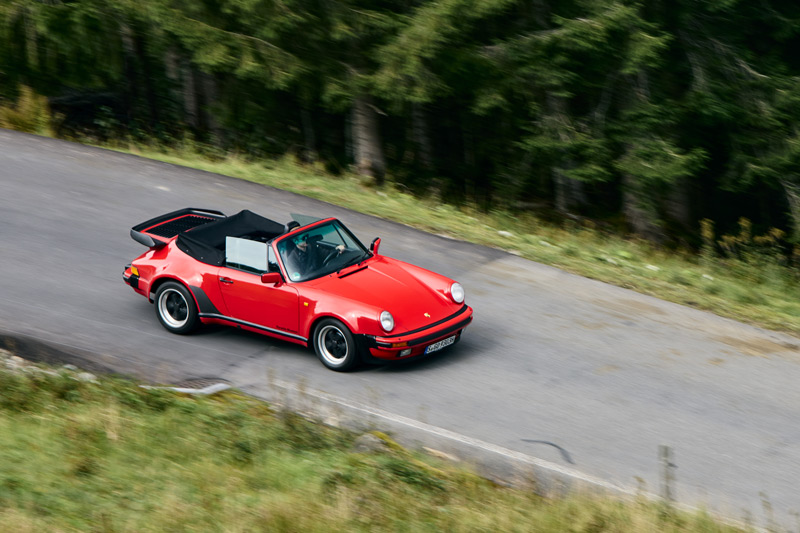
When I was invited by Porsche to drive a late 930 Turbo Cabriolet again last summer, I was thrilled by the "bang" from 3000 rpm and enjoyed the delayed but all the more powerful power development.