When rear-view mirrors still vibrated

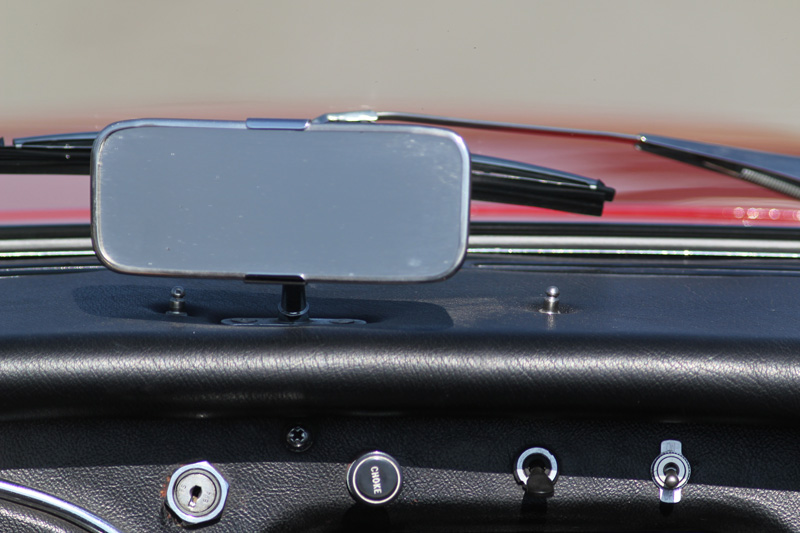
It's not that we think it was very practical when the rear-view mirror vibrated and you could barely guess what was going on behind the car. But somehow a slightly shaking rear-view mirror on an MG TC or Austin-Healey was a nice touch. The vibrations came from the engine and the road, of course. The dainty mirrors mounted on the dashboard or bolted to the flank had little to counter these "environmental influences". No problem, you simply turned your head and everything was clear.
Today, however, everything is different. Vibrating mirrors are a thing of the past. Simple mirrors are too. Modern (exterior) rear-view mirrors not only have several motors for adjusting and folding them, but also other functions such as a camera, position lights, projection of lettering on the floor or dimming. And perhaps even more. Today's mirrors are also significantly larger and (in the case of the exterior mirrors) often widen the car by 20 centimetres or more. Together with their functionalities, they are also considerably heavier, more complex and more expensive. It's no wonder that replacing them after a collision can quickly result in a bill of several hundred euros or Swiss francs, if that's enough.
In the past, after a mishap, you simply screwed a new, inexpensive mirror onto the door; you didn't have to tell a computer to replace it. And when reversing, you turned your head and looked behind, because no camera or monitor could do it for you. It didn't matter if the interior mirror vibrated.