High fuel prices also surprise classic car and youngtimer drivers

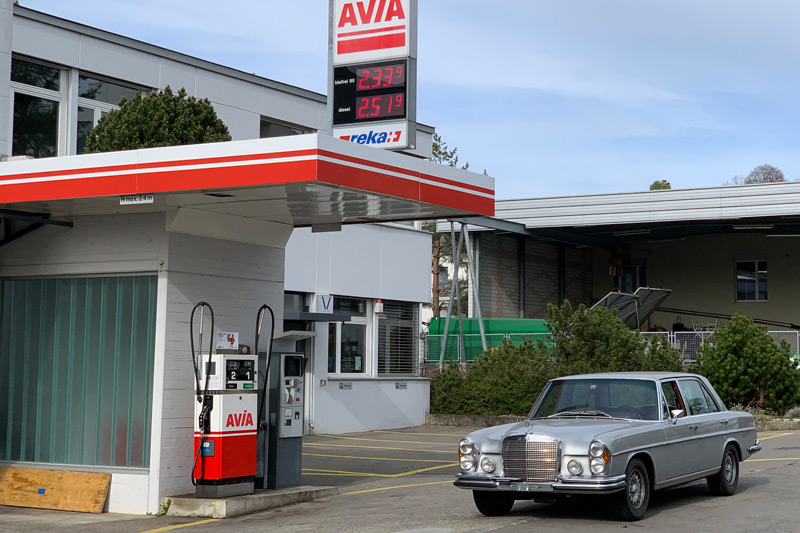
Petrol prices have risen sharply since February 2022, and the cause is well known. However, you quickly start to wonder when you look at the prices in different countries, but also at other aspects of petrol prices.
Why can it be that Brent crude oil is currently almost as expensive as it was on October 26, 2021 (USD 94.86 per bbl versus 91.388), while the price of petrol is currently 28 percent more expensive than it was back then in Switzerland, where, as we know, there are no government subsidies like in other countries (unleaded 95 currently CHF 2.24, October 2021 CHF 1.76). The situation would probably be similar in Germany if the state had not (temporarily) intervened.
Petrol prices are generally at an all-time high; according to TCS (Touring Club of Switzerland), the highest petrol prices for unleaded 95 currently have to be paid in Denmark (CHF 2.51), Norway (CHF 2.44), Greece (CHF 2.39), the Netherlands (CHF 2.38), Italy (CHF 2.23) and Switzerland (CHF 2.24).
If these high prices only have to do with high costs, how can it be explained that oil companies are raking in record profits?
The state is apparently not interested in sustainable reductions either, as it benefits in the form of additional tax revenue (including VAT) and sees the price of petrol more as an incentive tax on the way to emission-free or even prevented private transport.
Of course, we classic car and youngtimer drivers are not the most affected by this price hike. Most of us only drive our classic cars a few thousand kilometers and a price difference of EUR/CHF 0.50 per liter only amounts to perhaps EUR/CHF 150.00 per year. So you can do without dinner out and that's that.
However, many classic car and youngtimer drivers do not necessarily need or want to use the cheapest type of petrol (with a lot of ethanol mixed in at best), but prefer to fill up with Super Plus or Euro 98. And this raises another question that is hardly ever discussed. How can it be that the difference between Euro 95 and Euro 98 (or unleaded Super and Super Plus) has grown from 4 to 7 cents or centimes to an average of 12 to 20 cents or centimes? Those who rely on the 100-octane gasoline types sometimes even have to pay over 30 cents or centimes more. These differences have risen steadily over the last few years, but with the latest price surge they seem to have doubled, if my memory serves me correctly. This can almost certainly not be explained by the increased cost of crude oil, nor by transportation costs or anything similar. This is simply a case of optimizing returns and the consumers are footing the bill.
Where are the price supervisors and anti-trust authorities who should be dealing with such issues and ensuring that the market functions?
As classic car and youngtimer drivers, we are, as already mentioned, not the main victims and we prefer to keep quiet on these issues anyway, but the major consumer media (Bild, Blick, 20Minuten, etc.) should have an interest in doing a bit of educational work for their readers, shouldn't they?