Minimum mileage required for classic cars


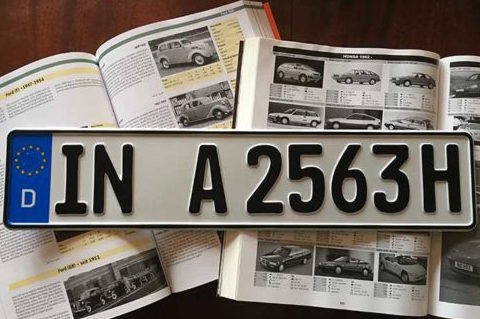
If a car was put on the market at least 30 years ago and the vehicle is in good original condition or has been faithfully renovated, it can be classified as an automotive historical cultural asset in Germany and subsequently receive the "H license plate" - as far as is known. In the opinion of the FIVA, however, the German criteria for classic car registration are inadequate. In order to do justice to the origin of the word "automobile", a historic vehicle must also drive, otherwise it would merely be a "historic cultural asset" similar to antique furniture.
For this reason, the World Federation of Classic Car Clubs is now demanding a minimum annual mileage for classic cars with an H license plate, which is checked during the biennial general inspection. Classic cars that are only kept in a collection or a dark underground garage and are towed from meeting to meeting on a trailer are to be stripped of their classic car registration, as they no longer move under their own power and are therefore no longer "automotive".
The lower limit is 1500 kilometers per year, which corresponds to 30 hours on the road at an average speed of 50 km/h. As classic cars from the 1980s, such as the Mercedes-Benz W124 series, are often still used in everyday life, the guideline value for younger classic cars should be higher. The plan is to stagger them by decade so as not to penalize older vehicles. Whether there will be exceptions for scooters and low-performance "Schnauferl" vehicles has not yet been finally clarified.
Helmut Körschgen from TÜV Süd welcomes the plans to increase the annual mileage: "This would greatly benefit road safety. Most damage to classic cars is not caused by driving, but by standing unused over a longer period of time. When a car is driven, it is also maintained and is therefore in better technical condition. The risk of hitting the brake pedal is much lower in a regularly driven classic car." With regard to the preservation of technical cultural assets, he adds: "The best repair is to prevent damage from occurring in the first place."
The ADAC, on the other hand, is less enthusiastic and fears fraud: "Anyone who has several classic cars and cannot drive them all often enough to meet the FIVA requirement will simply let the cars turn freely with the drive axle raised and the engine running until the required minimum mileage is reached. Such a legally enforced waste of resources is unacceptable in the age of environmental protection."
Among classic car owners, the camps are also likely to be quite divided.
One day later, on April 2, 2022, we can give the all-clear, because we have allowed ourselves a little joke with our readers on the occasion of April 1, 2022. As far as we know, neither the FIVA nor any other organization with sufficient influence (we don't know about small village clubs) is planning such a regulation. We ourselves are not quite sure whether we would welcome or reject a minimum mileage. However, the idea would have at least one advantage: no one would have to paint an artificial patina on the renovated classic car to make it look interesting. The signs of wear would then simply be the result of use.