Driving a classic car with foresight is a duty, not an optional extra

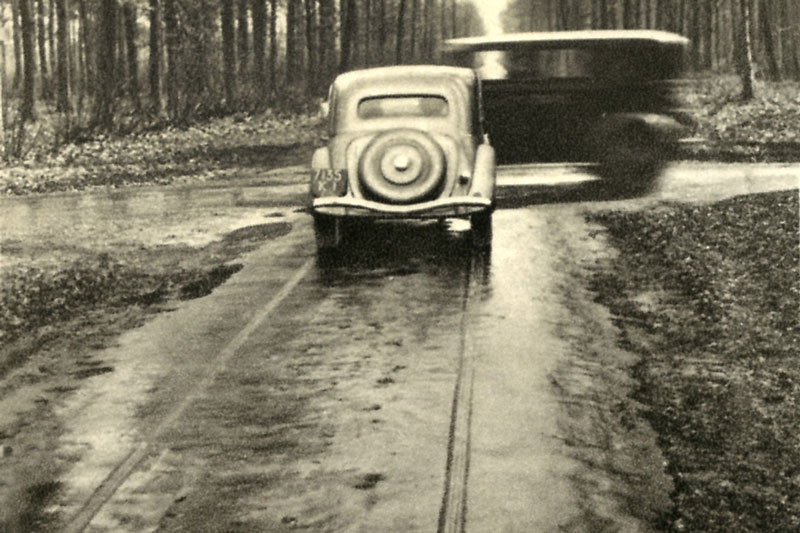
Of course, we all know that brakes used to be less good than they are today. But the fact that the differences are as big as they are is something that many classic car or youngtimer drivers give little thought to. Today, a modern car can easily brake from 100 to 0 km/h in 32 or 34 meters. When the car is stationary, a classic car that was following behind can easily still have 40 or even 60 km/h on the speedometer when it slams into the rear of its modern accident opponent.
Allianz (Allianz Center for Technology AZT) has tested the braking performance of old and new cars. The results were published by the VKU in 2019. The differences are enormous, as the following chart shows.

While classic cars achieve an average of around 7.2 m/s2 maximum and 5.2 m/s2 average braking deceleration, the figures for modern cars are just over 10 m/s2 and 7 m/s2 respectively. This has to do with the state of preservation, but above all also with the construction of the cars (brakes, tires, suspension construction, etc.).
While classic car drivers are normally able to call up sufficient braking power, things can quickly become very tight in tricky situations, e.g. in rear-end collisions. It helps to drive with foresight, but above all to leave enough distance in front. In contrast to modern cars, the pilot is also much more challenged, as the braking deceleration that can actually be achieved depends heavily on the driver's skills, especially in less than ideal road conditions.