How an Zwischengas article is created

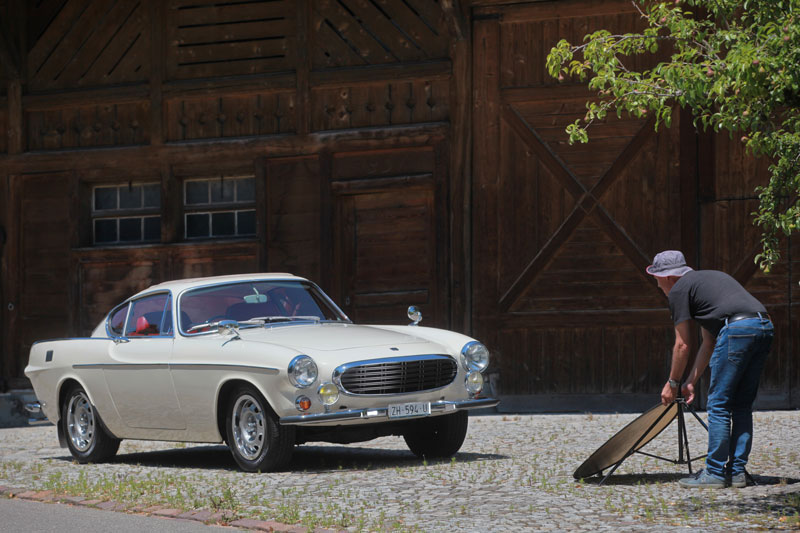
We are often asked what the creation process of an Zwischengas article actually looks like. Well, there is no magic involved, but rather well-planned and efficient work. Let us illustrate this using the example of a classic car portrait.
It starts with the selection of the vehicle. Sometimes cars are suggested to us, sometimes we have a specific type in mind and look for it specifically. We then have to find the right day for the photo shoot and the test drive. It doesn't necessarily have to be warm and sunny in the summer; depending on the car, it can also snow or be cool and rainy.
A suitable "location" must then be found on site that does justice to the car and also allows sufficient photographic freedom. The car is then extensively photographed there, and detailed and full-length shots are taken. The subsequent dynamic driving shots, which show the car as a driving vehicle and not as a stationary vehicle, are a plus. Depending on the possibilities, so-called "car-to-car" shots are also taken, in which the classic car is photographed from another car. Once the pictures have been taken, they still need to be edited to determine the right section and show all the details in the right light. Sometimes several days of shooting are necessary if, for example, changes over time are to be reproduced or very different locations can be used.
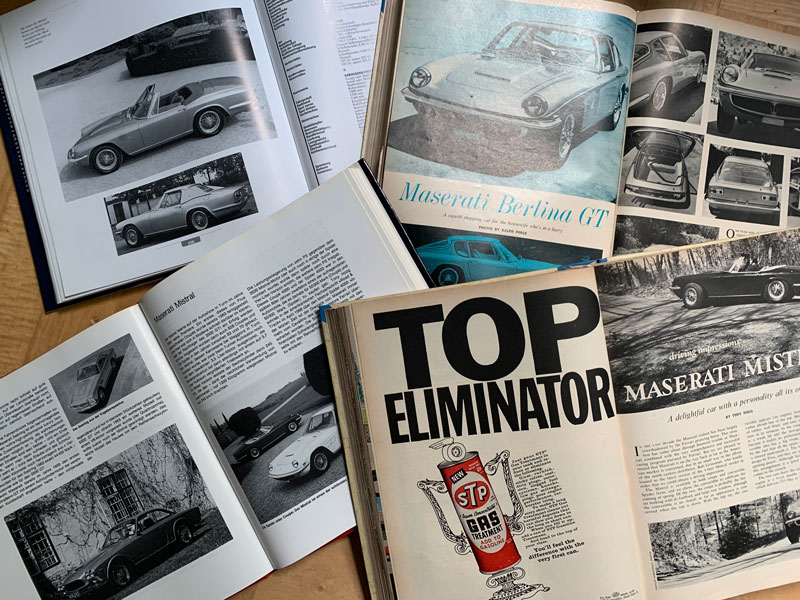
Parallel to the photo shoots and their preparation (or post-processing), extensive research is carried out on the vehicle and the history of the vehicle type. Books, old magazines and, of course, the Zwischengas magazine archive are combed through , and in many cases the vehicle owner can also contribute a lot. Important sources of information are collected and later added to the report.
Archive material available on paper is painstakingly digitized and extensively labeled. The freshly taken vehicle photos are also captioned.
Once the facts are gathered, the article text can be drafted. The aim here is to convey important background information as well as emotions. After several revisions, a publishable text is finally ready.
The final step is to put all the results online. Images and documents are uploaded to zwischengas.com and tagged so that they can be searched for later. The text is entered online into the editorial system, links are integrated and the formatting is made as reader-friendly as possible. Images are assigned and highlighted in the text flow. A final check is then carried out and the finished report can go live. Depending on the topic, several hours to several days of work have now gone into the article and of course the editorial team is very excited to see how the report will be received by readers.
If the report is read over 150,000 times within a few days, as was the case with the recently published article on the "Almost forgotten Mercedes-Benz collection" , then of course we are delighted, but we also like to tackle niche topics, and in this case, benevolent reader comments and feedback are worth more to us than statistics ...