Everything better? Everything worse? Or everything just different?

The season of the Drivers' World Championship, which has been held since 1950, got underway again last weekend in Melbourne. This year's F1 slogan is "Engineered Insanity". This snappy slogan can be translated as "engineered insanity" or "engineered madness". This gives food for thought, as there is no lack of room for interpretation...
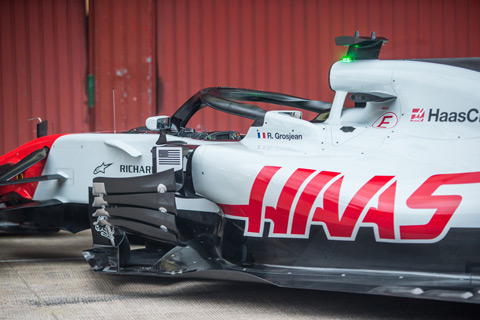
Photos of a crash helmet were placed next to the cryptic slogan in Melbourne. Purists would probably prefer to see an F1 racing car instead of the helmet, but this was dispensed with. Perhaps because of the halo, as toilet seats are probably only welcomed by a minority outside of toilets.
At least - or so it seems at first glance - the Melbourne daily newspaper "Herald" was almost overflowing with enthusiasm: the new season finally got underway again at the weekend, the fans could hardly wait and Daniel Ricciardo was convinced that it would be a good idea to hold an event in the evening.
No, it wasn't about Formula 1, the Herald was much more interested in the start of the new AFL season. In other words, it was talking about King Football. The writer also had F1 somewhere in the back of his mind, as Ricciardo was quoted as suggesting that evening matches should be played under floodlights, as this is also done in F1. Floodlights - electricity - Formula 1, there is a certain logic to this line of thought.
In the good old days, you would see photos in Australian newspapers a few days before the start of the season showing F1 drivers arriving at Tullamarine Airport. This has been dispensed with, as many drivers are hardly known beyond their circle of family and friends. And at the picturesque old train station, not far from the bridge over the Yarra River that leads to Albert Park, there are no huge GP posters this time, but rather advertisements for a comedy festival.
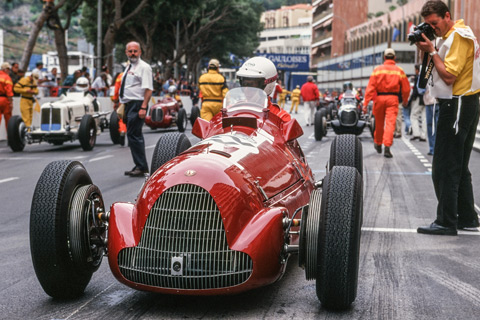
It is clear that the changing times have not spared GP racing. When the Alfetta drivers Juan-Manuel Fangio and Dr. "Nino" Farina were fighting for the title at the beginning of the drivers' championship, Formula 1 drivers were completely free to choose whether they raced with or without a helmet, while at the same time Eugenio Maria Giuseppe Giovanni Pacelli, who worked in Rome under the pseudonym Pius XII and led a life without any particular risks, wore a helmet-like headgear, the papal crown "tiara", on ceremonial occasions.
Making crash helmets compulsory for GP riders was an understandable measure, despite the interference in the individual responsibility of the riders. Of course, these early years do not necessarily have to be taken into account when comparing F1's past and present. The reason for this: Currently, there are probably a fair number of contemporaries who can hardly be blamed if they struggle not to confuse 1950s world champion Farina with Ben Hur.
If you ask what has changed since the 1970s and 1980s, the answer is: everything! To name the most important areas: The circuits, the racing cars, the regulations and the characters of the drivers.
As far as the circuits were concerned, they were extremely different "back then". There were circuits with inclines and corresponding downhill sections, tracks on flat terrain, the street circuit in Monte Carlo or the one in Barcelona, extremely fast circuits such as Monza, Silverstone, the Hockenheimring, the Ö-Ring near Zeltweg or Spa-Francorchamps. Even the track surface differed enormously from venue to venue. Monza? Silverstone? Hockenheim? Spa? Don't these circuits - as well as a race track near Zeltweg - still exist? Of course they do. The names are still on the F1 calendar - some of them at least occasionally. However, not much more than these names have remained. Monza is teeming with chicanes, the "Lesmo 2" corner, formerly a challenging corner, has been defused and the run-off zone in the "Parabolica" area has the charm of a supermarket parking lot. Those who continue to rave about the unique atmosphere created by the Tifosi have never experienced the true Italian fans, who can no longer afford the modern ticket prices.
It's a similar story at Spa. The former street circuit has been reduced to roughly half its length, and what remains is little more than a shadow of its former glory. Of course, the track still leads through the legendary "Eau Rouge" corner. Even Ayrton Senna, a Brazilian who knew his trade, said that he had to hammer it into his head on the approach to the "La Source" hairpin to keep his foot down on the gas if he planned to drive "Eau Rouge" flat out for a change. Without this mental attunement, the South American said, he would unintentionally lift his right foot. Since then - to put it casually - the entire slope has been asphalted. Hence the nickname "Mount Tarmac". As a result, while a few top drivers used to occasionally allow themselves to take the passage "full" in qualifying, anyone can now do so - provided they don't feel sick when their stomach is first in the footwell of the cockpit and seconds later below their larynx. Spa was once said to separate the men from the boys. In modern times, however, a Spa winner reported a few years ago that he had "great fun" during the race. Winners on the original track felt proud and relieved - no mention of "fun".
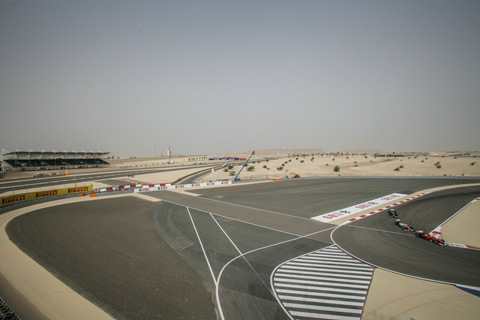
Oh yes, there are also new race tracks, of course, and not in short supply. However, long-time track architect Hermann Tielke's hands were tied. The regulations prohibit really demanding driving sections. Of course, these pistes, like the converted ones, are exemplary in terms of safety. How could it be otherwise when you have to refuel twice to get from the asphalt strip to the crash barriers. The disadvantages are obvious. Most spectators forget to bring opera glasses and the drivers lack the challenges they need to prove their skills.
It goes without saying that the racing cars are no longer the same. There are two main reasons for this. Let's take a look in the rear-view mirror: when top engineer Derek Gardner retired from GP racing in the early 1970s, his answer to the question of what would have the greatest impact on the design of F1 cars in the future was aerodynamics. He described the F1 racing cars of his era as "crimes against aerodynamics", which would probably soon be combated. Indeed, the dictates of the wind tunnel began. No one can be blamed for this, because only one shape is the ideal, and there is no reason why a designer should deviate from this ideal shape. At the same time, the regulations increasingly restricted the designers' scope. The result is racing cars that the majority of spectators can only distinguish by their paintwork.
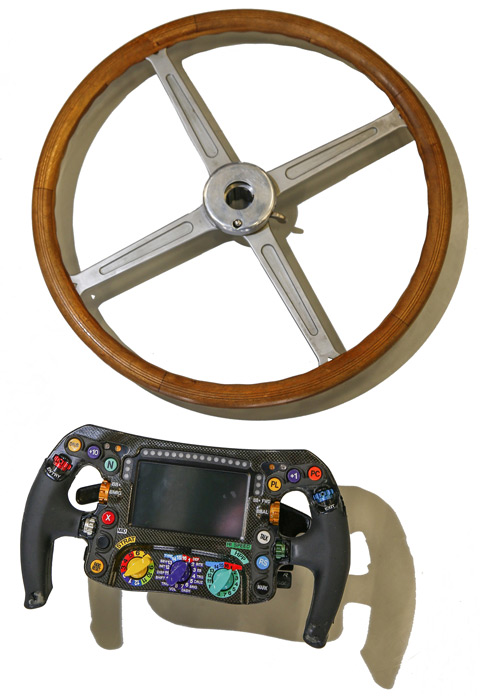
What Gardner could not have foreseen was the rapidly increasing importance of electronics. And with every task that was transferred to the electronics, the engineers relieved the drivers. Nowadays they have to press buttons like devils, but thanks to the electronic aids, they are becoming less and less different in terms of their operating skills.
Another milestone of change dates back to 2014, when the F1 cars were decisively converted to hybrid drives. The rules robbed Formula 1 of its sound as a result. The atmospheric disadvantage is huge. In addition, the racing cars seem slow on the track due to their low noise level, which is not noticeable during TV broadcasts. The background: science has proven that eyewitnesses perceive a loud car as fast and a quiet one as slow. Homo sapiens is simply not a speed trap...
Niki Lauda recognized this abruptly after the 2014 season-opening GP in Melbourne when he expressed his disappointment after the race because he felt "something was missing". Apparently, this criticism caused resentment among his employers, because a few days later Stuttgart informed him that Mr. Lauda found the new F1 sound "refreshing, likeable and invigorating". With the diplomatic tact of a North African oaf, the company's PR department believed it could take back the truth once it had been spoken. F1 earwitnesses continue to agree with Niki Lauda. For understandable reasons, deaf people have no opinion on this.
And unfortunately it gets worse. Because the engines can only be changed without penalty every seven Whitsun, they are treated like raw eggs after a bit of wrangling at the start of the races. With the exception of qualifying, full power can only be called up for a few kilometers with the permission of the management on the pit wall. The catch is that cars with engines that do not have to be changed at short intervals have the spectators at home in the garage or behind the grandstand in the parking lot. What's more, these almost noiseless endurance racers are ludicrously expensive.
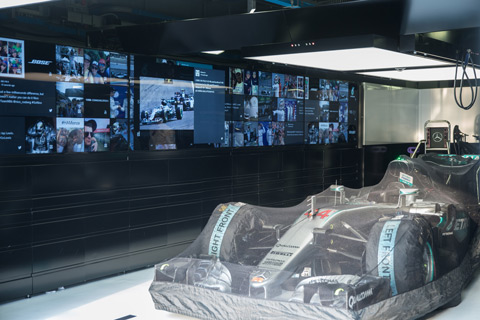
The list of penalties, which is twice the length of a giraffe's neck, is probably not in the spectators' interest either. Move back 50 starting positions? No problem. A lot of drivers are hit in every race, and measured against the maximum penalties, 50 places is a mere pittance. Plus the bully points that are awarded. Of course, driving must be fair, but what is already classified as unfair these days raises fears that sooner or later even overtaking will be punishable. Theoretically, it would even be possible to attach a "flavor" to an overtaking attempt in order to justify a penalty.
Of course, this is not to the taste of many spectators. But what do the drivers say? Sebastian Vettel didn't make a murder pit of his heart in 2014 and openly declared that "batteries belong in cell phones", i.e. not in racing cars, at least not for the purpose of enabling propulsion. But he had to come to terms with the situation. Many colleagues assess the situation similarly, but criticize "off the record", not wanting to be named. One said with a laugh: "My mechanics are physically fitter than me, because I no longer have to be." Another is of the opinion: "We can forget everything we learned as racing drivers."
Although these examples of unchanged "real" racing drivers exist, a new generation is inevitably growing up and thus into this new profession of energy manager. These young drivers are of course extremely talented. They are in control of their cars, are fast and do the work on the buttons at the same time, which requires concentration and skill, even if the tracks are often just marked paths in a desert of asphalt. Peter Revson, one of the protagonists of bygone times, defined his task as a racing driver with the words: "The name of the game is to keep her between the bits of grass." In the meantime, he would have to come up with a new denominator to describe the job.
There are increasing complaints that GP racing lacks real characters in this day and age. This judgment is of course completely subjective, as there are different evaluation criteria for every observer of the scene. But the drivers of the past and present are also objectively different. Until the early 1980s, GP racing was undoubtedly a risky sport. From this time onwards, those responsible had the problem under control thanks to numerous safety regulations. The legendary Canadian GP driver Gilles Villeneuve, who paid for his profession with his life in 1982, had already said that it was "impossible to have a fatal accident at the wheel of an F1 racing car". He was wrong with this statement, but this opinion was not completely out of thin air, because after another fatal crash in the same year, there was peace and quiet for twelve long years with regard to fatal accidents.
Then came the horrific Imola weekend in 1994, when it was proven twice in the space of just 24 hours that there is of course no such thing as absolute safety in Formula 1. Unfortunate circumstances first led to the death of Roland Ratzenberger, then cost the giant Ayrton Senna his life.
Despite the previous twelve accident-free years, the narrative was spread that the tragic double blow at Imola was the result of the alleged complete neglect of the safety aspect. Since then, safety thinking has dominated the scene, which has had both positive and negative consequences. A man like Stirling Moss says in retrospect that he would probably not have taken up the profession of racing driver if it had not been dangerous. His colleagues certainly thought similarly, although of course none of them were out to seriously injure themselves. They were simply characters who followed the old racer's motto "no risk, no fun". It certainly does not need to be emphasized that this type of person is not a pale everyday phenomenon.
These drivers are rarely encountered anymore. The majority of modern pilots hate risks like the plague. They avoid them to the best of their ability. But that doesn't distinguish them from the "normal people" sitting in the stands. They, on the other hand, want to see "guys" who deliver top performances. Just as they admire a tightrope walker who performs without a net more than one who offers the same artistic performance but insists on holding straps and installing a double safety net. Or: a predator trainer is usually more popular with spectators than someone who strokes a dwarf rabbit.
Unfortunately, that's not the whole story, because the drivers have another problem through no fault of their own: they are not only attached to the invisible radio strip to their "coach" on the pit wall, who tells them if necessary that they would be better off driving in fourth gear in T5, because they are also under the watchful eyes of their teams' PR specialists. Practically no one speaks off the cuff on their own responsibility anymore. Every word is weighed on the gold scale. The only exceptions are when extremely positive or negative feelings are involved. Shielding or monitoring of press contacts has long since extended to practically all members of the teams. A conversation with a Motorhome chef to write a desired fringe story? No problem as soon as the press officer has given the chef the green light...
And the shielding went even further. Back in the days of open motorhomes with awnings, photographers could shoot portraits in peace. Five to ten minutes and photos of a pilot with every conceivable facial expression were in the can. However, the drivers have long been rushing from the pits to the interior of their car fortress at a crawl, rarely stopping for a quick chat. And while the photographers in the "good old days" were tanned by the middle of the season at the latest, these days they are as pale as Chinese grotto elms, as they spend a lot of time in the photographer's room sorting, editing, labeling and sending their products. And if necessary, they also do this during the race. And this time is inevitably lost for atmospheric photos, such as mood pictures in the paddock even after the race, because if you haven't edited and sent off your yield by then at the latest, you are taking photos for the 100-year calendar, the next edition of which will be published correspondingly late.
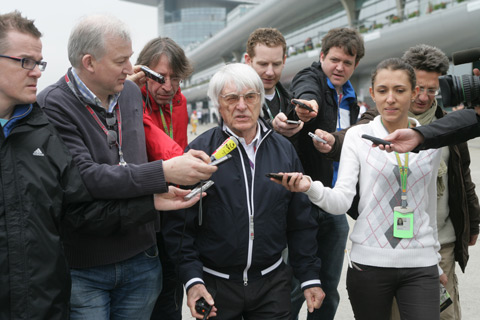
Bernie Ecclestone, no friend of the whispering hybrid track, issued a warning early on. In line with the motto: anyone who invests time and money to see wild animals may not be entirely satisfied if they are offered tame dwarf rabbits.