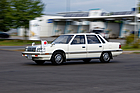
Less and less demand for right-hand drive vehicles?


It is becoming increasingly difficult to sell a right-hand drive vehicle, a classic car dealer recently told me. There are many reasons for this. For example, younger classic car buyers, who may have only passed their driving test 10 or 20 years ago, are completely unfamiliar with right-hand drive cars. Whereas 20 or 40 years ago, British sports cars with right-hand drive were quite popular and shifting gears with the left hand was no obstacle, this has completely changed.
And often it is not even necessarily the driver who objects to right-hand drive, but the passenger. They feel much more exposed and vulnerable on the left-hand side.
There are also a whole series of practical disadvantages of right-hand drive, such as toll stations on highways that are only designed for left-hand drive, opening mechanisms for garage doors or the entrance gate to the parking garage, which can only be operated from the left-hand car window.
A year ago, Zwischengas readers stated in a "question of the week" that they would be prepared to dig deeper into their pockets for a left-hand drive. And for 35.3 percent, a right-hand drive car would be out of the question.
These figures, or rather the rejection of RHD vehicles, are likely to have become even more pronounced since then. There are also good arguments in favor of the steering wheel on the right-hand side, and not only in motor racing, where a right-hand steering wheel is still preferred today because most circuits are right-handed, i.e. have more right-hand bends than left-hand bends.