When fast acceleration was still the exception


"A car's acceleration performance has not always been as important as it is today. The times when most mid-range cars took longer than half a minute to reach a speed of 100 km/h were not very long ago. In the meantime, a trend is beginning to emerge in Europe, which with its road and traffic conditions is dependent on agile and not overly large cars, which can only be welcomed from a traffic engineering point of view: "Acceleration is improving," was how Dipl. Ing. Gert Hack introduced an article on the subject of "How they accelerate" in 1965, 55 years ago.
Of course, Hack also documented the performance of contemporary automobiles, and there were considerable differences that were directly related to the engine power and the measured vehicle weight. As "auto motor und sport" measured the performance with a full tank and two people on board, smaller and lighter cars suffered more from the additional weight of the second person in the car (and the full tank), which Hack felt was important to mention.
Here is an excerpt of the interesting measured values of cars built in the mid-sixties (simply click on the corresponding column heading to sort):
| Vehicle | kg/hp o.B. | kg/hp 2 pers. | 0-100 km/h s | 1 km with standing start in s |
|---|---|---|---|---|
| VW 1200 | 23.1 | 27.5 | 30.2 | 43.9 |
| Opel Rekord 1500 | 17.8 | 20.6 | 22.2 | 40 |
| Opel Rekord 1700 | 16.4 | 18.8 | 18.2 | 39.2 |
| Mercedes-Benz 190 | 16 | 17.9 | 17.6 | 37.7 |
| VW 1500 S | 16.8 | 19.8 | 17.5 | 38.2 |
| Opel Kadett S | 14.1 | 17.6 | 17.2 | 38.8 |
| Ford 12 M TS Coupé | 13.3 | 15.6 | 15 | 36.1 |
| Glass 1700 | 12.7 | 14.6 | 14.8 | 36 |
| Fiat 1500 | 13.3 | 15.3 | 14 | 34.9 |
| Mercedes-Benz 220 S | 12.7 | 14.1 | 13.5 | 34.5 |
| Porsche 912 | 11.1 | 12.8 | 13.5 | 33.4 |
| BMW 1600 | 13.1 | 14.9 | 13.4 | 35 |
| Ford 20 M TS | 11.7 | 13.4 | 12.3 | 34.6 |
| Glass 1204 TS | 11.4 | 13.5 | 11.9 | 33.6 |
| Glass 1300 GT | 12.1 | 13.9 | 11.9 | 33.5 |
| Porsche 356 SC | 10.1 | 11.7 | 10.7 | 30.6 |
| BMW 1800 ti | 10.3 | 11.7 | 10.5 | 32 |
| Opel Diplomat | 8.4 | 9.2 | 9.9 | 31.4 |
| Mercedes-Benz 300 SEL | 9.5 | 10.4 | 9.8 | 30.5 |
| Mercedes-Benz 230 SL | 9.3 | 10.3 | 9.7 | 29.7 |
| Ford Mustang T5 | 7 | 7.8 | 9.2 | 29.6 |
| Exclalibur SS | 3.7 | 4.2 | 8.9 | 26.9 |
| BMW 1800 TI/SA | 7.3 | 8.3 | 8.9 | 29.5 |
| Alfa Romeo Sprint GTA | 7.5 | 8.9 | 8.8 | 29.9 |
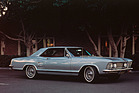
| Buick Riviera | 6 | 6.4 | 8.6 | 30.3 |
| Porsche 911 | 8.4 | 9.6 | 8 | 28 |
| Porsche 904 GTS | 3.9 | 4.7 | 5.5 | 24.8 |
By way of comparison, there are very few cars today that even manage more than 10 kg per hp, and an acceleration time of less than ten seconds from 0 to 100 km/h is actually almost a prerequisite to hope for sales figures in today's market (exceptions prove the rule).
It is also interesting to note that in 1965 it (almost) took a thoroughbred racing car to achieve a 0 to 100 km/h sprint time of under six seconds. Today, even sedans suitable for everyday use can achieve this. However, the experience of accelerating quickly in a Porsche 904 GTS was probably much greater back then than the same procedure in today's Golf GTI with DSG and multiple electronic aids.
The complete comparative values and Gert Hack's explanations can of course be found in the Zwischengas magazine archive .

.jpg)