Restorer training - an inspection

On July 4, 2020, the "Interessengemeinschaft Fahrzeugrestaurator (IgF)" held a training course at the Baden vocational college as part of the "Vehicle restorer with federal certificate" training course. The two lecturers and proven industry experts Daniel Reidl and Stefan Mäder also invited me to attend, and around 20 good-humored and inquisitive faces welcomed us.
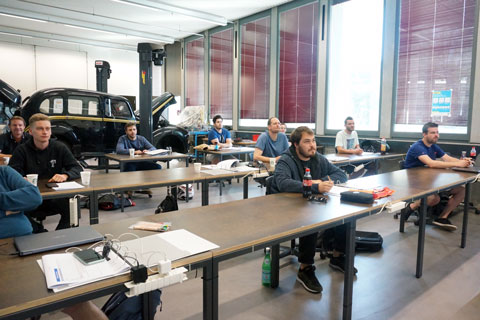
The course is aimed at specialists who apply the maintenance and repair techniques of vehicles built between 1945 and 1980 and combine them with today's practice. Will the job description develop further and also open up to youngtimers, for example those built in 2000? This is not currently planned. In addition to a needs assessment, the industry would first have to commit to this. The youngtimer scene is undergoing major change, and there are currently still a lot of everyday vehicles in the 20 to 29-year-old car segment. This is due in particular to the higher production quality and longevity of models from the 1980s and 1990s. Even today, the professional servicing and maintenance of these vehicles poses a small challenge for conventional garages in Switzerland.
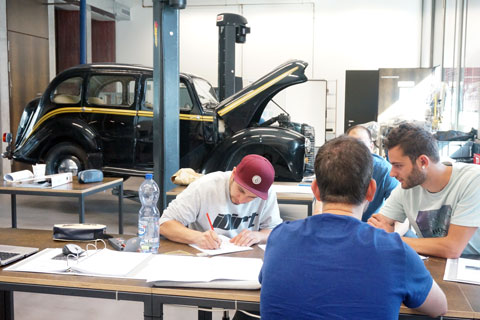
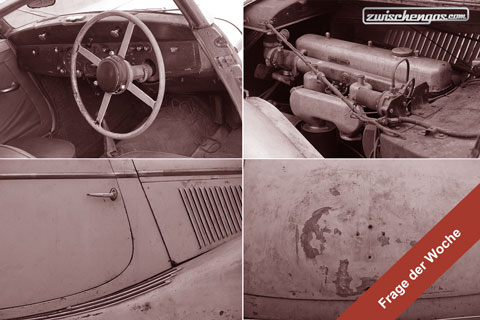
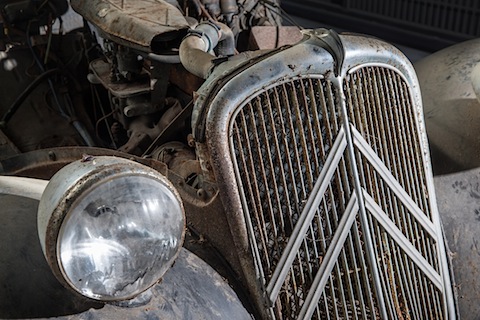
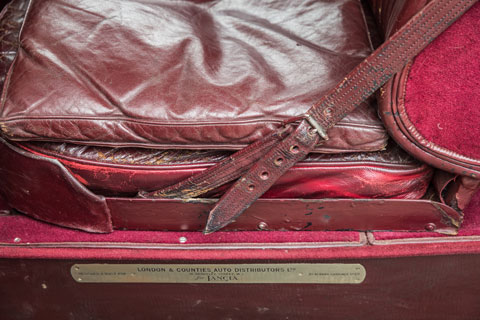
The fact that specific specialist knowledge is required for vehicles built between 1945 and 1980 was illustrated during the training day with the topic of "restoration work". In order to make the exercise as practical as possible, the instructors organized an unrestored "Hillmann". Working in groups, the budding restorers drew up a condition report and developed restoration proposals for three customers with different profiles and requirements. The project steps were defined for each restoration proposal and a cost proposal was calculated.
This task requires proven and expert know-how, as there are no reference or comparative values. And this is precisely where the focus of this "classic car whisperer" training comes in: you have to be able to feel the restoration object, says Stefan Mäder. The federal training courses for automotive specialists and automotive mechatronics engineers focus on electronic diagnostics and the replacement of defective parts or assemblies. An experienced vehicle restorer hears and feels when an engine is not running on all cylinders.
This sensitization plays an important role in the course in the modules "Work Attitude & Restoration Ethics". The trainees are taught the importance of originality, vehicle history and contemporary witnesses - driving safety and fidelity to the original always have top priority. With this principle in mind, old components are preserved or refurbished and cheap copies from poor-quality reproductions are not replaced. A vehicle restorer ensures serious maintenance at all times, tailored to the vehicle type and area of use. In addition to the effect that the susceptibility to breakdowns is significantly reduced, the service life of important components such as the engine and gearbox is considerably extended. The quality standards of the vehicle restorer course are significantly higher than those in the industry. In addition to specialist know-how, a great deal of experience and a strong work ethic are required to maintain the sometimes very primitive and vulnerable old technology, such as a single-circuit brake system.
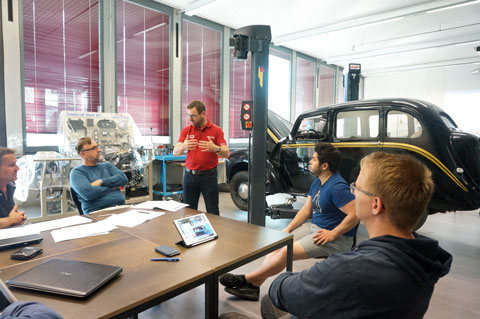
Training to become a vehicle restorer is primarily based on existing knowledge. Around 80% of participants have a basic technical qualification with a federal certificate of proficiency, for example as an automotive specialist, automotive mechatronics technician or coachbuilder. The industry cliché "hobby of older men" does not apply to the participant profile in two respects: the proportion of women is a pleasing 25% and 60% of participants are under thirty years old.
The other 20% are mostly technology freaks with higher vocational qualifications who want to realize a personal dream at an advanced age. Most of these people come from technical professions related to the industry. In some cases, the training is intended to professionalize their hobby or even turn it into a career.
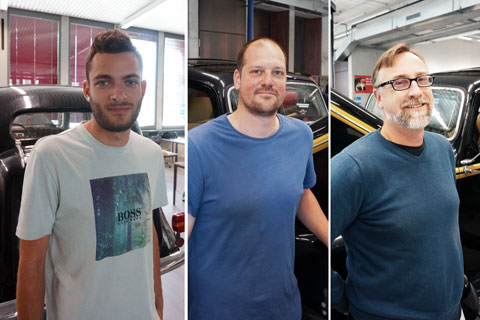
Marvin Pfister, 26, from Altenrhein, completed his apprenticeship as a car mechatronics technician. Pfister first came into contact with classic cars during his apprenticeship, and the different way of working on this vehicle segment, with lots of wrenching and making spare parts, really fulfilled him. Today he works as a restorer at Goodtimer. Similarly, Sven Lüthi, 35, turned his passion for classic cars into a profession. Having started his career as a motorcycle mechanic, he wants to broaden his horizons as a vehicle restorer and build up a good network.
Thomas Linser, 48, from Geneva, took a completely different career path. After studying art history, Linser worked as a successful key account manager for a major international company. At some point, he realized that his job didn't make sense - but he was very fulfilled by working on classic cars. He decided to start all over again. Today, he works as an assistant for a Geneva-based restorer. Linser has big plans for the course; after completing it, he would like to expand his business in western Switzerland to include the restoration of classic cars and build up a classic car community. As a tip for anyone interested, he said with a laugh: "All young people who are interested in oil should learn this trade. It's simply great fun!"
You can find out more about the Swiss training course for vehicle restorers on a dedicated website .