A racing car with radio


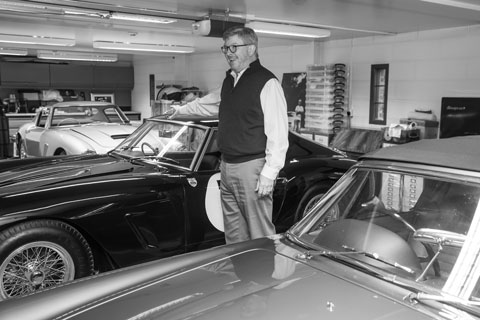
Ross Brawn, born on November 23, 1954, has had a fairytale career, starting as a mechanic at Williams/Wolf in 1978, then becoming a machinist (Wolf) and later an aerodynamicist (Williams) and designer (Arrows).
He continued to climb the career ladder and became Chief Designer (Jaguar), then Technical Director (Benetton, Ferrari). He was even given the position of team boss (BrawnGP, Mercedes) with his own world championship title, and now he has scaled the summit of Mount Everest as sports director of Formula 1.
But his great love is historic cars. He now owns some very exquisite pieces of them. From a steam car to a self-restored Maserati with Vignale bodywork, there are quite a few in his garage. Two Ferrari 250 GT SWBs are among them.
One of these cars was previously owned by Eric Clapton, while the other, chassis number 2119, was driven by none other than Sir Stirling Moss in the colors of the Rob Walker Racing Team.
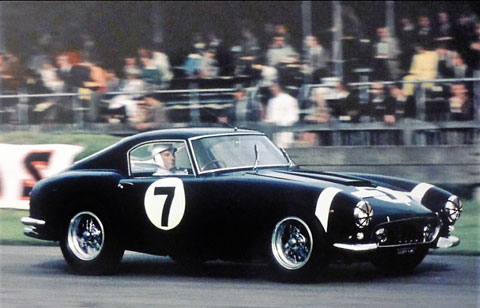
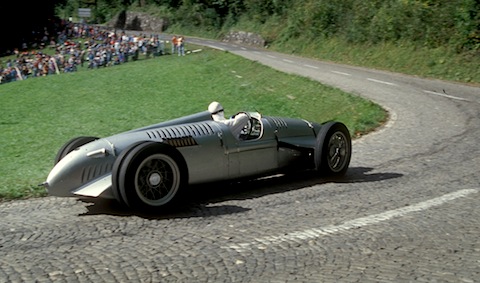
On August 11, 1960, the dark blue 250 GT SWB Competitzione left Maranello for the Rob Walker Racing Team. Moss started in three races and took three victories (TT Goodwood, Brands Hatch and the 25-lap Nassau TT).
After Moss, Mike Parkes took three more victories with this car (Snetterton, Brands Hatch and the Goodwood Fordwater Trophy) and a second place in the 1961 Goodwood TT behind Moss in another 250 GT SWB.
Despite being ordered as a racing car, this 250 GT SWB was delivered with a radio and aerial on the roof in 1960.
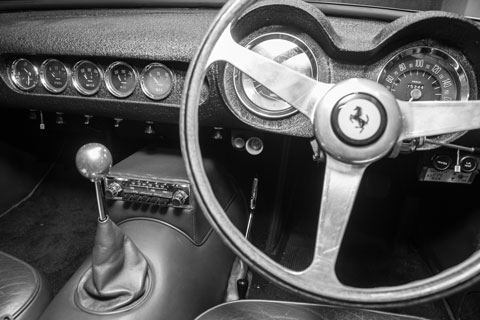
At first, there was a lot of laughter in the Goodwood paddock, but then Moss had the brilliant idea. If we can use it to receive Raymond Baxter's track commentary, we get information about the progress of the race. We can hear who is heading for the pits for a refueling stop and can make tactical decisions accordingly.
The number actually worked, but the speaker could only be heard at low engine speeds, as the three-liter twelve-cylinder engine naturally drowned out the radio by far. But after a long battle with Roy Salvadori's Aston Martin DB4 GT, Moss won the race after three hours with a two-lap lead.
This radio became a precursor to much later radio communication.