The repair costs of the past and their significance today

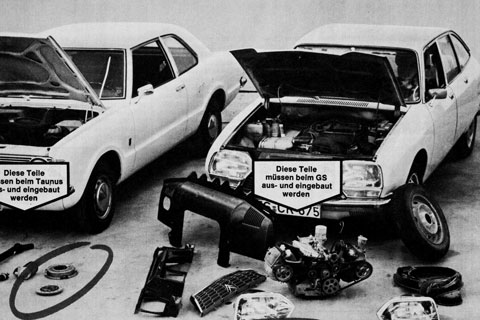
Unbelievable! More than 40 years ago, the ADAC (published in ADAC Motorwelt in November 1974) carried out an extensive repair analysis of 50 vehicle types, from the cheap Fiat 126 to the luxurious BMW 3.0 S. And realized that a low purchase price does not protect against expensive repairs. And realized that a low purchase price does not protect against expensive repairs. But let's let the authors themselves explain how the resulting graphic (click on the image below to access a larger version) reads:
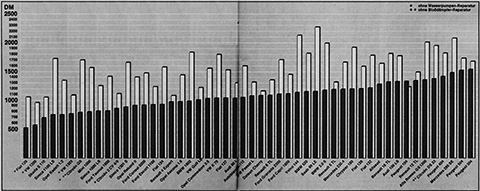
"Here are all 50 cars with their repair costs at a glance. The dark bars show how much the 8 selected wear and tear repairs cost on average. You can see: The amount of the repair costs does not always depend on the purchase price. Although the cheapest places are occupied by small cars, some full-blown mid-range cars (Ford Consul, Opel Rekord) are also able to push themselves quite far ahead in this price race. Conversely, two mini formats (Renault 5 and Peugeot 104) only appear in higher price regions - here the 8 repairs are more expensive than for the 3-liter BMW!
Now, with a car you not only have to reckon with wear and tear repairs, but also with accidental damage. Hence the light-colored bars. They show: This is how expensive a body repair is - calculated according to the system used for classification in comprehensive insurance. Based on the manufacturer's spare parts price and labor value lists, 3 types of damage are calculated for each car - front, side and rear. An average price is then calculated from these 3 figures in a ratio of 42:16:42 (this is accident practice).
The same applies to sheet metal repairs: a small car does not always have to be cheap to repair, and a larger car does not always have to be expensive. And if you do well with wear and tear repairs, you can do relatively badly with sheet metal repairs and vice versa.
It is a pity that on some cars the sheet metal repair pillar extends far beyond the wear and tear repair pillar - see Simca 1100 and 1301 S, Mini 1000, BMW 1802, Saab and Volvo. Overall, only cars in which both pillars are as short as possible are easy to repair, e.g. VW Beetle and Golf, Skoda, Renault 4, Citroen 2 CV, Ford Escort."
And today, 42 years later? Hardly anyone is interested in repair costs when buying a new car anymore, why should they be? Many manufacturers offer three or more years of warranty, service packages and you are also fully insured if you own the car at all and have to pay for maintenance/maintenance/repairs.
However, the maintenance costs of old cars are still interesting today, because the vehicles that were expensive to maintain and repair back then are certainly still expensive to maintain and repair today and no warranty will help. And the workshop costs, be it labor hours or spare parts prices, are significantly higher than back then, so the white and black bars would probably go up much higher today than they did back then.