After the "Act on the Revision of Cultural Property Protection Law" was adopted by the Federal Council shortly before the summer break on June 23, 2016 and thus became legally valid, there was an outcry in the art world and in the international art trade. Georg Baselitz withdrew his loans from the Albertinum in Dresden, the Pinacothek der Moderne and the Kunstsammlungen Chemnitz. Germany's most highly traded painter Gerhard Richter wants to do the same. They and many other artists fear that the international art trade is drying up.
As a result, the question quickly arose as to whether and to what extent this would also affect the collector's car sector and the international classic car trade.
Let's take a look at the legal text: cultural property within the meaning of this law is "any movable object or group of objects of artistic, historical or archaeological value or from other areas of cultural heritage [...]"
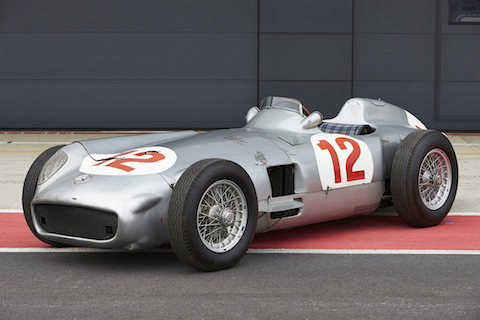
When Fangio's Mercedes Grand Prix car W 196 was auctioned at Goodwood in 2013 for 22.7 million euros, the international press predicted that the car was now about to move from the realm of value to that of art. The W 196 could therefore certainly be described as a "thing of artistic value".
![Mercedes-Benz W196 von 1954 (© Bonhams)]()
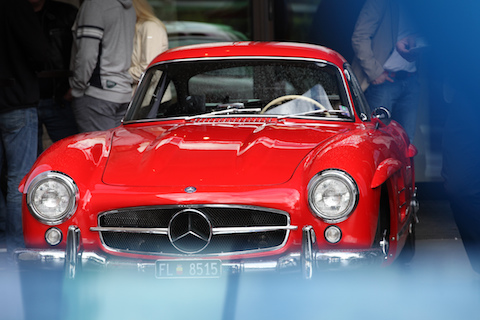
Since Kurt Schwitters' "Typography can be art under certain circumstances" (1924), the definition of art has distinguished between "free" and "applied art". The judgment of the Regional Court of Stuttgart of December 9, 2010 (Ref. 17 O304/10), for example, declares the body shape of the 300 SL Coupé (Gullwing) to be "applied art" (p. 18). Following Schwitters, one could also say that an automobile can be art under certain circumstances.
![Mercedes-Benz 300 SL]()
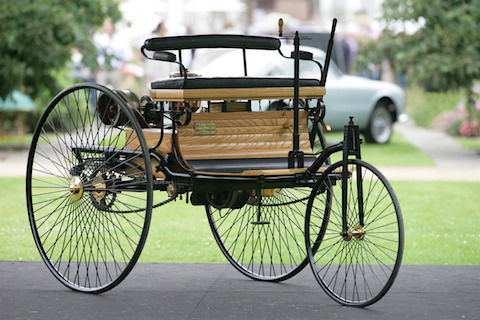
Carl Benz's Velociped from 1886 would fall under the definition of "movable object of historical value" if it had survived, which, as we know, is not the case.
There are also reports that the FIVA is planning something similar to the HVA (Historic Vehicle Association) in the USA, which lists cars on the "National Historic Vehicle Register" according to certain criteria, i.e. grants them the status of "cultural property".
Finally, there are reports in the press about the "Parliamentary Group on Automobile Cultural Heritage", which would like to register the automobile as a cultural asset with UNESCO. Indeed, a lot of the words art and culture in connection with the automobile.
It therefore came in handy that the author of these lines was able to have a clarifying conversation with the head of the parliamentary group, Carsten Müller, a member of the Bundestag, a few days after the Cultural Property Protection Act was passed.
Carsten Müller's comments summarized that the amendment to the law combines three existing regulations. Classification as a "nationally valuable cultural asset" and entry in the list required by law only takes place if a panel of experts [ ... ] comes to the conclusion that it is a nationally valuable object. Automobiles are not on this list. A further definition of the legislator is a value of more than €100,000, which applies to many collector's cars, and an age of more than 150 years, which will not apply until 2036.
![Benz Patentmotorwagen von 1886 (© Daniel Reinhard)]()
Müller quote: "The revised Cultural Property Protection Act means that owners of historic vehicles have no cause for concern. [ ... ] We are a long way away from the export ban or even expropriation that has been circulated time and again."
In connection with the UNESCO initiative, Mr. Müller clarifies that this is about the recognition of the automobile as "intangible cultural heritage", not about the definition of a physically existing automobile. Examples of intangible cultural heritage in Germany are the Oberammergau Passion Play, the Low German Theater or the Swabian-Alemannic Carnival.
So the old car scene can rest easy, continue to devote itself to its hobby, drive along an avenue of trees and listen to Janis Joplin's "Mercedes-Benz" on the car radio ... but at the same time buy a Facel Vega from France or put an SSK up for auction in Goodwood.