How the Opel GT became the GT/J in 1971

With its elegant and sporty shape, reminiscent of the Corvette, the Opel GT attracted many potential buyers. However, with a purchase price of 15,450 francs, the victim of desire had become relatively expensive by 1971; for the same money you could buy two normal Beetles and even a Ford Capri with a six-cylinder engine or a Triumph GT 6 were cheaper. So Opel reconsidered the "Junior" label and stripped down the sports car in places where it didn't hurt. The GT 1100 had taught them that you shouldn't cut back on performance.
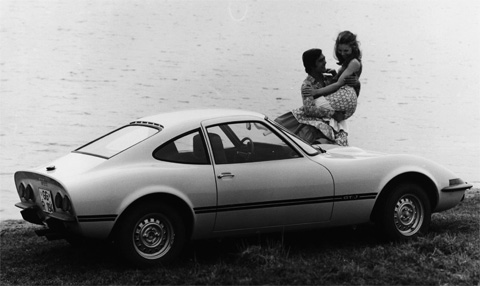
In fact, the cutbacks were minimal: they were primarily made to the body and interior, carpets were replaced by rubber mats, the seats were covered with smooth instead of perforated imitation leather (!), storage compartments in the doors and cigarette lighter were missing and the timer and oil pressure gauge were also omitted. On the outside, chrome was saved and the GT/J model was only available in four bright signal colors, which contrasted well with the double stripes on the flanks.

The result was a price of 12,900 francs, i.e. 2,550 francs (or around one sixth) less than the GT model that was still on offer. Whether this lower price could really be justified by the simplifications (including a simple horn instead of a two-tone horn and a foot-operated windshield wiper system) at the time is open to question. Even then, marketing (and pricing) was important. Good for the customers, who could buy a vehicle of almost the same quality for considerably less.
Driving performance remained at a high level, which meant 11.3 seconds for the 0 to 100 km/h sprint and a genuine 190.5 km/h top speed .
AR devoted a short test to the rejuvenated GT in issue 50/1971 . Their conclusion shows the satisfaction of the testers: "In its low-priced GT/J version, the first Opel of the "new generation" is particularly appealing to younger drivers. It is a real sports car with an exclusive line, excellent performance and safe driving characteristics, but without tearing too big a hole in the wallet due to high purchase and maintenance costs."