Suffering in the Lamborghini Jarama 400 GT

When Lamborghini introduced the Jarama in 1970, it was at most a minor sensation compared to the earlier 350 GT (Lamborghini's first sports car) and the Lamborghini Miura (the first Italian luxury mid-engined sports car for the road). Apart from its impressive Bertone design, the Jarama was relatively conventional in its architecture - engine at the front, drive at the rear, 2+2 seats.
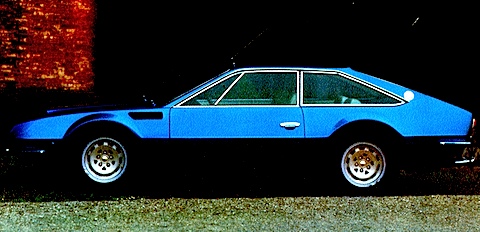
The Jarama was blessed by the 4-liter 12-cylinder engine, which the test drivers of the time attested "real music and the singing of the camshafts". According to the test report published by zwischengas at the time, the vehicle was also easy to control.
What is surprising, however, is how much willingness to compromise the rather expensive vehicle required from the owner. "You have to love the Jarama to forget its various shortcomings alongside its excellent features and impressive V-12 engine. Love is blind, as the saying goes," summed up the AR editors in 1971. And there were many flaws: Windshield wipers that lifted up to 10 cm (even at a speed of 120 km/h), fuel that could only be filled in gently and slowly, a windshield that could not be defrosted sufficiently, a footwell that heated up considerably, an unconvincing build quality, high water temperatures in city traffic, etc., the list of details that could be improved was long.
No wonder the AR writers thought that the buyer was buying a prototype, so to speak, in which some details were still unfinished.
The real fan was and is of course to be expected to accept this and, from today's perspective, even a perfect Jarama would be a vehicle with a lot of compromises, as modern demands on vehicles have risen almost immeasurably. And last but not least, it is precisely these "character flaws" that make many a classic a collector's item.
P.S. Our report with the refurbished test from 1971 not only shows the photos taken at the time, but also some other interesting illustrations, the sales brochure for the S version and the detailed technical data (in Italian) from 1970.